U.S. President Donald Trump told reporters he was "not satisfied" with Iran's latest peace proposal, which was delivered to Washington via Pakistani mediators on Friday (1 May).
SUMMARY
We are closing this Livepage now. Here are some of our top stories -
- The U.S. State Department said on Friday it was approving military sales worth a total of over $8.6 billion to Middle Eastern allies Israel, Qatar, Kuwait and the United Arab Emirates.
- Most activists detained after Israeli forces intercepted the Global Flotilla in international waters in the Mediterranean have been released on the Greek island of Crete.
- A senior U.S. official said a ceasefire agreed with Iran in early April has effectively ended hostilities for the purposes of a looming congressional war powers deadline.
- A total of 14 members of Iran's Revolutionary Guards have been killed in northwestern Iran after an ordnance left from the war exploded, Iranian state news agencies have said.
- U.S. President Donald Trump has told reporters he is "not satisfied" with Iran's newest peace proposal, which was sent to the U.S. via Pakistani mediators earlier today.
Here also are our top articles:
⦿ 22:31 GMT | UPDATE
U.S. approves military sales of more than $8.6 billion to Middle East allies
Reuters
The U.S. State Department said on Friday it was approving military sales worth a total of over $8.6 billion to Middle Eastern allies Israel, Qatar, Kuwait and the United Arab Emirates.
The announcement comes as the U.S. and Israel's war against Iran marked nine weeks since its start and more than three weeks since a fragile ceasefire in the Iran war came into effect.
⦿ 21:03 GMT | UPDATE
Iran officials aim to meet with FIFA, discuss World Cup issues
Reuters
Soccer officials from Iran are intent on meeting with FIFA's leadership about its upcoming World Cup matches in the United States.
Iran was the only FIFA federation among the 211 member countries without representation at this week's FIFA congress in Vancouver.
That meeting is expected to happen before 20 May at FIFA headquarters in Zurich, Switzerland, the Associated Press reported.
⦿ 20:00 GMT | UPDATE
Trump says U.S. will not leave Iran early
Reuters
U.S. President Donald Trump on Friday said the United States would not exit its confrontation with Iran early "and then have the problem arise in three more years".
⦿ 19:36 GMT | UPDATE
UN should reassess decision to end Lebanon peacekeeping mission
Reuters
China's Ambassador to the United Nations said on Friday that there was a need to revisit the UN's decision to end the longrunning peacekeeping mission in Lebanon at the end of this year.
The UN Interim Force in Lebanon (UNIFIL), established in 1978, patrols Lebanon's southern border with Israel. Last year, the UN Security Council unanimously agreed to begin a withdrawal of the mission at the end of 2026.
Envoy Fu Cong said China, which has taken over the presidency of the Security Council for May, was concerned about the situation in Lebanon. He said there was no real ceasefire in place, only a "lesser fire."
"It is incumbent on Israel to stop this bombardment of Lebanon," he told reporters.
More than 2,500 people have been killed in Israeli strikes across Lebanon since 2 March, when Lebanese militant group Hezbollah fired on Israel in support of its ally Iran and triggered an Israeli ground and air campaign that has left swathes of southern Lebanon in ruins.
Israel's mission to the United Nations did not immediately respond to a request for comment, but Israel has previously said its military activities in Lebanon are aimed at stopping attacks by Hezbollah militants.
⦿ 18:31 GMT | UPDATE
Iranian Supreme Leader calls for 'economic and cultural' war against adversaries
Mojtaba Khamenei
Iran's Supreme Leader, Ayatollah Mojtaba Khamenei, has called for "economic and cultural jihad" against the country's enemies in a statement issued via Telegram on Labour Day.
Khamenei added that the 47 years since the Iranian Revolution, Iran had demonstrated its "remarkable capability" to the world through battles with its enemies.
Khamenei also ackowledged the economic difficulties that Iran has experienced as a result of the conflict with the U.S., urging business owners to refrain from layoffs as much as possible.
⦿ 18:05 GMT | UPDATE
14 members of Iran's Revolutionary Guards killed in explosion, Iranian media says
Reuters
A total of 14 members of Iran's Revolutionary Guards have been killed in northwestern Iran after an ordnance left from the war exploded, Iranian state news agencies have said.
⦿ 16:58 GMT | UPDATE
Trump 'not satisfied' with latest Iranian peace proposal
Reuters
U.S. President Donald Trump has told reporters he is "not satisfied" with Iran's newest peace proposal, which was sent to the U.S. via Pakistani mediators earlier today.
Earlier, the White House refused to comment on the Iranian response, saying it didn't "detail private diplomatic conversations."
But less than an hour later, Trump told reporters that he wasn't happy with Iran's newest proposal, adding that negotiations were ongoing by phone.
Trump added that he was "not sure" if Washington was going to get a deal with Tehran.
"Right now we have talks going on: they're not getting there," he said.
Trump added that he wasn't worried about the U.S.'s stock of missiles, amid reports of concerns about the amount of weapons that have been used so far in the conflict with Iran.
⦿ 16:49 GMT | UPDATE
White House declines to comment on new Iran peace proposal
Reuters
The White House has refused to comment on Iran's latest peace proposal, which was sent to the U.S. via Pakistani mediators on Friday.
The U.S. Presidents office said it would not detail private diplomatic conversations, when asked about Tehran's response.
"We do not detail private diplomatic conversations. President Trump has been clear that Iran can never possess a nuclear weapon, and negotiations continue to ensure the short- and long-term national security of the United States,” spokeswoman Anna Kelly told Reuters.
⦿ 16:45 GMT | UPDATE
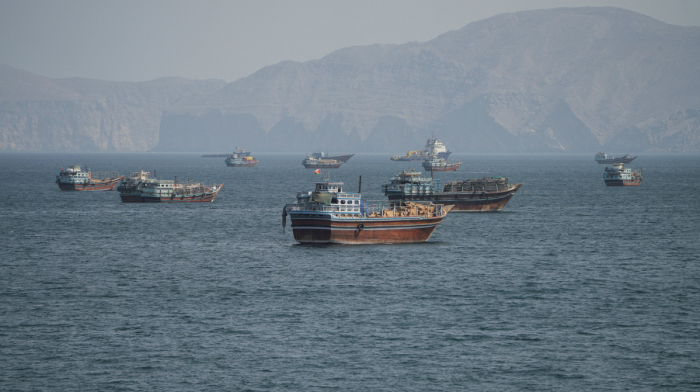
Shippers who pay Iran's Hormuz tolls at risk of sanctions, U.S. says
Reuters
The U.S. has warned that any shippers who pay tolls to Iran for passage through the Strait of Hormuz could face sanctions.
An advisory from the U.S. Treasury said that even charitable donations to organisations such as the Iranian Red Crescent Society would put fimrs at risk of penalties.
The Strait of Hormuz is one of the world’s most strategically vital maritime routes, with about 20% of the world’s seaborne crude oil and liquefied natural gas flows passing through it.
Tehran has proposed fees or tolls on vessels passing through the Strait, as part of proposals to end the war with Israel and the United States.
The U.S. Treasury said fee demands from Iran may include several payment options, including currency, digital assets, offsets, informal swaps, or charitable donations
It said it was issuing the alert to warn "U.S. and non-U.S. persons about the sanctions, [and] risks of making these payments to, or soliciting guarantees from, the Iranian regime for safe passage."
⦿ 15:21 GMT | UPDATE
U.S. to close flagship Gaza mission as peace plan stalls
Reuters
A U.S. military-run centre near Gaza that critics say failed in its mission to monitor the Israel-Hamas ceasefire and boost aid flows to besieged Palestinians is set to be shut by the Trump administration, sources familiar with the matter told Reuters.
The closing of the Civil-Military Coordination Centre (CMCC) in Israel would mark the latest blow to U.S. President Donald Trump's Gaza plan, already undermined by repeated Israeli attacks since the October truce and a refusal by Hamas to lay down its arms.
Diplomats and officials said the move, which has not been previously reported, underscores the difficulties facing U.S. efforts to oversee the truce and coordinate on aid, as Israel seizes more Gaza territory and Hamas firms its grip in areas under its control.
The move could also add to unease among Washington's allies, whom Trump encouraged to deploy personnel to the CMCC and commit funds for his Gaza rebuilding plan, effectively on hold since the U.S. launched its joint war with Israel against Iran.
⦿ 12:36 GMT | UPDATE
Iran has sent its latest proposal to U.S. via Pakistani mediators, Iran's state news agency says
Reuters
Iran has sent its latest response in negotiations with the United States to Pakistani, Tehran's official state news agency IRNA reported on Friday.
⦿ 10:18 GMT | UPDATE
U.S. Navy turns to AI to hunt Iranian mines in Strait of Hormuz
Reuters
The U.S. Navy is boosting its use of artificial intelligence to speed up the detection of Iranian naval mines in the Strait of Hormuz, according to details of a newly awarded contract.
The move comes as President Donald Trump says U.S. forces are clearing mines from the vital shipping lane, where disruptions are threatening global oil and trade flows despite a fragile U.S.–Iran ceasefire.
Under the $99.7 million contract, AI firm Domino Data Lab will expand its role in the Navy’s Project Accelerated Machine Learning for Maritime Operations (AMMO), helping train underwater drones to identify new types of mines within days rather than months.
The technology allows rapid updates to mine‑hunting models using data from sonar and imaging systems, significantly cutting the time needed to adapt drones to new threats, officials say.
⦿ 09:14 GMT | UPDATE
Most Global Flotilla activists released in Greece, two leaders still held
Anadolu
Most activists detained after Israeli forces intercepted the Global Flotilla in international waters in the Mediterranean have been released on the Greek island of Crete, organisers said, except two flotilla leaders who remain in Israeli custody.
The Global Flotilla Crisis Desk said 175 activists were detained during the operation late on 29 April, with 173 transferred to Crete and handed over to Greek authorities, while Saif Abukeshek and Thiago Avilia are still being held by Israel.
The freed activists arrived at Aterinolakos Port near Yerapetra in Crete’s Heraklion region and are expected to be flown out from Heraklion Airport.
The flotilla was part of the Global Flotilla Spring 2026 Mission, which set sail from Barcelona on 12 April to deliver humanitarian aid to Gaza and challenge Israel’s blockade.
Organisers say Israeli forces intercepted and damaged the boats in international waters off Crete, around 600 nautical miles from Gaza, detaining participants from 39 countries.
⦿ 07:30 GMT | UPDATE
UAE warns against unilateral Iranian control of Hormuz navigation
X/@AnwarGargash
UAE Presidential Adviser Anwar Gargash said on Friday that unilateral Iranian arrangements over freedom of navigation in the Strait of Hormuz cannot be trusted, following what he described as Tehran’s “treacherous aggression” against its neighbours.
Writing on X, Gargash said secure passage through the vital waterway must be guaranteed by collective international will and international law, underlining the strait’s global strategic and economic importance.
⦿ 06:43 GMT | UPDATE
Toyota faces profit pressure from costs and Middle East conflict
Reuters
Toyota is expected to report a fourth straight year‑on‑year drop in quarterly operating profit next week, as rising material and labour costs, U.S. tariffs and fallout from the Middle East conflict offset strong demand for hybrid vehicles. Analysts forecast a 27% fall in operating profit for the January–March quarter, pushing full‑year earnings to a three‑year low.
The conflict has already driven up prices for aluminium and other key inputs, disrupted shipments to the Middle East and hit regional sales, with analysts warning that cost pressures could intensify later this year. Investors will be watching closely how Toyota factors rising materials costs and geopolitical risks into its outlook under new CEO Kenta Kon.
⦿ 06:22 GMT | UPDATE
Israeli air strikes hit southern Lebanon
Anadolu
At least two people were killed and 10 wounded in Israeli air strikes on southern Lebanon overnight, according to Lebanon’s health ministry, despite a ceasefire that came into effect on 17 April.
Lebanon’s state news agency said Israeli aircraft hit several southern towns, including Upper Nabatiyeh, Harith and Tayri.
The attack adds to concerns over the fragility of the ceasefire, which U.S. President Donald Trump recently extended.
Israeli strikes and Hezbollah attacks have continued despite the ceasefire, with Lebanon reporting more than 2,500 killed and over one million displaced since Israeli operations intensified in early March.
⦿ 06:17 GMT | UPDATE
Iran war strain hits Dubai restaurants
Reuters
The war involving Iran is beginning to bite Dubai’s food scene, with chefs reporting supply disruptions and rising costs as the Strait of Hormuz remains effectively closed and air freight prices surge.
Imported ingredients such as avocados, tomatillos and premium seafood are becoming harder to source, forcing some restaurants to scale back menus, cut output or shift to locally sourced alternatives.
Higher fuel costs and reduced tourist arrivals have added pressure, with industry surveys showing falling demand and rising supplier prices across the UAE.
While authorities say businesses are adapting with new formats and offerings, chefs warn that the conflict has exposed the sector’s reliance on imports and tourism, with recovery closely tied to stability in the region.
⦿ 04:54 GMT | UPDATE
Middle East Conflict pushes gas prices to $6 a gallon in California, U.S.
Reuters
Rising gasoline prices have become a flashpoint of the Iran war’s economic fallout, with motorists in California paying more than $6 a gallon, the highest level in two years.
The conflict has severely disrupted global oil supplies, pushing prices higher worldwide and hitting California particularly hard because it relies on imported fuel.
The surge is fuelling political tensions ahead of elections in California and across the U.S., as higher fuel costs add to inflation pressures and raise concerns about summer travel.
⦿ 03:25 GMT | UPDATE
CBS reports Iran war costs far higher than Pentagon figure
Anadolu
Anadolu reports that the true cost of the U.S. war with Iran is closer to $50 billion, significantly higher than figures publicly cited by the Pentagon, according to U.S. officials familiar with internal assessments, CBS News reported on Thursday.
The revised estimate is roughly double the $25 billion figure presented to Congress a day earlier by Pentagon official Jules Hurst during testimony on “Operation Epic Fury”. Hurst told lawmakers the lower estimate did not account for longer‑term costs such as infrastructure repairs or future construction, citing uncertainty over the military’s eventual force posture in the region.
CBS News reported that the Pentagon’s publicly cited figure also excludes the full cost of damaged or destroyed equipment, including the loss of 24 MQ‑9 Reaper drones, each valued at more than $30 million.
The conflict began with U.S. and Israeli strikes on Iran on 28 February, triggering Iranian retaliation and the closure of the Strait of Hormuz. A ceasefire was announced on 8 April through Pakistani mediation, but talks failed to reach a permanent agreement, with President Donald Trump later extending the ceasefire without a set end date.
⦿ 03:08 GMT | BREAKING
U.S. says Iran ceasefire ends hostilities for war powers 1 May deadline
Reuters
A senior U.S. official said a ceasefire agreed with Iran in early April has effectively ended hostilities for the purposes of a looming congressional war powers deadline. The Trump administration argues there has been no exchange of fire for more than three weeks, meaning the conflict no longer triggers requirements under the War Powers Resolution.
President Donald Trump was facing a Friday deadline either to halt military action or seek approval from Congress.
Democrats dispute the administration’s legal interpretation, saying the law does not allow the clock to pause during a ceasefire, but Republicans have blocked efforts to force a withdrawal or formal authorisation.












What is your opinion on this topic?
Leave the first comment