Iran’s leadership has presented a united front, rejecting claims of internal divisions amid continued tensions with the U.S. and Israel following a fragile ceasefire and stalled Iran–U.S. talks.
Tehran has also strongly rejected an Arab League resolution condemning Iran’s attacks on U.S. bases and interests in regional Arab countries used to target the Islamic Republic.
Leadership signals unity amid external pressure
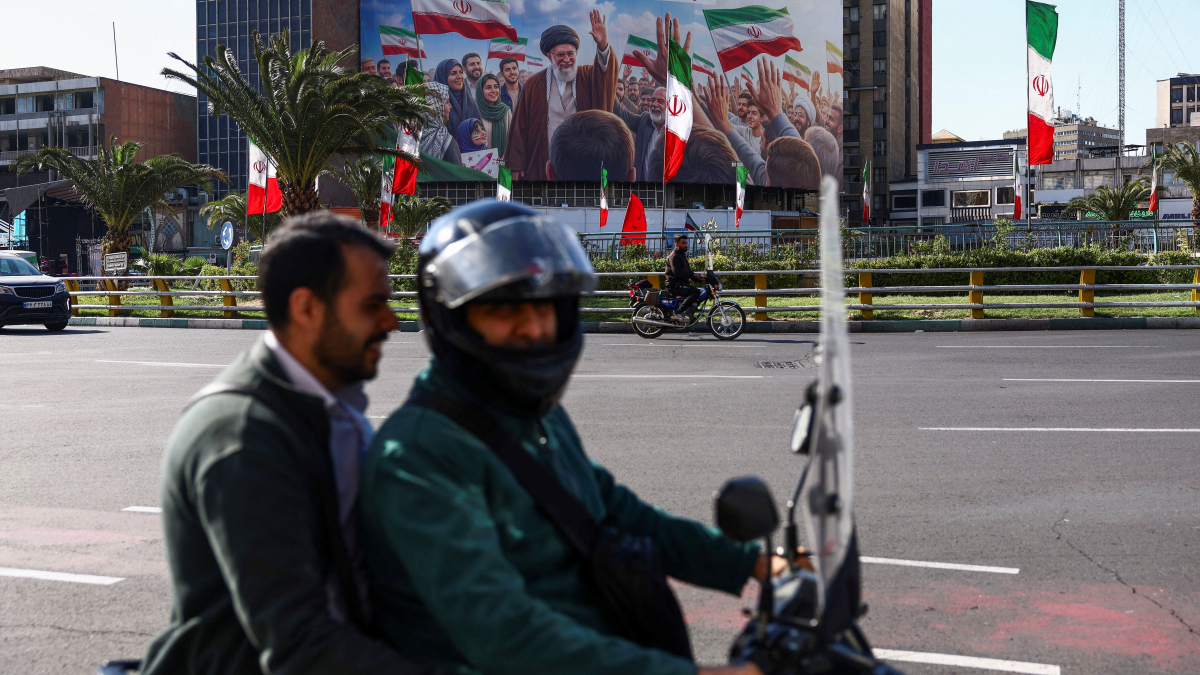
Iran’s leadership, in coordinated statements on Thursday, projected national solidarity in the face of what it described as the Israel–U.S. military war on Iran, dismissing claims of infighting and discord aired by U.S. President Donald Trump.
Supreme Leader Ayatollah Mojtaba Khamenei, in a post on the X platform, retweeted excerpts of his Nowruz message, stating that “media operation of enemies aims at manipulating heart and minds of the people to undermine national unity.”
The heads of Iran’s branches of government - the presidency, parliament and judiciary - also issued a joint statement presenting a united front and vowing revenge against their adversaries.
“There are no hardliners or moderates in Iran. We are all Iranians and revolutionaries,” official media quoted President Masoud Pezeshkian, Parliament Speaker Mohammad-Bagher Ghaliban and Judiciary Chief Gholam-Hossein Mohseni-Ejei as saying.
They also promised to inflict regret on aggressors by relying on unity between the nation and the government, and adherence to Supreme Leader Ayatollah Khamenei.
Officials dismiss claims of divisions
Foreign Minister Abbas Araghchi likewise dismissed President Trump’s claims of differences among Iranian officials - notably between the armed forces and foreign policy institutions - over a forthcoming round of mediated Iran–U.S. negotiations.
“The warfare and diplomacy are coordinated fronts in a single war. Meantime, the Iranian nation is more unified than ever,” he said in a post on his X account.
Iran condemns U.S. rhetoric and assassination claims
Amid the stalled Iran–U.S. talks, Foreign Ministry spokesman Esmaeil Baghaei criticised remarks by U.S. officials that appeared to encourage the assassination of Iranian figures opposing negotiations under pressure, branding Washington a sponsor of terrorism.
“America, which once presented itself as the cradle of democracy, freedom, and human values, has now openly become a promoter of terrorism, violence, and mass murder. Can we call this situation anything other than complete moral collapse?” he said in a post on X.
Baghaei’s condemnation followed the U.S. president’s reported retweeting and liking of a post by a presidential speechwriter suggesting the assassination of opponents in Iran of a deal between Tehran and Washington.
Dispute over regional security and UN complaint
In a separate statement, the Iranian spokesman rejected the Arab League resolution issued after an extraordinary online meeting of foreign ministers on Wednesday concerning Iran’s attacks on U.S. bases in regional Arab countries.
“The defensive measures of Iran against U.S. military bases and facilities located in some countries on the southern shores of the Persian Gulf were taken within the framework of the inherent right of self-defence in accordance with Article 51 of the United Nations Charter and in response to the military aggression of the U.S. and the Zionist regime against Iran,” the statement read.
According to the state-owned IRNA news agency, Baghaei reiterated Iran’s determination to strengthen trust and cooperation among regional countries.
“He called on the regional countries to understand their legal and political responsibilities, avoid adopting provoking positions, and pursue a path of constructive interaction based on mutual respect,” the agency reported.
In New York, Iran’s mission to the United Nations lodged a complaint with the UN Secretary-General and the Security Council president over the U.S. use of the territory and airspace of Qatar, Kuwait, Bahrain, the United Arab Emirates and Saudi Arabia during 40 days of the Israeli–U.S. war on Iran.
In retaliation for attacks launched from U.S. bases in Persian Gulf states as well as Jordan, Iran carried out missile and drone strikes on U.S. military assets and interests across the region.













What is your opinion on this topic?
Leave the first comment