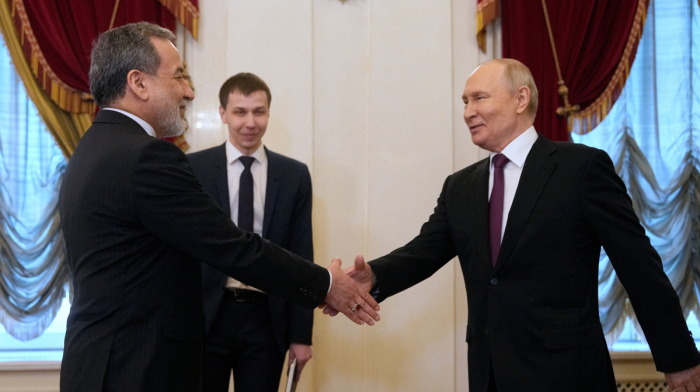
Iranian Foreign Minister Abbas Araghchi arrived in St Petersburg on Monday after visits to Pakistan and Oman for talks on bilateral ties and regional developments, including a fragile ceasefire, tensions in the Strait of Hormuz and stalled peace negotiations with the U.S.
Meanwhile, local media affiliated with the Revolutionary Guards (IRGC) reported that over the weekend Araghchi delivered Iran’s messages to Pakistan to be relayed to U.S. officials. The messages concerned a potential deal to end the war and reopen the strategic waterway, while postponing discussions on Iran’s nuclear programme.
“I am visiting Russia to meet with senior Russian officials with the aim of continuing close consultations between Tehran and Moscow on regional and international issues and improving bilateral relations,” he said in remarks broadcast on state-owned IRIB TV.
Pakistan meetings described as ‘fruitful’
Iran’s top diplomat departed for Islamabad on Friday (24 April), where he met Pakistani Prime Minister Shehbaz Sharif, Army Chief Field Marshal Asim Munier, and Foreign Minister Muhammad Ishaq Dar.
“The visit to Pakistan was a very good one, with fruitful consultations, during which a review was made of what had happened and under what conditions the (Iran-U.S.) negotiations could continue,” he said.
Oman’s mediation role revisited
Araghchi then travelled to Muscat on Saturday, where he met Sultan Haitham bin Tariq and Foreign Minister Badr Al-Busaidi. Oman previously mediated indirect negotiations between Tehran and Washington in 2025, which were halted by Israel-U.S. attacks last June.
“Iran and Oman are two coastal countries of the Strait of Hormuz,” he said.
“It is necessary for us to consult with each other, especially since safe passage through the Strait of Hormuz has become an important issue at the global level," Araghchi added.
Talks expected with Putin and Lavrov
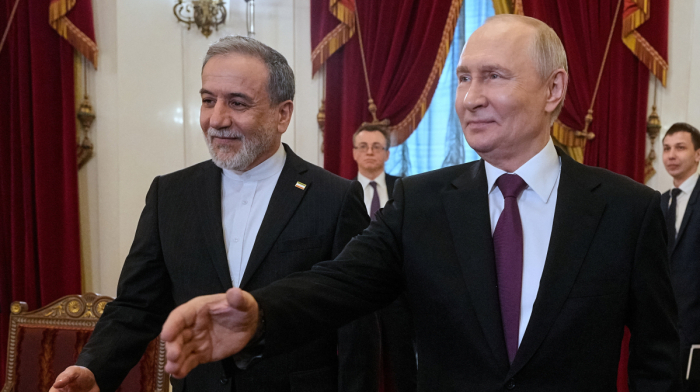
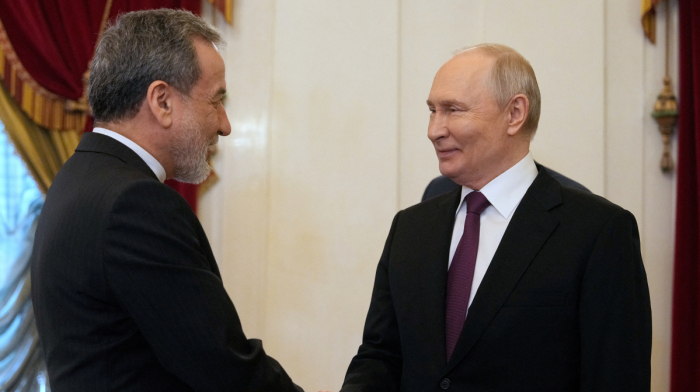
Following his regional tour, Araghchi is expected to meet Russian President Vladimir Putin at the Kremlin on Monday, as well as Foreign Minister Sergei Lavrov.
He said, “Today's meetings will be an opportunity to discuss developments in the war and review the latest situation in this regard. I am confident that these consultations and coordination between the two countries in this regard will be of particular importance.”
According to the Fars news agency, Araghchi also conveyed written messages outlining Iran’s position on its “nuclear red lines” and the Strait of Hormuz to the U.S. via Pakistan.
“The exchange of messages had nothing to do with negotiations and was an initiative by Iran to clarify the situation in the region and clearly declare Tehran’s red lines,” the agency reported.
Wider regional engagement
During his visits to Pakistan and Oman, Araghchi also held phone calls with counterparts from Türkiye, Egypt, Qatar, Saudi Arabia, and France.
Local media, citing Foreign Ministry releases, said the discussions focused on bilateral relations, ceasefire prospects, and stalled negotiations between Iran and the U.S.
Civilian casualties highlighted
Meanwhile, Jamshid Nezami, First Deputy President of Iran’s Foundation of Martyrs and Veterans Affairs, said civilians account for nearly half of the deaths in the war involving the U.S. and Israel.
Speaking at a press conference in Tehran on Sunday, he highlighted the heavy toll on ordinary people not involved in military operations.
“3,468 people were killed in the war that began on 28 February, with 1,460 of them - around 45% - identified as civilians who were not present at military sites at the time of the attacks,” the state-owned IRNA news agency quoted him as saying.
Earlier, Abbas Masjedi Arani, head of the Iranian Legal Medicine Organization, said the highest number of casualties were recorded in Tehran, followed by Hormuzgan Province in the south and Isfahan Province in central Iran.









What is your opinion on this topic?
Leave the first comment