Reversing a decade of restrictions, New South Wales has opened new areas for gas exploration in its remote west. The move reflects growing concern over future energy supply across Australia’s east coast.
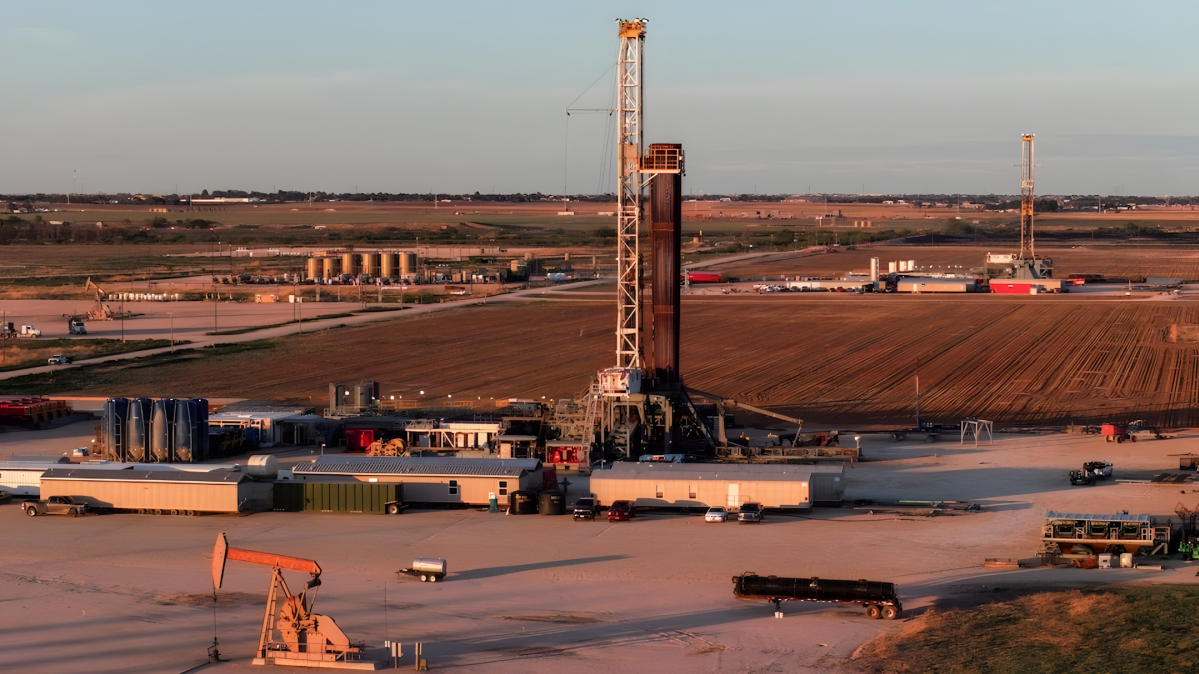
The New South Wales (NSW) government has formally opened two large frontier regions in the state’s remote west for gas exploration.
Officials did not specify how many extraction sites could be developed. However, a preliminary government study published in 2021 suggested at least four major hubs may be viable. The announcement highlights rising concern among state governments about the stability of Australia’s energy market.
Geopolitical pressures and the energy grid
The decision to subsidise exploration costs marks a clear shift in government policy.
“What we need to do, carefully and methodically, is make sure we are responsibly pulling every lever to support a stable and robust energy grid for decades to come,” NSW Minister for Natural Resources Courtney Houssos said on Wednesday.
Houssos linked the move to global instability.
“Current global events make this work more important than ever,” she said, referring to volatility in hydrocarbon markets driven by conflicts in the Middle East and Eastern Europe.
She argued domestic gas remains essential for heating and heavy industry, acting as a transition fuel as coal-fired power is phased out. However, recent data from the Australian Energy Market Operator (AEMO) shows gas use for power generation has fallen to a two-decade low.
Backlash from farmers and environmental groups
The response from rural communities and environmental groups was swift and largely negative.
A sharp reduction in application fees has raised concerns that inexperienced operators could enter the market.
“The government must explain how it will prevent a flood of speculators and ‘$1,000 cowboys’ arriving on farms with inadequate resourcing, poor behaviour, and little regard for biosecurity or water risk,” said NSW Farmers President Xavier Martin.
Martin said the agricultural sector is not opposed to resource development in principle, but warned that rapid deregulation could threaten prime farmland.
Business groups, including Australian Energy Producers, welcomed the move as a necessary step to address supply concerns.
East coast supply concerns intensify
The decision comes amid broader efforts to boost energy security across Australia’s east coast.
The AEMO has warned of structural gas shortfalls by the end of the decade, prompting several states to expand exploration.
Queensland and Victoria have both recently offered new acreage for oil and gas exploration. Queensland remains the dominant producer, with a large coal seam gas (CSG) sector supplying three liquefied natural gas (LNG) export projects operated by companies including Shell, ConocoPhillips and Santos.
Victoria, by contrast, has had minimal exploration in recent years due to strict moratoria and a ban on onshore fracking. However, it has recently offered five new offshore drilling permits.
A significant policy reversal
For NSW, the move represents a major reversal.
Over the past decade, successive governments cancelled or bought back most coal seam gas licences from smaller companies such as Metgasco and Comet Ridge, following public concern over environmental risks.
The only major project to retain government backing—the Santos-operated Narrabri CSG project—remains stalled due to legal challenges and community opposition.
Industry calls for cheaper gas
Pressure to increase supply is also coming from major manufacturers.
On Wednesday, BlueScope Steel CEO Tania Archibald warned that more affordable gas is essential for industry competitiveness.
She said increased gas supply is also key to reducing emissions, allowing companies to shift away from thermal coal.
BlueScope, headquartered in NSW, is one of the state’s largest industrial gas users. Her comments highlight the challenge facing policymakers: balancing environmental concerns with the risk of rising energy costs and industrial decline.














What is your opinion on this topic?
Leave the first comment