The World Health Organisation (WHO) has warned that efforts to contain the Ebola outbreak in the Democratic Republic of Congo (DRC) are facing growing pressure as the virus spreads to new areas faster than treatment capacity can be expanded.
Health officials say significant shortages of trained medical staff, operational partners and funding are creating obstacles to scaling up the response, despite what they describe as one of the fastest treatment expansions seen during an Ebola emergency.
The outbreak, caused by the Bundibugyo strain of the Ebola virus, has become the deadliest in the country's recent history. According to WHO figures, more than 6,000 cases and more than 3,100 deaths have been recorded since the epidemic was declared in May.
What began in the northeastern city of Bunia has now spread across six provinces, forcing health authorities to rethink their response strategy.
Rather than relying heavily on a small number of central treatment centres, authorities are increasingly establishing facilities closer to newly affected communities in an effort to speed up access to care and reduce transmission.
Luca Fontana, a technical officer with the WHO Health Emergencies Programme, said the scale of the expansion has been remarkable.
Within the first months of the response, nearly 1,400 treatment beds were established across 59 facilities, a pace he described as among the fastest seen during any Ebola outbreak.
However, health officials say current capacity remains insufficient for the rapidly growing number of infections.
WHO estimates indicate that an additional 1,600 treatment beds will be needed to meet projected demand, bringing total capacity to around 3,000 beds.
Thousands more health workers needed
Expanding treatment facilities presents another challenge: staffing.
According to WHO estimates, each patient bed requires approximately three trained healthcare workers to ensure patients receive continuous care while maintaining strict infection-control standards.
Meeting the target of 3,000 beds would therefore require a workforce of roughly 9,000 medical personnel.
With existing staffing levels falling far short of that figure, authorities will need to recruit and train around 5,000 additional healthcare workers.
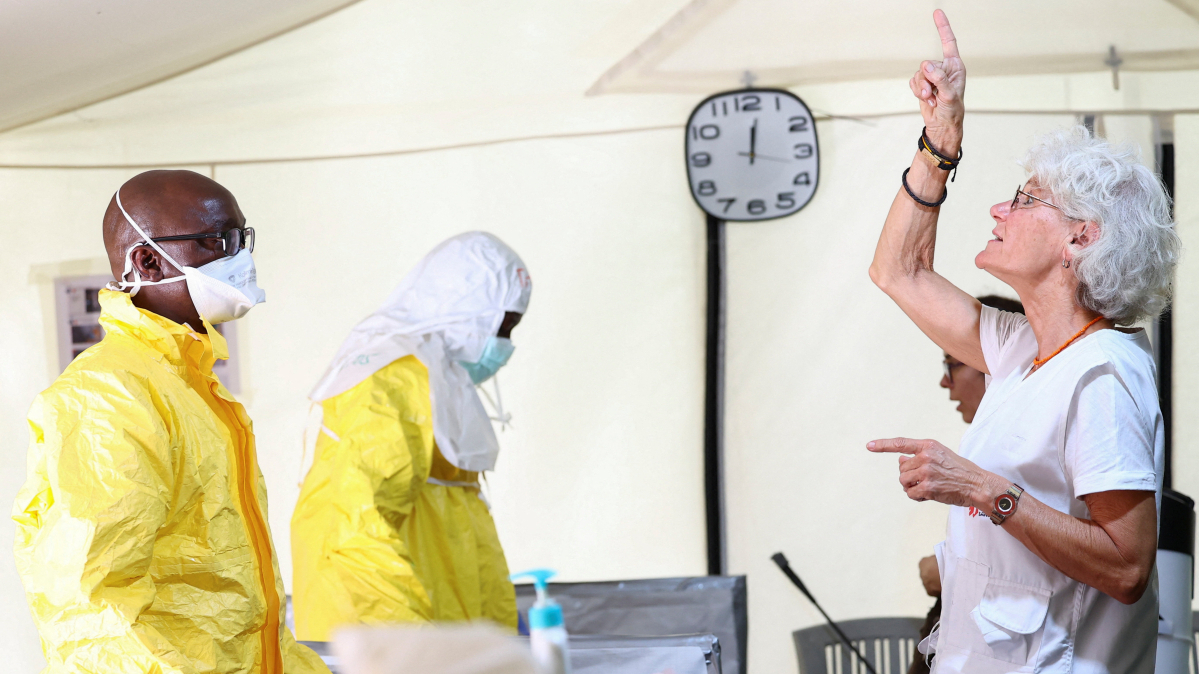
The process involves more than simply increasing numbers. Medical staff must be trained in infection prevention procedures, the use of protective equipment, laboratory operations and specialised Ebola treatment protocols.
Officials say ensuring the safety of frontline workers remains critical as they confront one of the world's most dangerous infectious diseases.
Funding and operational support under pressure
The WHO has also highlighted concerns about a limited number of international organisations capable of managing Ebola treatment centres.
According to Fontana, the shortage has been exacerbated by broader reductions in global humanitarian and development funding, making it more difficult to deploy experienced partners to outbreak zones.
While many treatment facilities have already been upgraded with water systems, solar power installations and other infrastructure improvements designed to serve communities long after the outbreak ends, more support is needed to keep centres fully operational.
Health officials are urging additional organisations to join the response effort and help provide patient care across affected regions.
They argue that every fully functioning treatment centre increases the chances of saving lives and bringing the epidemic under control.
In response to the growing crisis, the WHO and the Africa Centres for Disease Control and Prevention (Africa CDC) have launched a six-month continental preparedness and response plan.
The plan which requires hundreds of millions of dollars in funding to execute, aims not only to support efforts inside Congo but also to help neighbouring countries strengthen surveillance and preparedness measures to prevent cross-border transmission.
Although significant financial commitments have already been pledged by international partners, health officials continue to appeal for faster disbursement of funds and additional contributions to sustain operations.
No approved vaccine for current strain
Complicating the response is the fact that the outbreak involves the Bundibugyo strain of Ebola, for which there is currently no approved vaccine or specific treatment.
Unlike the Zaire strain, which has been the focus of successful vaccination campaigns during previous outbreaks, Bundibugyo remains more difficult to combat through existing pharmaceutical tools.
As a result, controlling the outbreak relies heavily on rapid case identification, patient isolation, contact tracing and public health interventions.
Read More:













What is your opinion on this topic?
Leave the first comment