The Democratic Republic of Congo is set to receive 70,000 doses of the Ebola vaccine Ervebo as health authorities race to contain what has become the country's largest Ebola outbreak on record.
The World Health Organization (WHO) announced the allocation after Congolese authorities requested access to the global Ebola vaccine stockpile amid a rapidly worsening epidemic that has already infected more than 5,000 people and killed over 2,300.
The outbreak, concentrated in eastern Congo, is being driven by the Bundibugyo strain of Ebola, a rare form of the virus for which no approved vaccine or treatment currently exists. That has complicated efforts to control the disease and increased concerns among international health agencies.
Vaccine rollout to support outbreak response
According to the WHO, the International Coordinating Group (ICG) on Vaccine Provision approved the release of 70,000 doses from the global emergency stockpile.
Of those, 20,000 doses will be used in a late-stage clinical trial to determine whether Ervebo can offer protection against the Bundibugyo virus in humans.
Ervebo, developed by Merck, is currently licensed for use against the more common Zaire ebolavirus strain and has been credited with helping contain previous outbreaks. However, scientists have not yet established whether it provides effective protection against the Bundibugyo variant responsible for the current crisis.
"It is not known whether Ervebo may be protective against the Bundibugyo virus in humans," the WHO said, stressing that the trial could provide critical evidence for future outbreak responses.
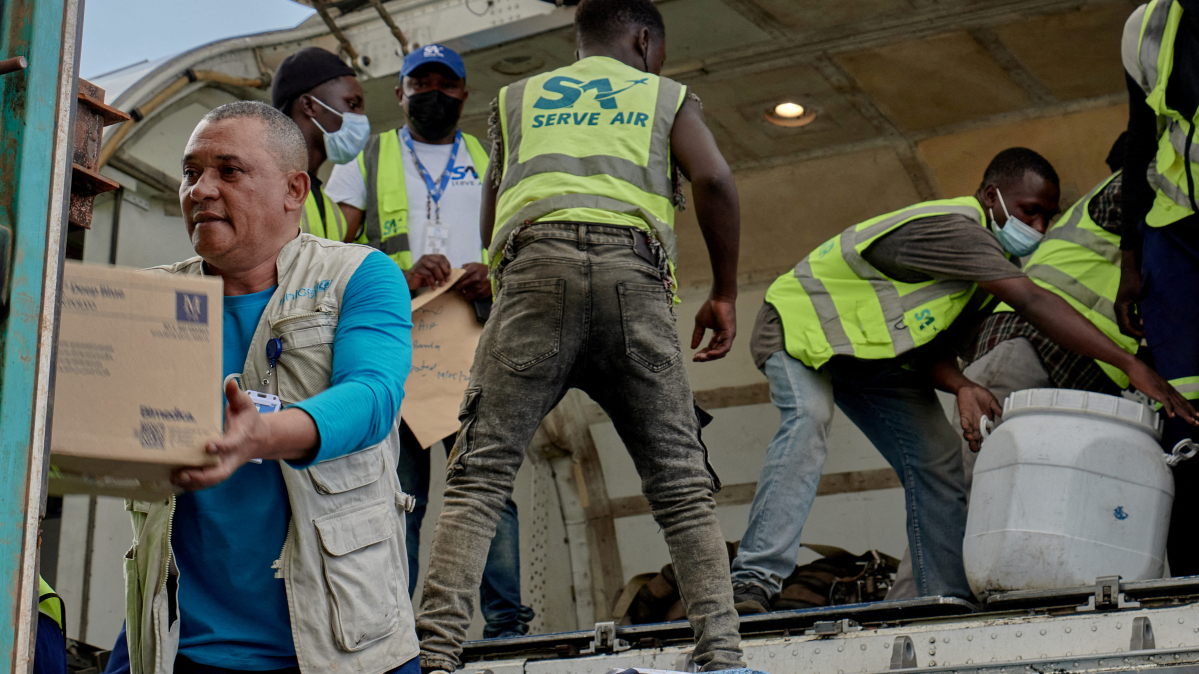
The first shipment has already begun arriving in the country. More than 16,000 doses landed in Kinshasa late Friday, with additional deliveries expected in the coming days.
Financial support from global partners
The vaccine deployment is being supported by international donors.
Gavi, the Vaccine Alliance, said it will provide $7 million to fund the transportation of the vaccine doses to Congo and an additional $6 million to support vaccination campaigns in high-risk communities.
The WHO, UNICEF, Médecins Sans Frontières and the International Federation of Red Cross and Red Crescent Societies, which together form the ICG partnership, are also involved in coordinating the response.
Health officials hope the vaccination effort will help slow transmission in affected areas, though challenges remain significant.
Largest Ebola outbreak in Congo's history
The current epidemic became Congo's biggest Ebola outbreak by case count in late July, surpassing the country's devastating 2018-2020 outbreak.
Government figures show the outbreak has now exceeded 5,000 confirmed cases, while the death toll has risen to around 2,400 people. Some reports place the number of confirmed infections above 5,300, with more than 2,500 deaths recorded.
The outbreak has spread across six provinces and continues to generate a large number of new cases.
According to Africa Centres for Disease Control and Prevention data, transmission has not yet peaked and could rise substantially if containment efforts fail.
United Nations officials have described the outbreak as unprecedented in speed and scale, warning that it continues to expand across a vast area of the country.
Global concern growing
WHO Director-General Tedros Adhanom Ghebreyesus recently reiterated that the situation remains a global health emergency.
Concerns have also been raised by world leaders and humanitarian organisations. Pope Leo used his weekly address at the Vatican to call for international support to help contain the epidemic.
The pontiff said he was praying for the people of the Democratic Republic of Congo and urged greater efforts to combat the disease as fatalities continue to mount.
Unique challenges of the Bundibugyo strain
The Bundibugyo virus presents additional difficulties for health workers because its symptoms can resemble other diseases common in the region, including malaria.
This can delay diagnosis, complicate treatment and make it more difficult to identify and isolate infected individuals early enough to halt transmission.
Health authorities are also battling community transmission in remote areas, deaths occurring outside treatment centres and disruptions to response efforts in some affected regions.
As vaccinations begin and clinical trials get underway, officials hope the arrival of the Ervebo doses will help slow the outbreak and provide crucial data on whether the vaccine can be used against future Bundibugyo-related epidemics.










What is your opinion on this topic?
Leave the first comment