Iran vows strong response to Trump’s threat, calls for global condemnation
Iranian President Masoud Pezeshkian warned that Tehran’s answer to any aggression will be decisive and “discouraging” and Foreign Minister Abbas...
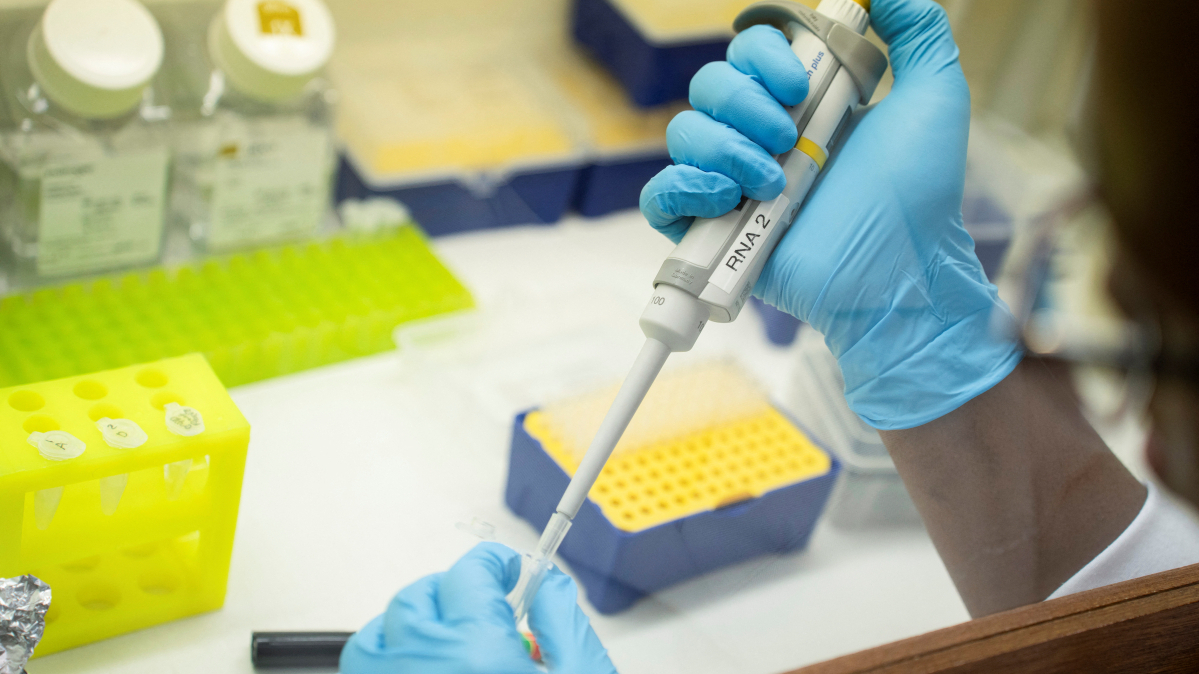
China has overtaken the United States in the volume of medical research it publishes, showing a major shift in global scientific influence, according to the chief editorial leadership of Swiss-based scientific publisher Frontiers.
The publisher’s latest assessment suggests that China has now become the world’s largest source of medical research papers, reflecting years of rapid investment and expansion across its scientific system.
Fred Fenter, Frontiers’ chief executive editor, said China produced more than a million research papers in 2024, significantly outpacing U.S. output. He described the shift not as an isolated milestone but as part of a realignment in global scientific power, with emerging research systems becoming increasingly competitive with long-established Western institutions.
China’s surge is especially visible in fields such as oncology, where it has recently become the leading producer of cancer research publications. Analysts attribute this growth to extensive government funding, large-scale clinical trial capacity and a fast-developing biomedical infrastructure supported by steady growth in postgraduate training and personnel.
Recent international studies of research collaboration also show China quickly narrowing leadership gaps with the US., UK. and Europe, taking on more central roles in cross-border scientific teams. While China has not yet caught up in every measure, the trend indicates that its influence is expanding beyond sheer output to leadership in joint projects and high-impact research.
The transformation carries significant implications. Universities and private-sector research centres are reassessing how they collaborate with Chinese institutions, while pharmaceutical and biotech companies see China’s expanding clinical research system as a rising force in global drug development.
Governments, meanwhile, are debating the strategic ramifications of China’s growing scientific footprint - from research security to technology competitiveness.

The Russian radio station known as 'Doomsday Radio' (or UVB-76) unexpectedly began playing ‘Swan Lake’, music from a ballet composition. The last time this was done was during the deaths of Soviet-era leaders and the 1991 coup.
Protests in Iran over soaring prices and a plunging rial have spread to universities in Tehran, as students join shopkeepers and bazaar merchants in demanding government action. With inflation above 42% and the rial at record lows, unrest continues to grow across the country.
As Russia’s war in Ukraine enters its fourth year, rising casualties, economic struggles, and mounting unrest expose cracks in society. Despite Kremlin propaganda, frustration is growing as more Russians question the government’s narrative, according to The Washington Post.
The head of Yemen’s Presidential Council, Rashad al-Alimi, has ordered all forces linked to the United Arab Emirates to leave Yemen within 24 hours.
European leaders held talks on Ukraine after Russia said it would revise its negotiating position, citing an alleged Ukrainian drone attack that Kyiv has firmly denied.
An international scientific-practical congress marking the 90th anniversary of the Azerbaijan State Advanced Training Institute for Doctors named after Aziz Aliyev has opened in Baku.
China has announced plans to fully cover childbirth-related costs for families as authorities move to incentivise young couples to have more children.
World Health Organization (WHO) Director-General Tedros Adhanom Ghebreyesus said on Thursday that he still hopes the U.S. administration will reconsider its decision to withdraw from the organisation next month, warning that its exit would be a loss for the world.
The United States has signed significant health cooperation agreements with Uganda and Lesotho, further strengthening bilateral relations and advancing global health initiatives, the U.S. State Department announced on Wednesday.
A viral claim circulating online that Denmark requires sperm donors to have an IQ of at least 85 is misleading. While one Danish sperm bank, Donor Network, does use an IQ threshold, there is no nationwide legal requirement for donors to meet a specific level of intelligence.
You can download the AnewZ application from Play Store and the App Store.
What is your opinion on this topic?
Leave the first comment