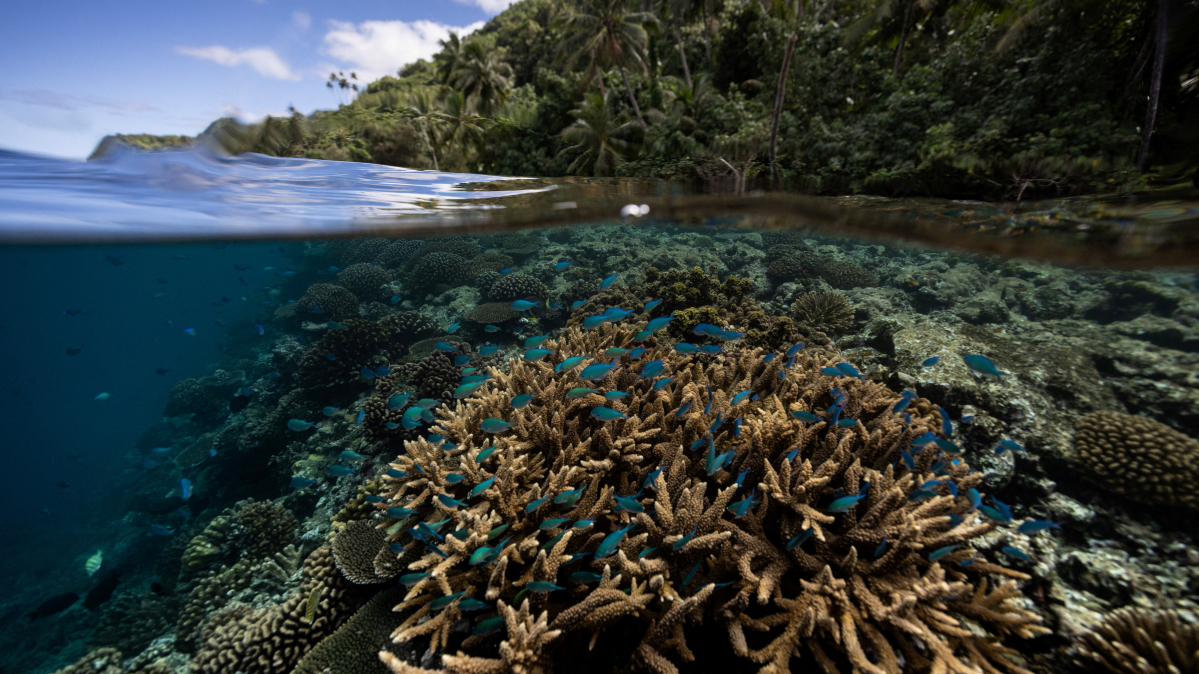
Scientists have identified almost 166,000 square kilometres of coral reefs worldwide that appear capable of surviving and recovering from the impacts of climate change, offering new hope for some of the planet's most vulnerable marine ecosystems.
The area identified is around three times larger than previous estimates, according to a study published on Tuesday.
Reefs found in more than 70 countries
Coral reefs support roughly a quarter of all marine life and play a vital role in maintaining healthy ocean ecosystems. However, they have faced increasing pressure in recent decades from rising sea temperatures, pollution, powerful tropical storms and repeated coral bleaching events.
Some researchers have warned that many reefs could face irreversible decline if current trends continue.
The new study combined data from 45,000 coral reef surveys with decades of climate and ocean records. Researchers identified climate-resilient reefs across 71 countries and 100 territories.
The findings include reef systems in parts of the Caribbean, as well as the Pacific and Atlantic oceans, that had not previously been recognised as particularly resilient.
Emily Darling, director of coral conservation at the Wildlife Conservation Society (WCS) and one of the study's authors, said the results challenge the widespread belief that coral reefs are beyond recovery.
"Coral reefs are often framed as ecosystems beyond saving," Darling said.
"This research shows otherwise: we know where the hope is and what we need now is political will."
Findings could support global conservation goals
The research comes as countries work on plans to meet the global "30 by 30" target, which aims to place 30 per cent of the world's land and marine areas under formal protection by 2030.
Scientists say the new data could help governments identify which coral reef areas should be prioritised for conservation efforts.
Darling noted that many of the resilient reefs remain outside protected zones.
"Only 28% of the reefs currently fall within protected and conserved areas, so the opportunity is clear, and so is the urgency, especially as we face an upcoming super El Nino event," she said during a briefing.
Limited resources require careful decisions
Researchers believe the findings could also help governments make better use of limited conservation funding.
Stacy Jupiter, co-author of the study and executive director of the WCS Global Marine Program, said the data can guide decisions on where protection efforts are most likely to succeed.
According to Jupiter, some reefs may be resilient enough to recover if given support, while others may already be too degraded.
"In certain cases, where reefs are below certain benchmarks for ecosystem function, it may be a case of triage, where we may need to leave those places," she said.
Scientists hope the study will encourage policymakers to act quickly, using the new information to protect the reefs with the greatest chance of surviving in a warming world.




















What is your opinion on this topic?
Leave the first comment