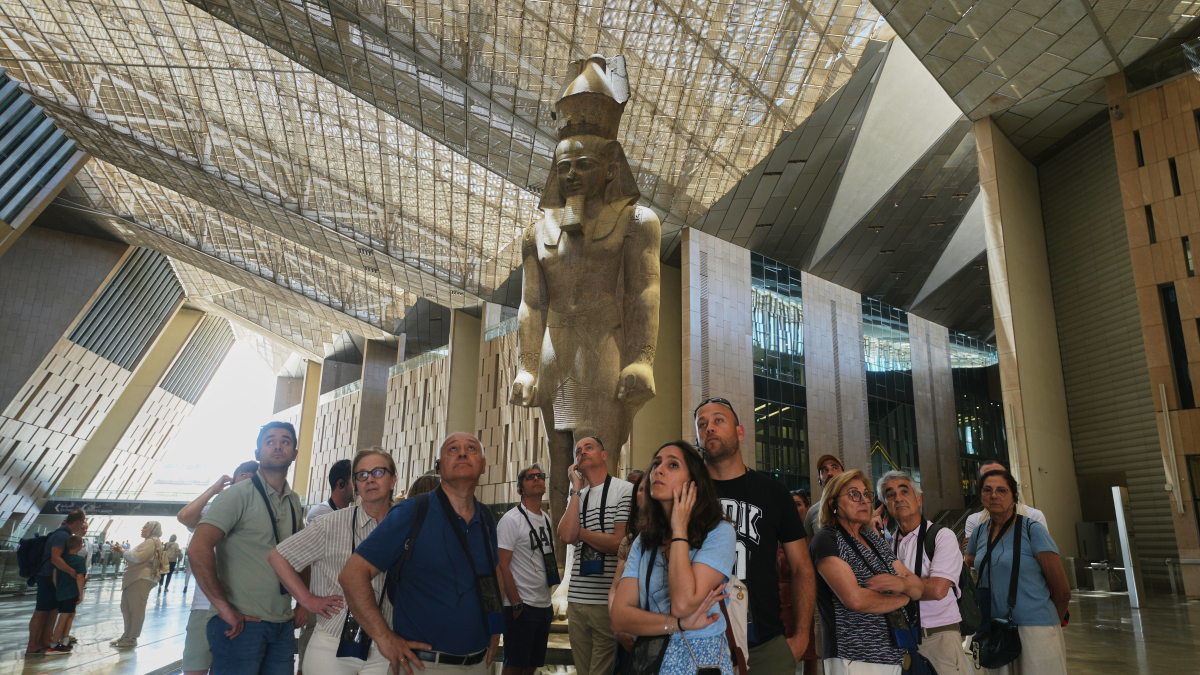
Egypt will open the long-delayed $1 billion (about £820 million) Grand Egyptian Museum on Saturday, unveiling the world’s largest archaeological complex dedicated to a single civilisation after more than 20 years of planning and construction.
Located just a mile from the pyramids of Giza, the 470,000-square-metre facility will display more than 50,000 artefacts spanning prehistoric times to the Roman era.
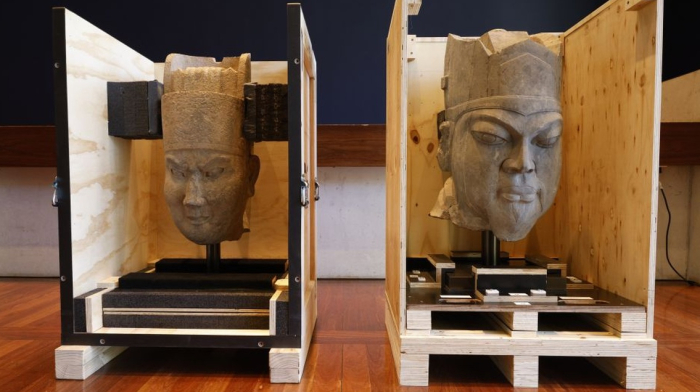
Among them are an 83-tonne, 3,200-year-old statue of Pharaoh Ramesses II and a 4,500-year-old wooden boat belonging to Khufu, the builder of the Great Pyramid.
Construction of the vast complex began in 2005, though the project was first announced in 1992. Some exhibition halls opened during a soft launch in 2024.
The main opening, repeatedly delayed, most recently in July amid regional tensions over the Gaza conflict is expected to draw world leaders, including the country's President, Abdel Fattah al-Sisi.
Museum chief executive Ahmed Ghoneim said the museum uses advanced technology and mixed-reality displays to engage younger audiences. “We’re using the language that Gen Z uses,” he told reporters.
The museum’s 24,000 sq metres of permanent exhibition space include 12 main galleries, a children’s museum, a conservation centre and conference facilities.
Many antiquities have been transferred from Cairo’s century-old Egyptian Museum in Tahrir Square, while others come from recent excavations at the Saqqara necropolis, about 14 miles (22 km) to the south.
Officials say the new attraction forms part of a broader infrastructure drive that includes a metro system and a new airport for the Giza area.
The project aims to revitalise Egypt’s tourism sector, which drew a record 15.7 million visitors in 2024. The government hopes to double that figure by 2032, with the museum expected to receive 15,000–20,000 visitors a day.
“It is a gift from Egypt to the world and we are proud to finally share it,” said Tourism and Antiquities Minister Sherif Fathy.
The launch comes amid renewed concerns over artefact security after the theft of two pieces, including a 3,000-year-old gold bracelet, from a Cairo conservation lab.
Looting during the 2011 Arab Spring also led to the loss of several antiquities.
Hassan Allam, head of the firm managing the museum, said anticipation was global: “The world has been waiting … everyone’s excited.”













What is your opinion on this topic?
Leave the first comment