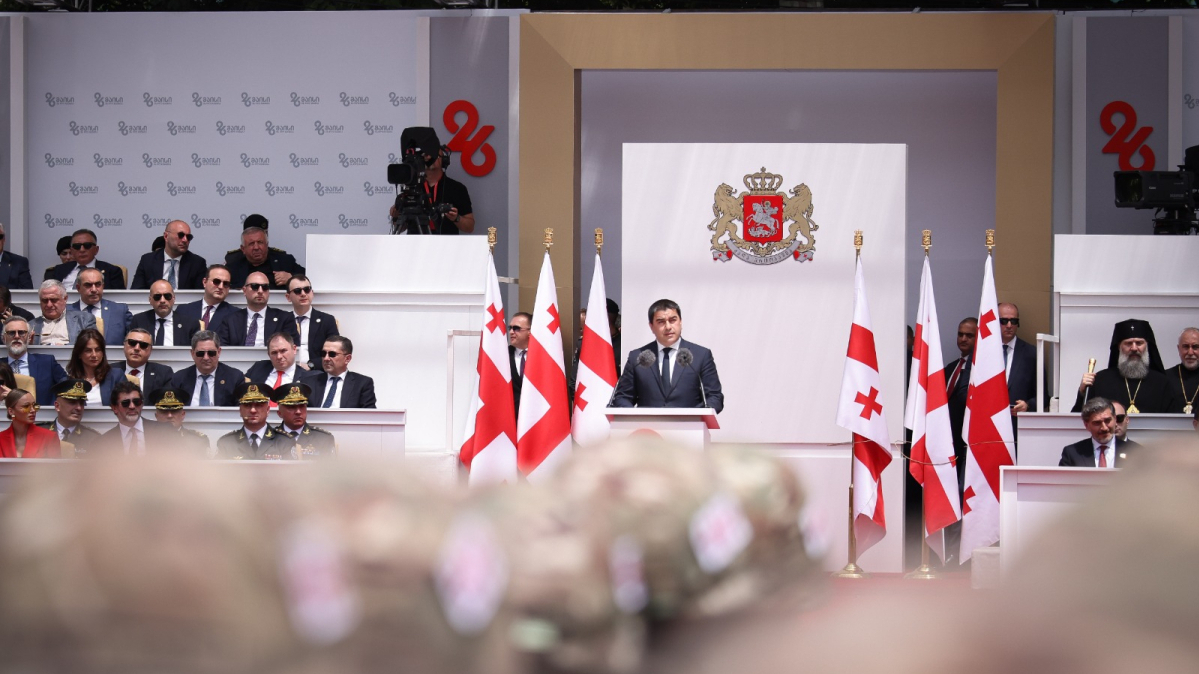
A series of statements by Georgian Parliament Speaker Shalva Papuashvili has reignited debate over freedom of speech, the role of the Orthodox Church, and the influence of the European Union.
Speaking to journalists in Tbilisi on Wednesday (7 January), Papuashvili strongly defended the Georgian Orthodox Church and the Patriarch’s warning that freedom of speech can be transformed into a destructive force when used irresponsibly.
He also criticised a post by imprisoned former President Mikheil Saakashvili, suggesting that Christmas be celebrated on 25 December instead of 7 January.
The post led to discussions about celebrating Christmas on 25 December instead of 7 January, a sensitive issue in a country where the Orthodox Church holds significant social influence.
The Speaker further criticised what he described as externally funded ideologies, accusing Brussels and EU-backed non-governmental organisations of encouraging confrontation and hostility within Georgian society.
He claimed that years of foreign funding allowed aggressive rhetoric and verbal attacks to flourish in public life, framing Georgia as a testing ground for ideological experiments.
According to the Speaker, similar polarisation has surrounded public protests, NGO activity, and international involvement in domestic affairs, reinforcing mistrust between political actors, civil society, and international partners.
"Where there is violence, the EU flag flies; where there is hatred, the EU flag flies; where there is malice and personal attacks, the EU flag flies," he said.
European institutions reject accusations of interference, maintaining that their engagement in Georgia focuses on supporting democratic institutions, freedom of expression, independent media, and civil society.
EU officials have consistently stated that pluralism and open debate are fundamental to democratic development and to Georgia’s aspirations for closer integration with Europe.
From Brussels’ perspective, criticism of NGOs and external funding raises concerns about shrinking civic space and increased pressure on independent voices, an issue repeatedly highlighted in EU reports on Georgia’s democratic progress.












What is your opinion on this topic?
Leave the first comment