The AnewZ Opinion section provides a platform for independent voices to share expert perspectives on global and regional issues. The views expressed are solely those of the authors and do not represent the official position of AnewZ
Since the United States and other Western countries remain hesitant to formally recognise and engage with the Taliban-led government, Afghanistan has been left with little choice but to look closer to home.
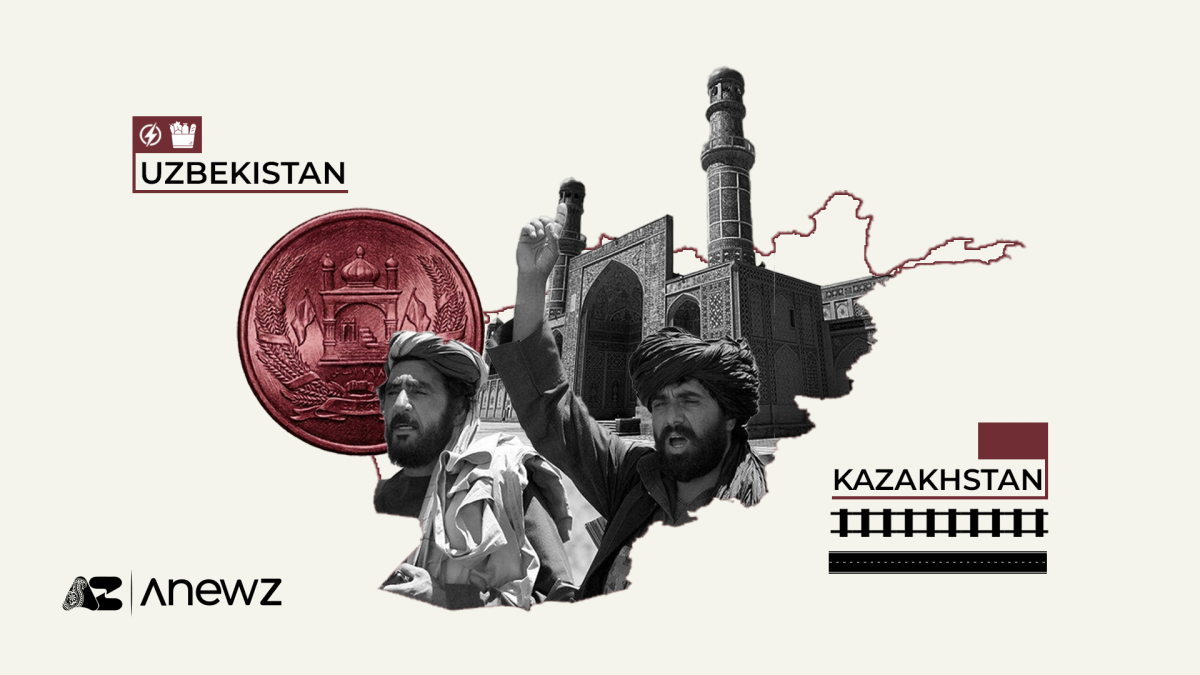
In this regional vacuum, Central Asian states have quietly but steadily increased their engagement with Kabul, particularly in trade, energy, connectivity, and, in some cases, security cooperation. What is emerging is not an ideological alignment, but a pragmatic relationship driven by geography, necessity, and shared economic interests.
Over the past four years, since the Taliban returned to power, Afghanistan’s trade patterns have shifted noticeably towards its northern neighbours. According to official Afghan trade data covering the last five years, Afghanistan’s total trade turnover reached nearly $10 billion in 2023–24, compared to just over $7.1 billion in 2019–20, showing a marked recovery despite political isolation and sanctions. While imports still dominate, exports have more than doubled in the same period, rising from $894 million in 2019–20 to over $1.8 billion in 2023–24. A significant portion of this trade growth is linked to Central Asian markets.
Trade with Uzbekistan and Kazakhstan particularly stand out. Uzbekistan has become one of Afghanistan’s most important economic partners in the north. In the past five years, Afghan exports to Uzbekistan have grown from just $2 million in 2019–20 to over $23 million in 2023–24, up 1050%.
Imports from Uzbekistan have also remained consistently high, averaging over $300 million annually during this period, largely driven by energy supplies and basic goods.
More recently, Uzbekistan’s own Statistics Committee reported that between January and November 2025, the country exported $3.1 billion worth of goods to Afghanistan, accounting for over 4.1 per cent of its total exports and placing Afghanistan among its top three export destinations. This is not symbolic trade; it is structural and growing.
Kazakhstan has followed a similar path. Afghan imports from Kazakhstan averaged nearly $400 million annually over the past five years, making it one of Afghanistan’s top ten import partners.
Beyond trade, the two sides have moved towards deeper infrastructure cooperation, including a $500 million rail investment deal aimed at improving transit and logistics links. These are long-term commitments that suggest Astana sees Afghanistan not as a temporary risk, but as a future trade corridor.
Connectivity is central to this evolving relationship. Rail and road projects linking Afghanistan with Uzbekistan, Kazakhstan, Kyrgyzstan, and Turkmenistan have gained renewed momentum. Regional rail expansion has become a key tool for engagement, with Turkmenistan signing agreements on rail extensions linked to Aqina–Andkhoy and further northern connections. The Torghundi railway project is another example, strengthening Afghanistan’s western link with Turkmenistan and beyond. These projects are not charity; they offer Central Asian states access to southern markets and ports, something geography has long denied them.
The Lapis Lazuli Corridor remains another strategic artery, connecting Afghanistan to Turkmenistan, the Caucasus, and ultimately Europe. While progress has been uneven, the corridor reflects a shared vision among regional states to reduce dependence on traditional routes and political chokepoints. In the same vein, projects such as CASA-1000 and TAPI continue to feature prominently in regional discussions. Although delays persist, the CEO of Afghanistan’s power company, Abdul Bari Omar, recently confirmed that the route map for the TAP project has been finalised and will soon be shared with Turkmenistan, signalling renewed technical engagement rather than stagnation.
Security cooperation, though sensitive, has also entered the conversation. Tajikistan, long one of Kabul’s harshest critics, has recently seen a shift in tone. Following the killing of Chinese citizens near the Afghan–Tajik border, Afghan authorities proposed cooperation with Tajik officials in counterterrorism efforts. While trust remains fragile, this development indicates a growing recognition on both sides that instability benefits no one, especially in border regions.
This regional turn is also shaped by Afghanistan’s deteriorating relations with Pakistan. Tensions over Islamabad’s allegations regarding the presence of the Tehrik-i-Taliban Pakistan (TTP), which Kabul firmly denies, have effectively paralysed bilateral trade. Border closures and restrictions have hit Afghan traders hard, cutting off what was once the country’s primary commercial artery. In this context, Central Asia is no longer an alternative; it has become a necessity. Kabul’s outreach northward is driven as much by desperation as by opportunity.
Importantly, this engagement is not one-sided. Central Asian states themselves have repeatedly signalled their desire for stable and functional relations with Kabul. Officials from Uzbekistan, Turkmenistan, and Kazakhstan have publicly endorsed trade, transit, and diplomatic engagement with Afghanistan, arguing that isolation only deepens instability. Recent high-level visits, including a high-level Kyrgyz delegation to Kabul that resulted in new trade and transit agreements, further underline this regional consensus.
Afghanistan’s growing ties with Central Asia are not a sign of geopolitical triumph, but of adaptation. In the absence of Western recognition, the country is being slowly woven into a regional economic fabric that prioritises roads over rhetoric and trade over ideology. Whether this integration will translate into broad-based economic relief for ordinary Afghans remains uncertain. However, what is clear is that Central Asia has become Afghanistan’s most realistic economic horizon, and both sides appear willing to invest in making that horizon tangible.















What is your opinion on this topic?
Leave the first comment