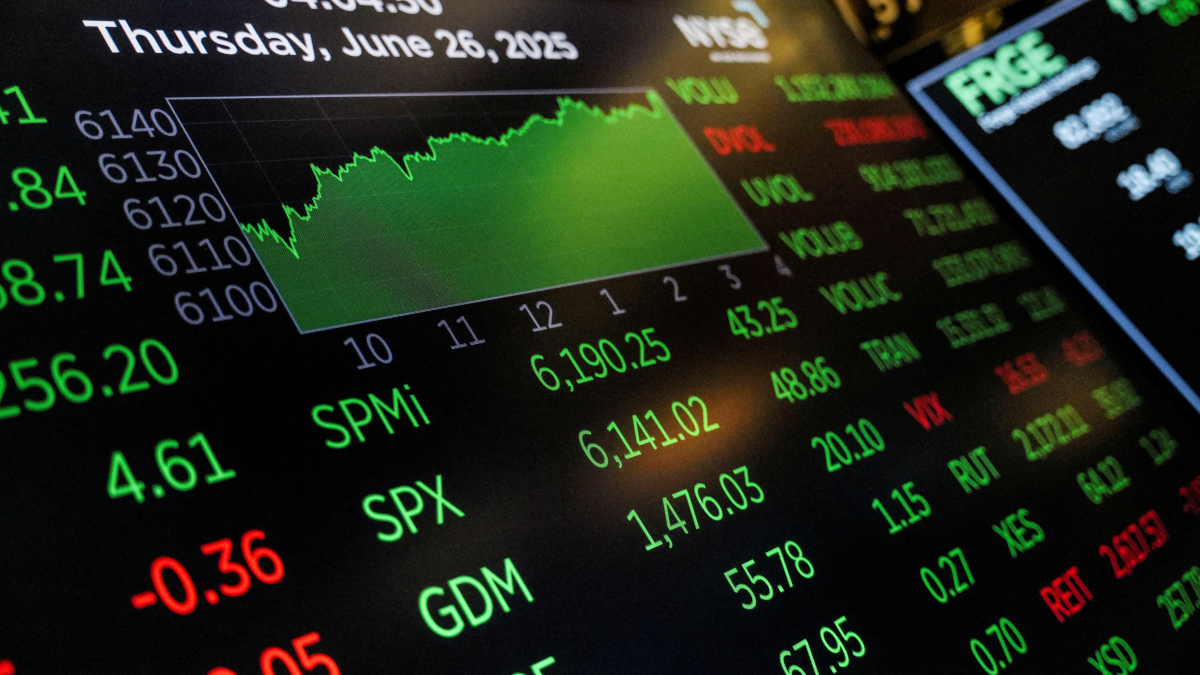
The S&P 500 edged to a record closing high on Tuesday, marking its fifth consecutive day of gains, as strong advances in technology stocks offset a sharp selloff in healthcare shares and a mixed batch of corporate earnings.
The benchmark index gained 0.41% to close at 6,978.60, while the Nasdaq Composite rose 0.91% to 23,817.10, its highest level since late October. The Dow Jones Industrial Average, however, fell 0.83%, weighed down by heavy losses among health insurers.
Healthcare stocks plunge
Healthcare stocks led declines after UnitedHealth Group shares tumbled 19.6%, dragging the Dow lower, after the Trump administration proposed changes to Medicare insurer payment rates. The move compounded concerns following UnitedHealth’s disappointing revenue outlook for 2026.
Other insurers followed suit, with Humana plunging 21% and CVS Health sliding 14.2%.
“There’s a bifurcated market today, with the Dow down because of announcements around Medicare premiums,” said Phil Blancato, chief market strategist at Osaic Wealth. “The rest of the market is holding up as investors wait for a big week of earnings.”
Tech and autos provide support
Technology stocks extended gains ahead of high-profile earnings reports later this week, with heavyweights Microsoft, Amazon, Nvidia, Apple and Broadcom providing the biggest boosts to the broader market.
The technology sector rose 1.4%, leading gains among the S&P 500’s 11 major sectors.
Corning was the top gainer in the S&P 500, surging 15.6% after the company announced a deal with Meta Platforms worth up to $6 billion to supply fibre-optic cables for AI data centres.
In the automotive sector, General Motors shares jumped 8.7% after reporting stronger-than-expected fourth-quarter core profit.
Economic data and currency moves
U.S. consumer confidence unexpectedly fell in January to its lowest level since 2014, but the data had little impact on markets, analysts said.
Investors were also encouraged by a sharp decline in the U.S. dollar, which fell more than 1% on the day. A weaker dollar tends to support U.S. equities by boosting export competitiveness.
“This currency move is really positive for S&P earnings going forward,” said Adam Rich, deputy chief investment officer at Vaughan Nelson Investment Management.
Mixed earnings elsewhere
Trading in Boeing was volatile after the company swung to a quarterly profit due to a unit sale but reported larger-than-expected losses in its core divisions. Shares ended down 1.6%.
In airlines, American Airlines dropped 7% after warning that recent winter storms would weigh on first-quarter results, despite issuing a stronger-than-expected 2026 forecast. JetBlue shares slid 6.9% after posting a wider-than-expected quarterly loss.
Logistics firm United Parcel Service projected higher revenue for 2026, but shares finished up just 0.2%, while rival FedEx rose 2.6%.
Focus turns to megacap earnings and the Fed
All eyes now turn to earnings from Meta Platforms, Microsoft and Tesla on Wednesday, which will kick off results from the so-called “Magnificent Seven” group and test the resilience of the AI-driven rally.
In total, 102 S&P 500 companies are due to report earnings this week. Of the 64 that had reported so far, 79.7% have beaten analyst expectations, according to LSEG data.
Investors are also awaiting the U.S. Federal Reserve’s policy decision on Wednesday. While rates are widely expected to remain unchanged, markets will closely watch guidance on future policy and the outlook for the U.S. economy.






















What is your opinion on this topic?
Leave the first comment