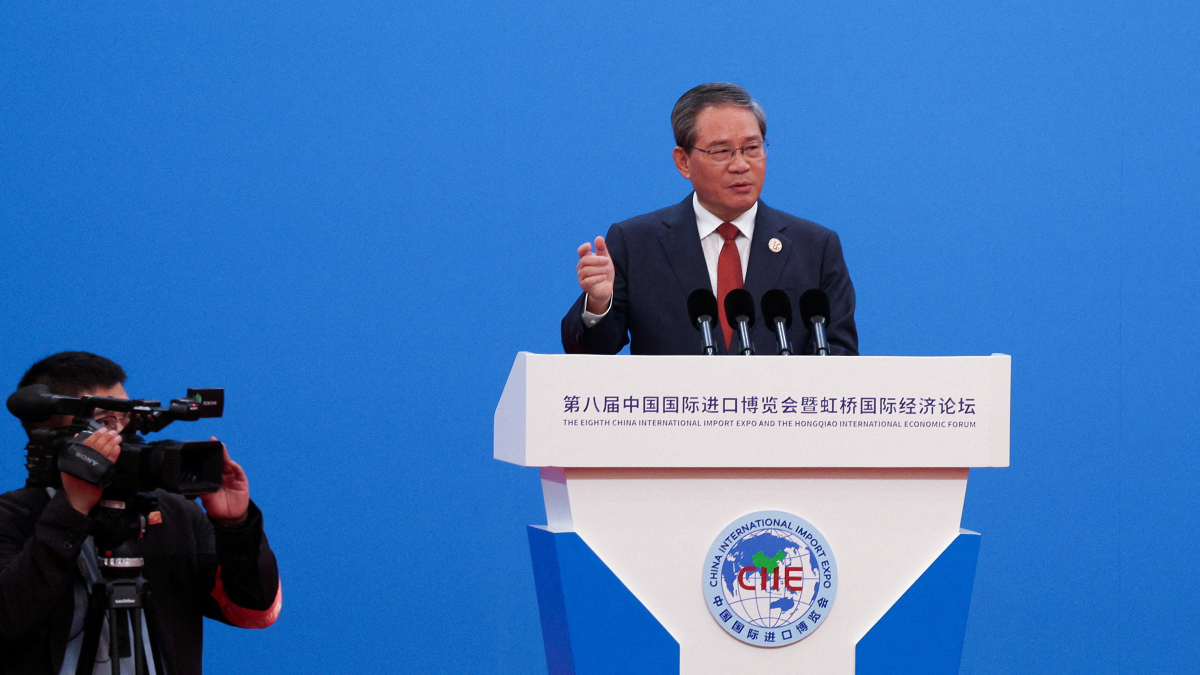
Premier Li Qiang said on Wednesday that China's economy will exceed 170 trillion yuan ($23.87 trillion) by 2030, presenting a big market opportunity for the world as trade restrictions rise globally.
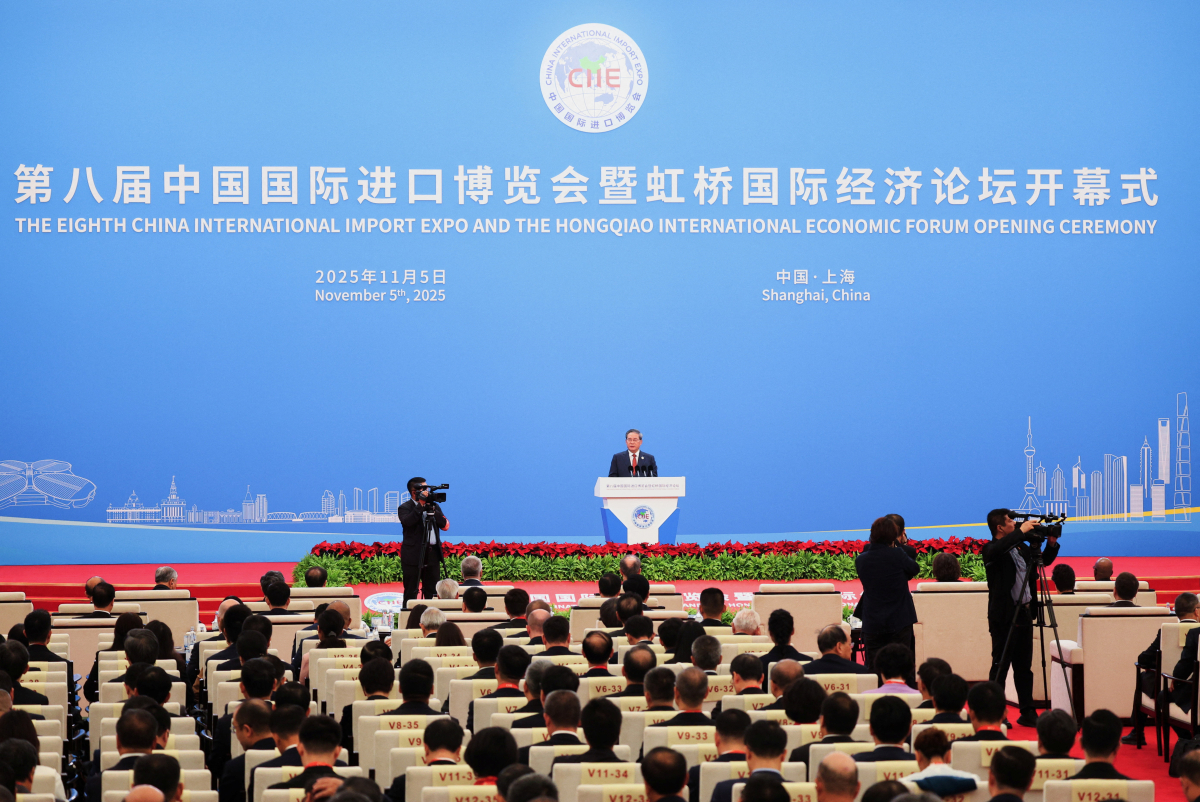
In his speech at the opening ceremony of the China International Import Expo (CIIE) in Shanghai (5 November), Li criticised tariffs and said that China wanted to reform the global economic trading system to make it more reasonable and transparent, especially for developing countries.
Tariffs are "seriously undermining international economic and trade rules, and also disrupting the normal operation of enterprises in various countries," he said, without mentioning the United States.
"In five years, China's economy is expected to exceed 170 trillion yuan, which will make new and important contributions to global economic growth," Li added.
China has said its GDP will top 140 trillion yuan this year, and the projection by 2030 is in line with proposals for its upcoming five-year plan that predicted annual growth of 4.17% over the next five years.
CIIE was launched under President Xi Jinping in 2018 to promote China's free trade credentials and counter criticism of its trade surplus with many countries.
But the expo has its sceptics, as the country's trade surpluses with other markets have only grown in the years since.
While China's supply of manufactured goods to the world is growing, its contribution to global demand is less significant, with imports barely growing - a dynamic economists have said fuels trade tension abroad and deflationary pressure back home.
China and U.S. relations
Global trade this year has been heavily disrupted by tariffs imposed by U.S. President Donald Trump and have launched the U.S. and China into a fresh trade war that has ebbed and flowed in tit-for-tat actions through this year.
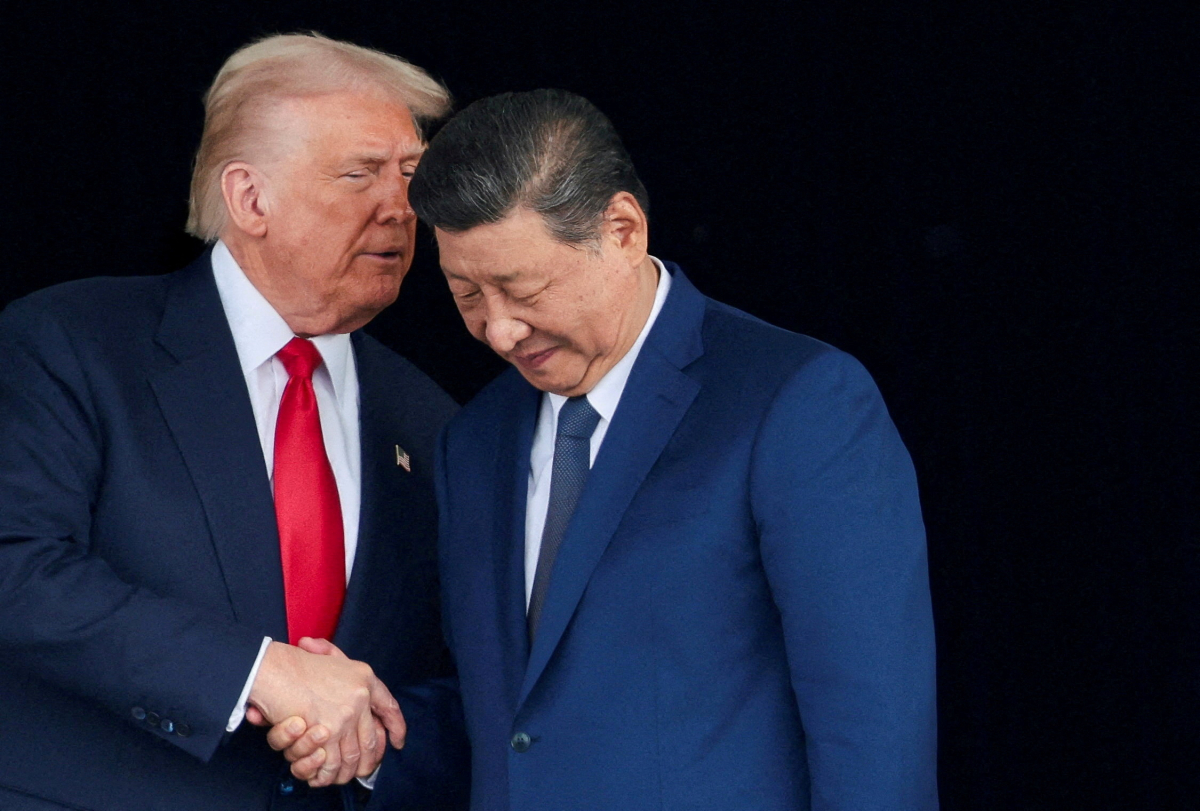
Last week, Xi and U.S. President Donald Trump met in South Korea to reach a trade truce. The U.S. agreed to reduce some tariffs on Chinese goods and pause some export controls, and China agreed to pause new export restrictions on rare earth minerals and magnets and resume purchases of American soybeans.
But analysts say it may be no more than a fragile truce in a trade war with root causes still unresolved.
Li in his speech said China wanted to increase its imports of high quality products and repeatedly stressed that it was open to business and trade.
"Let enterprises from all over the world develop in China with more peace of mind, more comfort and more confidence," he said.
China's trade surplus is set to exceed last year's record of roughly $1 trillion as exporters offset a plunge in U.S. sales due to higher U.S. tariffs by selling more to the rest of the world, often at a loss in pursuit of market share.
Exports to the U.S. fell about 27% in September versus the same month a year prior, while shipments for the European Union, Southeast Asia and Africa grew 14%, 16% and 56% respectively.
More than 155 countries, regions and organisations plan to participate in this year's CIIE, the commerce ministry said. More than 4,100 overseas enterprises will take part, with U.S. companies maintaining the largest exhibition area for the seventh consecutive year.
















What is your opinion on this topic?
Leave the first comment