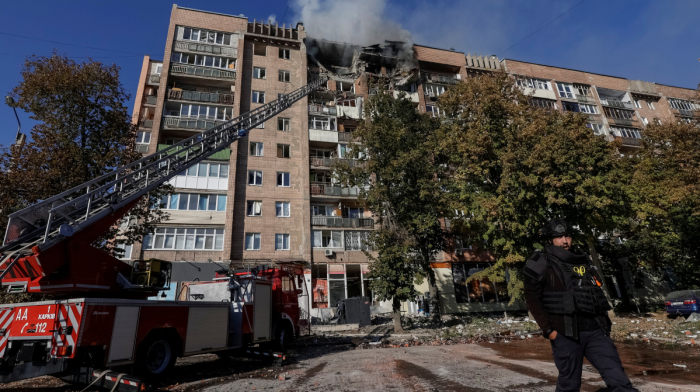
EU top diplomats voiced continued support for Ukraine after visit to Bucha to mark 2022 massacre
The European Union's top diplomat Kaja Kallas and several EU foreign ministers voiced their suppo...
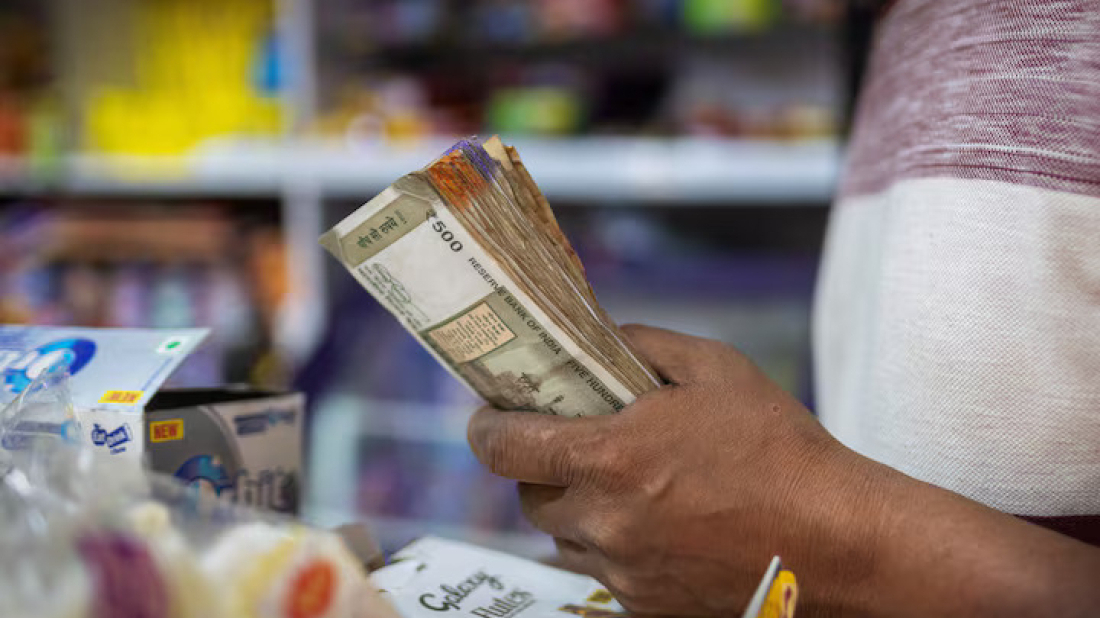
The Indian rupee is expected to open stronger on Friday, supported by gains in other Asian currencies and a temporary pause in the U.S. dollar index’s upward trend.
The one-month non-deliverable forward suggests an opening in the 86.00–86.02 range, compared to Thursday’s close at 86.0750- the rupee’s first close below 86 in nearly a month.
A currency trader at a bank noted that while the rupee may gain at the open due to regional strength, any drop in USD/INR should be viewed as a buying opportunity, citing favourable risk-reward conditions and market positioning.
The U.S. dollar index eased by 0.2% in Asian trading to 98.40, boosting most Asian currencies. This follows a sharp rally on Thursday that brought the index close to 99, driven by strong U.S. economic data, including robust June retail sales and a three-month low in jobless claims, which reinforced the narrative of a resilient labour market.
MUFG Bank commented that the U.S. data continues to reflect economic strength, although U.S. Treasury yields remained mostly flat. Markets remained steady in their expectations regarding future rate cuts by the Federal Reserve, with little change in projections for a potential rate cut in September or the total expected in 2025.
Even with Friday’s dip, the dollar index is up 0.6% for the week, following a nearly 1% gain the previous week. MUFG Bank added that persistent short positions on the U.S. dollar could reverse and provide further support to the currency.
Key indicators:
- One-month non-deliverable rupee forward at 86.08
- Onshore one-month forward premium at 10 paise
- Dollar index at 98.41
- Brent crude down 0.1% to $69.50 per barrel
- U.S. 10-year Treasury yield at 4.44%
- Foreign investors sold $121.3 million in Indian equities on July 16 (NSDL data)
- Foreign investors bought $3.5 million in Indian bonds on the same day (NSDL data)

U.S. President Donald Trump has said that the U.S is in talks with the new Iranian regime. He said this in a post on his Truth Social account but warned that the U.S. will "Obliterate" Iran's electric and oil facilities if no deal is reached, especially regarding the Strait of Hormuz closure.
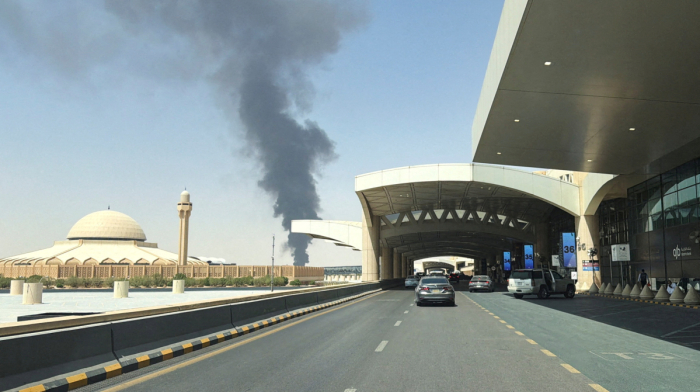
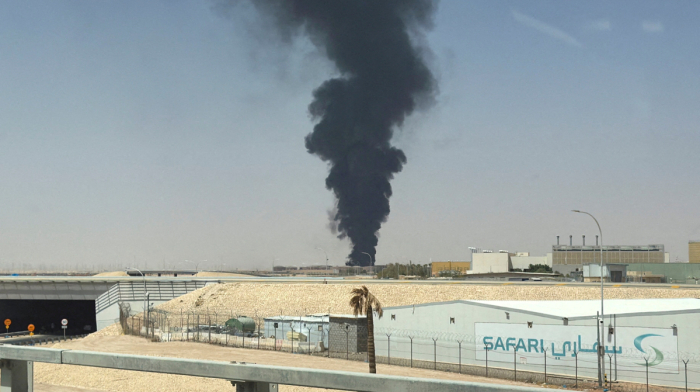
The Iran-U.S.-Israel conflict is intensifying, with fresh strikes near Tehran, European calls for restraint, and Iran threatening to target U.S. firms in the region, raising fears of a broader escalation across the Middle East.
The war in Iran has rapidly upended regional security, triggering spillover across the Middle East and raising fears of wider economic disruption that could threaten globalisation.
The Israeli military said on Monday that Iran launched multiple waves of missiles at Israel, and an attack had also been launched from Yemen for the second time since the U.S.-Israeli war began on Tehran. It said two drones from Yemen were intercepted early 30 March but gave no further details.
Japan’s growing interest in Caspian crude reflects a pragmatic response to uncertainty in global energy markets and its continued reliance on the Middle East for more than 90% of its oil imports.
The U.S. national average retail price of petrol rose above $4 a gallon for the first time in over three years on Monday (30 March), according to GasBuddy data, as the U.S.–Israeli war with Iran continued to roil global energy markets.
Japan and Indonesia will deepen coordination on energy security, Tokyo said, as the U.S.-Israeli war on Iran disrupts vital oil and gas flows to Asia.
China's three largest state-owned airlines have issued warnings regarding their financial outlook for the current year, acknowledging that the eruption of war involving Iran has driven jet fuel prices to unsustainable highs.
Stock markets across Asia fell on Monday as escalating conflict involving Iran drove oil prices sharply higher, fuelling fears of inflation and a potential global recession, with investors reacting to disruption risks in the Strait of Hormuz and prolonged hostilities.
World Trade Organization (WTO) talks broke up with no agreement on Monday on a plan for reform or even on extending a moratorium on e-commerce, piling more pressure on the trade body that finds itself increasingly sidelined by economic nationalism.
You can download the AnewZ application from Play Store and the App Store.
What is your opinion on this topic?
Leave the first comment