Three killed in San Diego Islamic Centre shooting as police confirm two teenage suspects dead
Two teenage gunmen opened fire on Monday at the Islamic Center of San Diego, California, killing a security guard ...
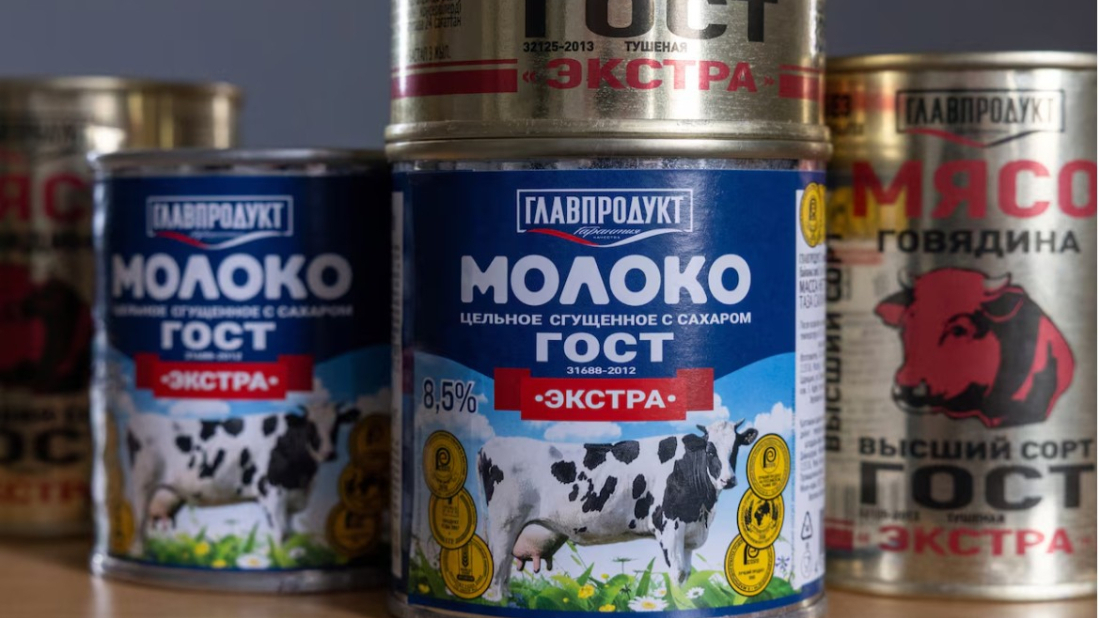
A Moscow court has ruled that the assets of U.S.-owned canned food company Glavprodukt be handed over to the Russian state, the TASS news agency reported late on Friday, ending a months-long legal tussle over the company.
One participant in the court proceedings, who declined to be named, confirmed to Reuters on Monday that the court had satisfied the prosecution's claim in full with immediate effect after a six-hour court session.
The seizure of Glavprodukt, the only U.S. company Moscow has seized, coincides with stalled attempts to reset U.S.-Russian relations.
Glavprodukt and other assets ultimately owned by U.S. company Universal Beverage and founder Leonid Smirnov were placed under temporary state management by presidential decree in October 2024.
Russia has regularly justified asset seizures by labelling companies as strategic.
Russia's Prosecutor General used similar reasoning when arguing that the preliminary court hearing for Glavprodukt should be closed to the public, according to sources familiar.
Prosecutors subsequently sought to justify the seizure to ensure stable food supply in Russia, according to a letter seen by Reuters in April.
"The court ruled that the general prosecutor's case on the seizure of Glavprodukt assets and property of its head Smirnov in favour of the state be satisfied in full," TASS quoted the court as saying. "The decision comes into force immediately."
Court filings showed Universal Beverage had applied for a postponement of proceedings, but no ruling was specified. The court did not immediately respond to a request for comment. Smirnov's legal team did not immediately respond to a request for comment outside U.S. business hours.
Since being placed under state management, Glavprodukt's sales have dropped sharply and the company has started posting a regular monthly loss, according to documents seen by Reuters last week.
In spite of the state seizure aimed at securing food supplies for Russia, the new management team plans to boost dwindling sales with exports to China and North Korea, according to documents reviewed by Reuters and people familiar with the matter.
Bulgaria has won the Eurovision Song Contest for the first time, taking victory in a final overshadowed by a boycott over Israel’s participation and the war in Gaza.
The World Urban Forum (WUF13) continues in Baku, Azerbaijan on 18 May, addressing the global housing crisis. The day’s agenda includes the official opening press conference, the WUF13 Urban Expo opening and a ministerial dialogue on the Nairobi Declaration to advance Africa's urban agenda.
U.S. President Donald Trump said on Monday he had paused a planned attack on Iran after appeals from the leaders of Qatar, Saudi Arabia and the United Arab Emirates, allowing negotiations to continue over a possible deal to end the conflict.
A 5.2 magnitude earthquake struck China’s Guangxi region early on Monday, killing two people and forcing more than 7,000 residents in Liuzhou to evacuate as rescue efforts continued.
The World Health Organization (WHO) has declared an Ebola outbreak in the Democratic Republic of Congo (DRC) and Uganda a Public Health Emergency of International Concern (PHEIC), warning that the situation poses a significant risk of cross-border spread in Central Africa.
Government bond markets from Tokyo to New York extended losses on Monday (18 May) as rising energy prices linked to the Middle East conflict heightened inflation concerns and reinforced expectations that major central banks could keep interest rates higher for longer.
Negotiations between Samsung Electronics and its workforce on Wednesday have broken down, officials said, raising fresh concerns over potential disruption to South Korea’s export-heavy economy.
By the time American shoppers began noticing higher prices on everything from trainers to televisions, the world's two largest economies were already deep in a trade war that left the world wondering how it would end.
The Strait of Hormuz remains a vital maritime chokepoint and serves as the primary artery linking the Persian Gulf to international energy markets. With approximately 20% of global oil and gas shipments transiting this waterway, it is the backbone of energy security for Asia, Europe, and beyond.
China’s exports grew faster than expected in April, as overseas buyers moved quickly to secure supplies amid fears that the conflict involving Iran could drive up global energy and transport costs.
You can download the AnewZ application from Play Store and the App Store.
What is your opinion on this topic?
Leave the first comment