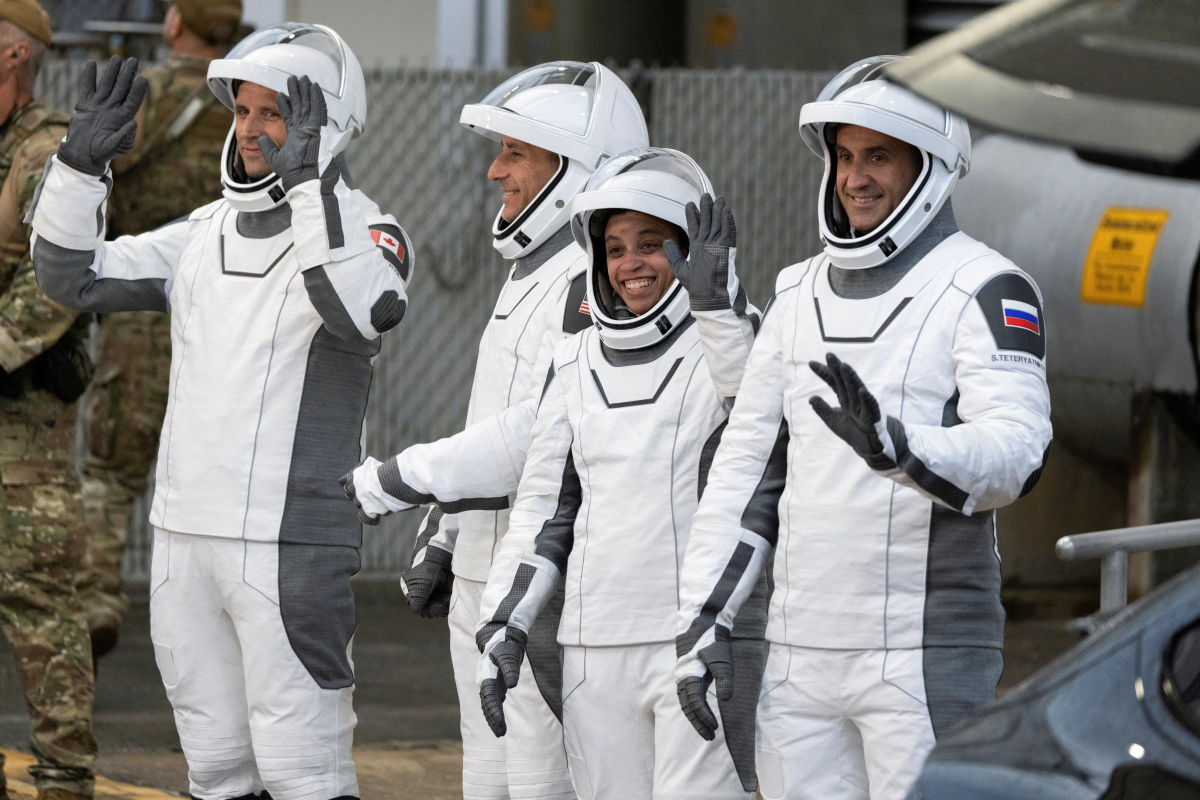
A four-person crew aboard SpaceX's Crew-13 mission, consisting of two U.S. astronauts, a Canadian astronaut and a Russian cosmonaut, arrived at the International Space Station (ISS) on Thursday (1 October), for a long-duration science mission focused on human health and performance in orbit.
A live webcast showed the NASA astronauts Jessica Watkins and Luke Delaney, Canadian astronaut Joshua Kutryk and Russian cosmonaut Sergey Teteryatnikov boarding the ISS, welcomed aboard the space station by seven current occupants of the orbital outpost, including the four members of Crew 12 who are due to fly back to Earth soon as their seven-month-plus mission comes to an end.
“That was a super quick trip. It is hard to believe that we are already here,” said Watkins, the commander of Crew 13. The eight-hour trip set a U.S. speed record.
“We are so excited to be here, this is truly a special place. I'm excited to be back, excited to be sharing this place with my Crew-13 crewmates for the first time, Josh, Sergei and Luke," she said.
"Thank you Expedition 75 for such a warm welcome, we are happy to join you guys and get to work as soon as possible, so thank you so much."
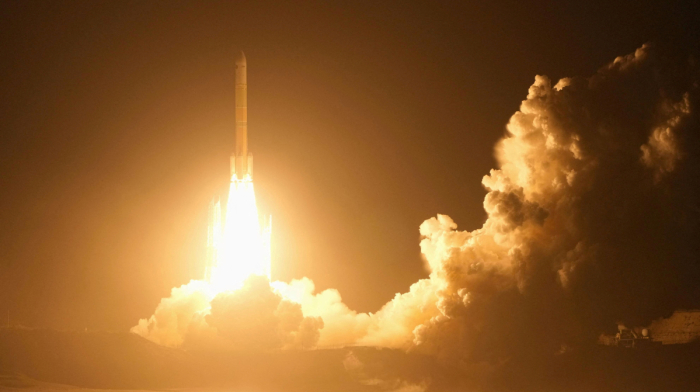
SpaceX Falcon 9 rocket lifted off from Cape Canaveral in Florida. Within three minutes of launch, the rocket’s reusable first-stage booster separated from the spacecraft and began its return to Earth, successfully flying itself back for a landing.
The Falcon 9’s upper stage continued towards orbit with the Crew Dragon and its four passengers.
Mission focuses on human health in space
The crew will conduct scientific research aboard the International Space Station (ISS), with a particular focus on how extended periods in orbit affect human health and performance.
The flight marks the 13th long-duration ISS crew NASA has launched aboard a SpaceX vehicle since the company began carrying U.S. astronauts into orbit in May 2020.
The mission also comes just days after SpaceX reached another milestone with its next-generation Starship spacecraft.
Starship completed its first trip to orbit and carried out its first commercial satellite deployment during its 14th uncrewed test flight since the programme began conducting launches in 2023.
The developments come as SpaceX continues to operate regular crewed missions to the ISS while simultaneously testing Starship, the much larger spacecraft being developed for future missions beyond low-Earth orbit.
Read more on SpaceX:




















What is your opinion on this topic?
Leave the first comment