Here's your AnewZ Daily Brief for 13 October 2026 with the top five science and technology news happening around the world.
NASA’s Perseverance rover breaks Mars driving record
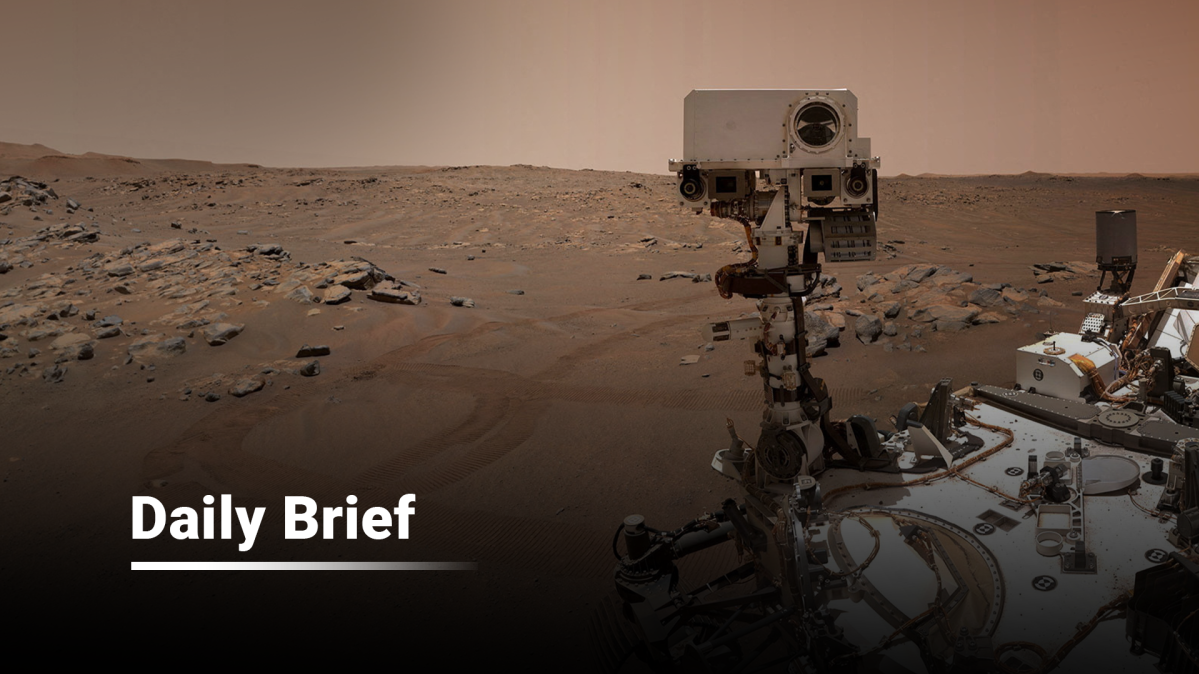
NASA’s Perseverance rover has travelled 28.1 miles (45.2 kilometres) across Mars since landing in 2021, surpassing the previous record held by the Opportunity rover. The six-wheeled robot is exploring Jezero Crater, searching for evidence of ancient microbial life and studying the planet’s geological history. NASA says the rover remains in excellent condition, with its autonomous navigation system handling about 90 per cent of its drives without human intervention.
Anthropic warns AI models could soon self-replicate
Anthropic said its experiments suggest small AI models could become capable of autonomously replicating across vulnerable internet-connected devices within months. The tests found that models with fewer than 30 billion parametres could complete individual steps required for replication but struggled to execute the entire process independently. The company warned that self-replicating AI could be difficult to contain because it might identify and exploit unfamiliar devices without human assistance.
China-linked hackers breach Fiji network
China-linked hackers accessed a regional organisation’s network in Suva, Fiji, for several days between July and August 2026, the U.S. Embassy in Fiji said. The embassy notified the Fijian government and the affected organisation, providing technical recommendations to strengthen network security, but did not identify the organisation. The incident follows other reported cyber activities attributed to Chinese-linked groups, including attacks on critical infrastructure and attempts to steal passwords from experts and professionals. Fiji’s government had not immediately commented on the reported breach.
Trump plans to move AI safety officials to White House
U.S. President Donald Trump’s administration plans to transfer three senior officials from the Centre for Advancing Innovation and Standards for Super Intelligence (CAISSI) to the White House, according to reports by The Information. The move reportedly aims to improve coordination between the Commerce Department and the White House on AI policy and decision-making. CAISSI evaluates advanced AI models for safety and capabilities before their deployment. The report comes as the administration steps up efforts to coordinate federal AI policy and maintain U.S. leadership in the technology.
UK AI institute gains access to latest models
Britain’s AI Security Institute has gained access to the latest advanced AI models and is working with the U.S. government and major developers, including Google, to evaluate their safety, AI Minister Kanishka Narayan said. The institute aims to identify potential risks, test safeguards and help establish international AI safety standards before new models are released. The announcement follows concerns over access restrictions reportedly imposed on British testers by the White House and growing scrutiny of unexpected behaviour by advanced AI systems.




















What is your opinion on this topic?
Leave the first comment