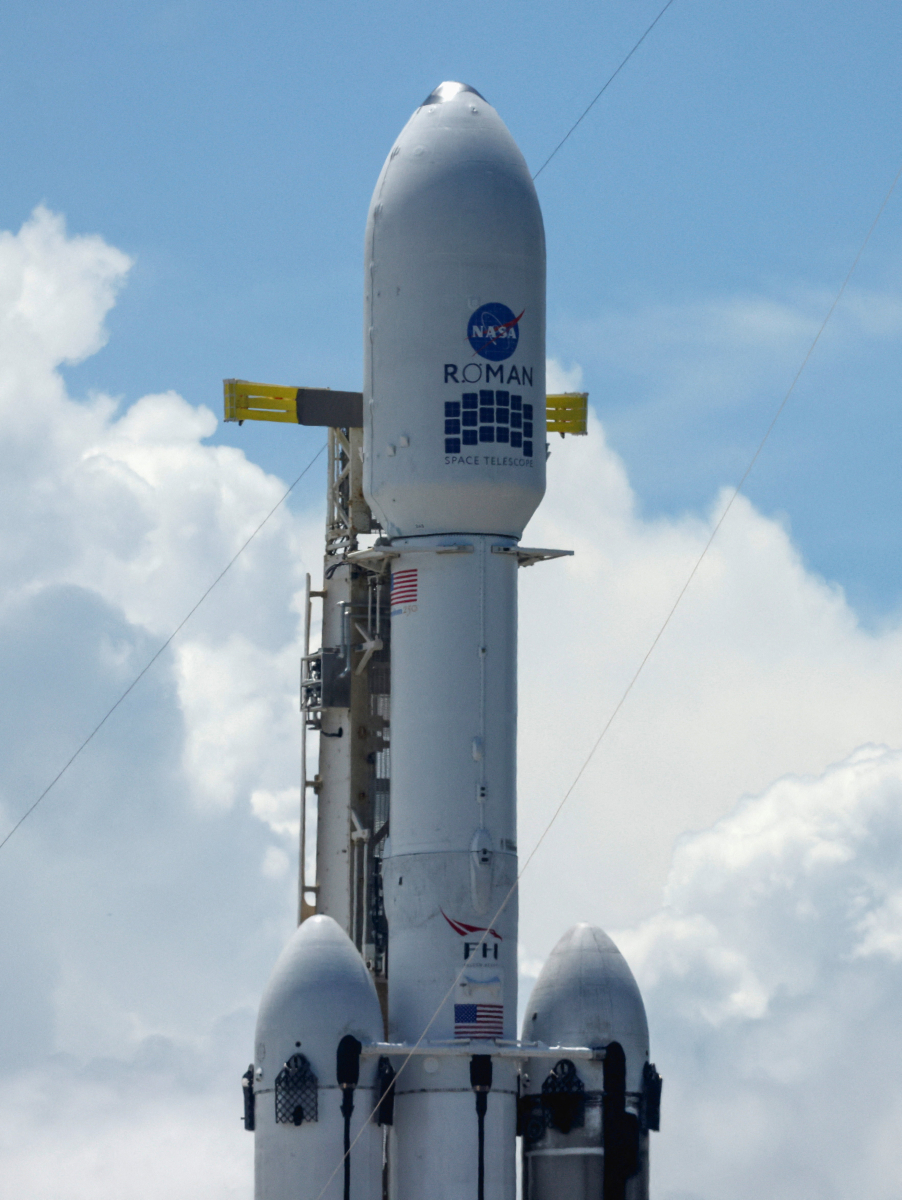
NASA's new flagship astronomical observatory was launched into space from Florida on Sunday on a mission to probe some of the biggest mysteries in astrophysics and cosmology.
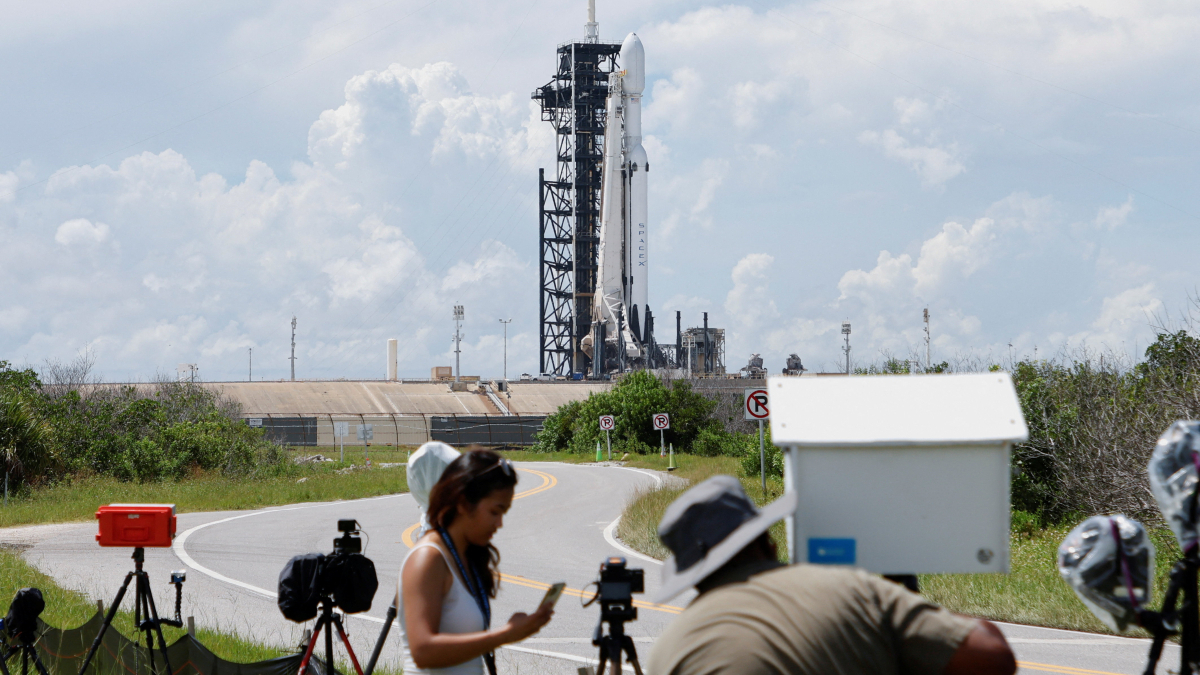
The Nancy Grace Roman Space Telescope, a roughly $4 billion mission, is scheduled to launch on Sunday (30 August) from NASA’s Kennedy Space Center in Florida aboard a SpaceX Falcon Heavy rocket.
According to NASA officials, the mission is ready for launch around nine months earlier than originally planned.
Roman will follow in the footsteps of the Hubble Space Telescope and the James Webb Space Telescope, but its ability to observe enormous areas of the sky at high speed could give scientists a completely new view of the universe.
What is the Nancy Grace Roman Space Telescope?
The Roman Space Telescope is NASA’s next major space observatory and is designed primarily to survey large sections of the cosmos.
It is named after Nancy Grace Roman, NASA’s first chief astronomer, who played an important role in the development of space-based astronomy and is often referred to as the “mother of Hubble”. She died in 2018 at the age of 93.
Roman builds on decades of discoveries made by Hubble, launched in 1990, and the James Webb Space Telescope, launched in 2021.
However, the three observatories have different strengths.
While Hubble and Webb can examine relatively small areas of the sky in extraordinary detail, Roman is designed to capture much wider views. This will allow astronomers to survey vast regions far more quickly and identify objects and phenomena that can later be studied in greater detail.
Its combination of sensitivity, image quality and wide field of view is expected to make Roman particularly effective at finding rare or unusual objects across the universe.
Julie McEnery, Roman’s Senior Project Scientist at NASA’s Goddard Space Flight Center, said the telescope’s enormous reach would allow scientists to find “the weird, the rare and the unusual”.
Why is Roman different from Hubble and Webb?
One of Roman’s biggest advantages is the amount of sky it can observe at once.
Its main instrument is designed to conduct wide-field surveys capable of examining huge populations of galaxies, stars and planetary systems.
Rather than concentrating mainly on individual astronomical targets, Roman will repeatedly scan large areas of space, creating an enormous database that scientists can use to study how the universe is structured and how it has changed over billions of years.
The telescope’s main survey is expected to take more than a year.
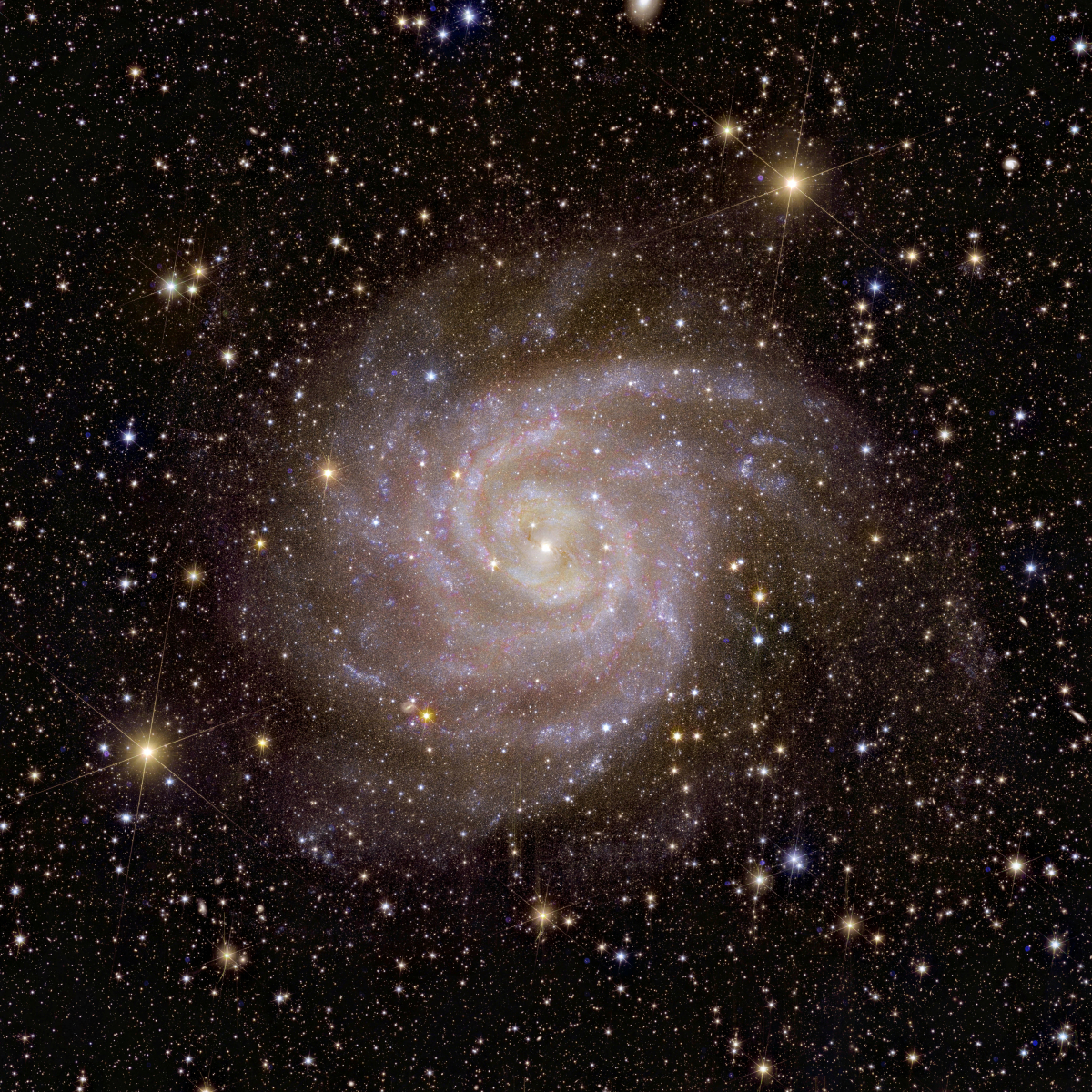
Scientists say the resulting observations could contain more than two billion galaxies.
By studying such a vast sample, researchers will be able to examine how stars, galaxies and clusters of galaxies formed and evolved over cosmic history.
The telescope will also measure how the universe’s expansion has changed over time, information that could provide crucial clues about dark energy.
What is dark energy?
Dark energy is one of the biggest mysteries in physics. The universe began with the Big Bang roughly 13.8 billion years ago and has been expanding ever since.
For much of the 20th century, astronomers expected gravity to gradually slow that expansion.
But in 1998, researchers studying distant supernovae discovered something unexpected: the expansion of the universe appeared to be accelerating.
Scientists proposed an unknown form of energy, now called dark energy as the possible explanation.
Dark energy is thought to make up around 68 per cent of the universe, yet scientists still do not know what it actually is.
One of Roman’s central goals is to determine whether dark energy is a constant property of empty space or whether its behaviour has changed during the history of the universe.
That question has become particularly important following recent observations by the Dark Energy Spectroscopic Instrument, or DESI, which have produced indications that dark energy may evolve over time.
If those hints are confirmed, scientists may have to reconsider some of their fundamental assumptions about how the universe works.
What is dark matter?
Dark matter represents another major cosmic mystery. Unlike ordinary matter, it does not appear to emit, absorb or reflect light, which means astronomers cannot observe it directly with conventional telescopes.
Its existence is instead inferred from its gravitational effects.
The movements of stars and galaxies suggest that far more matter exists than can actually be seen.
Scientists estimate that ordinary matter, including stars, planets, gas, dust and everything on Earth makes up only around 5 per cent of the universe.
Dark matter is believed to account for roughly 27 per cent, while dark energy makes up most of the remaining 68 per cent.
Roman will help scientists investigate dark matter by studying the distribution of galaxies and observing how gravity bends light travelling through the universe.
How could Roman test Einstein’s theory of gravity?
Albert Einstein introduced his theory of general relativity in 1915, fundamentally changing scientists’ understanding of gravity.
More than a century later, the theory continues to successfully explain gravitational phenomena ranging from planetary motion to black holes.
But scientists still want to know whether general relativity works perfectly across the largest distances in the universe.
Roman could help provide an answer.
The telescope will map how galaxies are distributed across billions of light-years and study a phenomenon known as gravitational lensing.
Gravitational lensing occurs when the gravity of massive objects such as galaxies or galaxy clusters bends the path of light coming from objects behind them.
By measuring these distortions, scientists can determine how matter, including invisible dark matter is distributed.
Researchers can then compare those observations with predictions made by Einstein’s theory.
If the measurements do not match those predictions, it could indicate that the current theory of gravity needs to be modified on extremely large cosmic scales.
Cosmologist Mustapha Ishak of the University of Texas at Dallas, who is involved in Roman’s scientific collaboration, described the issue as one of the most fundamental questions in physics: what law governs the universe on its largest scales?
Could Roman find thousands of new planets?
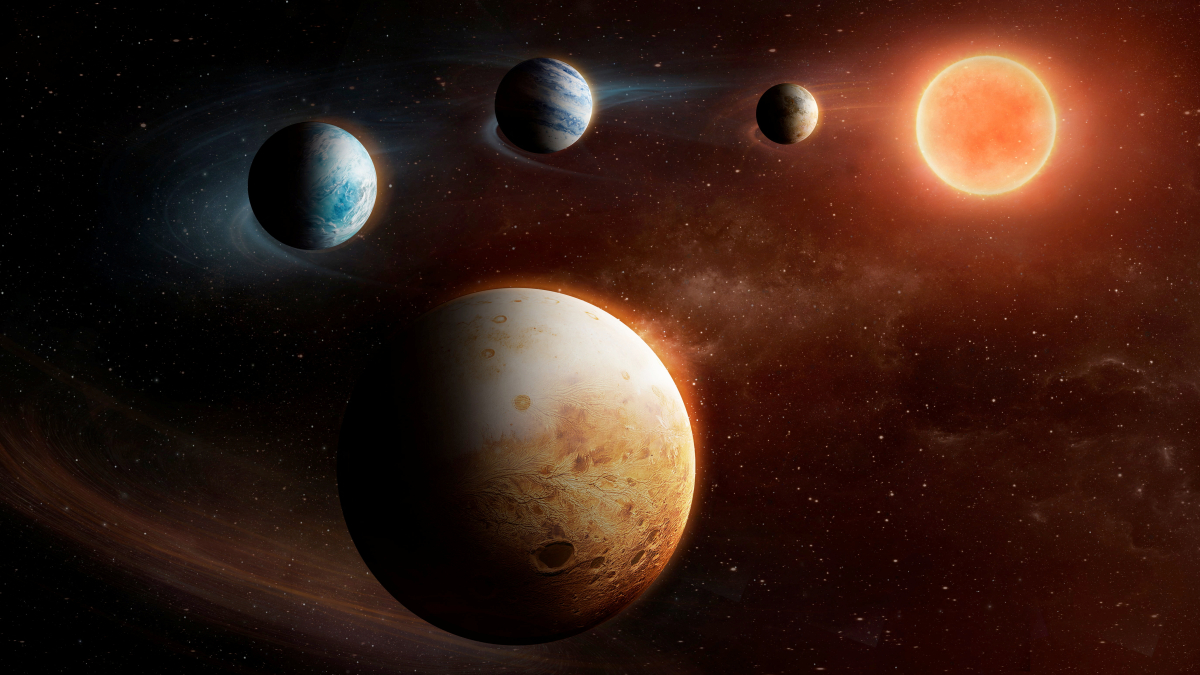
Roman will also carry out one of the most extensive searches ever conducted for planets beyond the solar system.
More than 6,350 exoplanets have already been confirmed, ranging from enormous gas giants to rocky worlds roughly the size of Earth.
But astronomers still do not have a complete picture of how common different types of planetary systems are.
Roman is expected to discover thousands of additional exoplanets.
One of its main techniques will involve gravitational microlensing.
This happens when the gravity of a foreground star temporarily magnifies the light from a more distant star. If a planet is orbiting the foreground star, its gravity can produce an additional signal in the magnified light.
The method is particularly useful for detecting planets that may be difficult to find using other techniques.
By surveying millions of stars, Roman could provide the first broad statistical census of planetary systems comparable with our own.
That could help scientists determine how common solar-system-like arrangements are across the Milky Way.
Will Roman photograph planets directly?
Roman will also test technology aimed at directly imaging some exoplanets relatively close to Earth.
Observing an exoplanet directly is extremely difficult because stars are vastly brighter than the planets orbiting them.
Roman will carry a coronagraph technology demonstration designed to block out much of a star’s light so that much fainter objects nearby can be detected.
The instrument is primarily intended to demonstrate technologies that could eventually be used on future missions searching for Earth-like planets.
If successful, the technology could be an important step towards telescopes capable of directly examining potentially habitable worlds and analysing their atmospheres for possible signs of life.
Where will the Roman telescope operate?
After launch and separation from its rocket, Roman will travel approximately 1.6 million kilometres from Earth to a region known as the second Sun-Earth Lagrange point, or L2.
The James Webb Space Telescope also operates around this location.
L2 provides a stable environment where a spacecraft can remain broadly aligned with the Earth and Sun while using relatively little fuel to maintain its position.
It is around four times further from Earth than the Moon.
Hubble, by contrast, operates much closer to Earth in low-Earth orbit.
Operating at L2 will give Roman a relatively unobstructed view of space and help provide the stable conditions needed for precise astronomical observations.
How long will the mission last?
Roman’s primary mission is planned to last five years.
NASA has said the telescope could carry enough fuel to continue operating for another five years, potentially extending the mission to around a decade if the spacecraft remains healthy and further funding is approved.
Its large-scale surveys are also expected to create a scientific archive that researchers could continue studying long after the telescope itself stops operating.
Because Roman will repeatedly map enormous areas of space, the observatory may also detect phenomena that were not part of the mission’s original scientific objectives.
These could include exploding stars, distant galaxies, wandering planets, unusual gravitational events or objects scientists have yet to anticipate.
Why has the Roman telescope faced political uncertainty?
Despite its scientific ambitions, Roman has faced repeated funding uncertainty in Washington.
U.S. President Donald Trump’s administrations sought to reduce or eliminate funding for the programme during both his first and second terms.
Congress, however, continued to provide funding for the telescope, allowing development to proceed.
The mission has now reached the launch stage at an estimated cost of around $4 billion.
Its arrival in space will place another major observatory alongside Hubble and Webb, creating three complementary tools for studying the universe.
What could Roman ultimately tell us?
Roman’s importance lies not in answering a single question but in addressing several fundamental problems at once.
Scientists hope its observations will help determine what dark energy is, reveal how dark matter is distributed, test whether Einstein’s theory of gravity remains accurate across billions of light-years and establish how common different types of planetary systems are.
Its enormous surveys could also uncover objects and phenomena that astronomers do not yet know to look for.
For decades, telescopes such as Hubble and Webb have transformed astronomy by looking deeper into space.
Roman will add another capability: looking broadly. By observing billions of galaxies, millions of stars and thousands of distant worlds, the telescope could provide scientists with one of the most comprehensive maps yet of how the universe is built and perhaps bring them closer to understanding why it behaves the way it does.





















What is your opinion on this topic?
Leave the first comment