For now, Earth is the only confirmed cradle of life in the universe, but every new discovery of distant worlds brings us closer to answering one of humanity’s oldest questions: could some of them be home to intelligent beings?
For all our space probes, telescopes, and planetary missions, there’s still only one place we know that teems with life: Earth. Yet, every time we look deeper into the cosmos, we find more worlds that could, in theory, host life — and perhaps even intelligent life.
What we mean by “life” – and why that’s tricky
Ironically, scientists don’t have a single, universal definition of life. On Earth, we recognise it through things like metabolism, growth, reproduction, and adaptation. But life elsewhere might operate in entirely different ways. That’s why astrobiologists often focus not on life itself, but on biosignatures — chemical fingerprints in a planet’s atmosphere or surface that might hint at biology.
“We want to always be cautious with making extraordinary claims,” said Laura Schaefer, assistant professor of Earth and planetary sciences at Stanford University. “A tantalising hint is not the same as proof.”
Our tools for the search
The James Webb Space Telescope (JWST), launched in 2021, has opened a new chapter in this search. By analysing the light passing through an exoplanet’s atmosphere, Webb can detect gases such as oxygen, carbon dioxide, methane — even complex molecules that on Earth are linked to living processes.
Future observatories, such as NASA’s proposed Habitable Worlds Observatory or the ambitious Nautilus telescope constellation, aim to examine hundreds of potentially Earth-like planets for these tell-tale signals.
“These and other future telescopes aim to provide more sensitive studies of more alien worlds,” explained an astrophysicist leading NASA’s Alien Earths project. “The question is not just ‘where to look,’ but whether the environments where we think we see signs of life are actually habitable.”
Close encounters in our cosmic neighbourhood
While most headlines focus on far-off exoplanets, life could also be lurking closer to home — beneath Mars’s surface, or in the dark oceans of Jupiter’s moon Europa or Saturn’s Enceladus. Any discovery here would reshape our understanding of how common life might be.
The habitable zone — and beyond
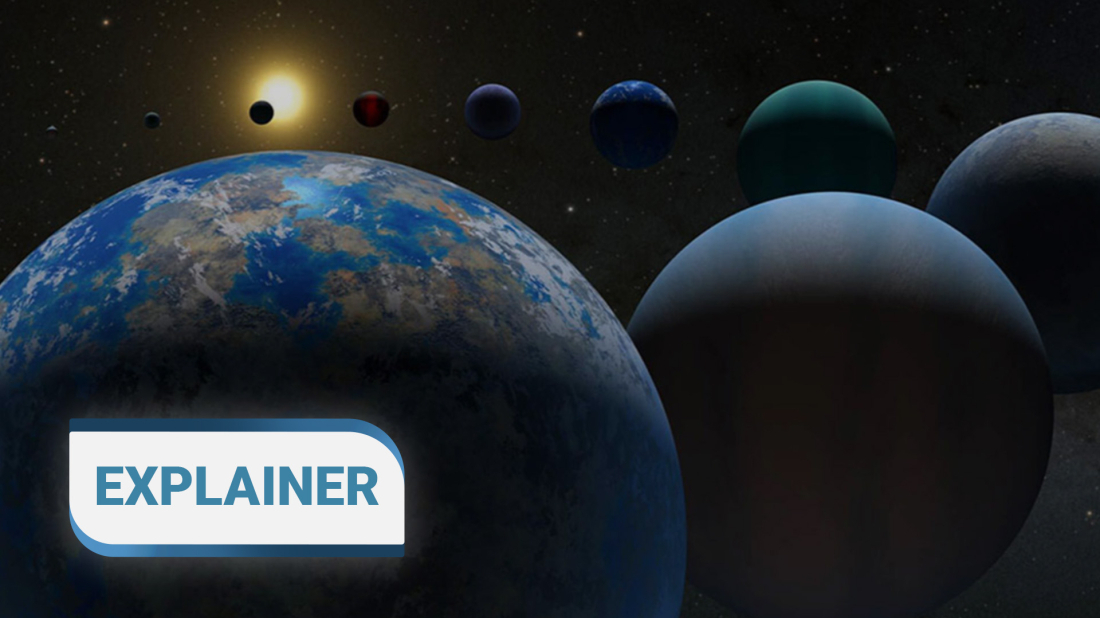
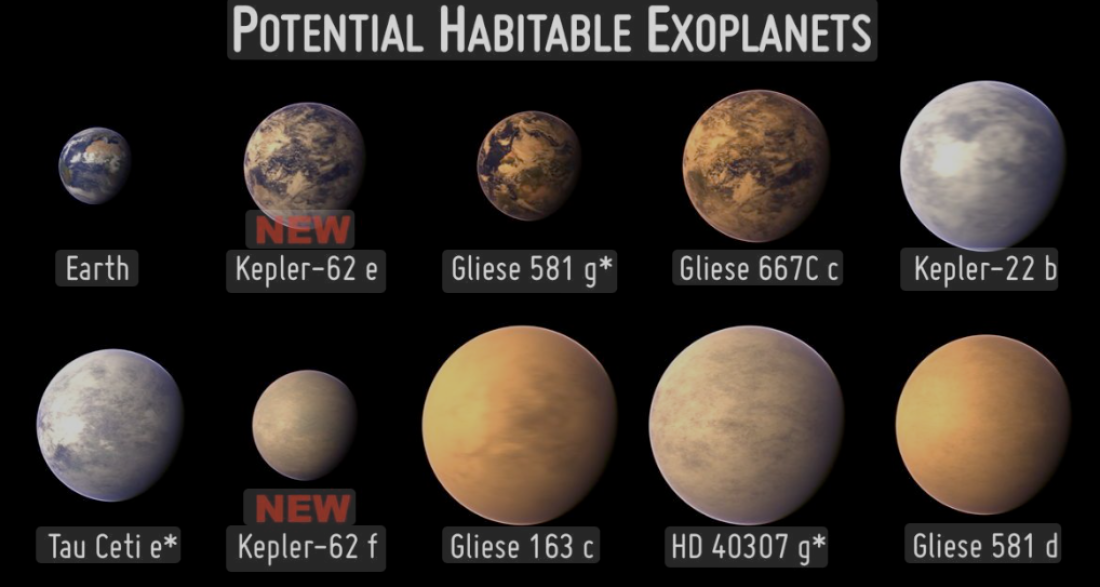
So far, astronomers have confirmed more than 5,800 exoplanets, but the number likely stretches into the trillions in our galaxy alone. One way to filter the list is by using the habitable zone — the “Goldilocks” region around a star where liquid water could exist. Yet, water isn’t the only requirement. The planet’s size, atmosphere, chemistry, and the stability of its star all play crucial roles.
K2-18b — a tantalising hint
One of the most talked-about candidates is K2-18b, a super-Earth about 124 light-years away. Observations with JWST have revealed water vapour, carbon-bearing molecules, and even a possible trace of dimethyl sulfide — a gas on Earth mostly produced by marine life.
“The only potential source we can think of that could explain these observations would be a fairly advanced biological production mechanism,” Schaefer noted. “And to have this big of a signal, you would need near-constant production coming up from the surface.”
Scientists stress that this is not proof of life, but the find has sparked intense interest.
HD 20794 d — a nearby opportunity
Even closer, just 20 light-years away, lies HD 20794 d, a newly confirmed super-Earth orbiting in its star’s habitable zone. Its elliptical orbit means conditions swing between cooler and warmer extremes, but it offers an ideal target for next-generation telescopes to test life-detection methods.
“It was a huge joy when we could confirm the planet’s existence,” said Dr Michael Cretignier of Oxford University, who first spotted the signal in 2022. “Its proximity means there’s hope for future space missions to obtain an image of it.”
Intelligent life — the harder question
Detecting any life would be extraordinary. But intelligent life adds another layer of complexity. In theory, advanced civilisations could reveal themselves through technosignatures — signals or atmospheric pollutants from technology. Radio telescopes, for instance, could pick up artificial transmissions, while future space observatories might spot patterns in light or heat that nature is unlikely to produce.
Caution and curiosity
Scientists remain cautious. A molecule linked to life could also be produced by non-biological chemistry. But even a 95% probability of life on another planet would be a discovery of historic proportions.
“While my job mainly consists of finding these unknown worlds, I’m now very enthusiastic to hear what other scientists can tell us about this newly discovered planet,” Cretignier said. “It’s among the closest Earth-analogues we know about.”
Why the search matters
Whether the universe is teeming with life or Earth is uniquely fortunate, the answer will shape how we see ourselves and our place in the cosmos. Every new telescope, every refined model, and every ambitious mission brings us closer to answering a question as old as humanity: Are we alone?
























What is your opinion on this topic?
Leave the first comment