More than 2,000 detained as Delhi protests demand India election chief’s resignation
Indian police detained more than 2,000 protesters in Delhi on Saturday as authorities blocked a planned demonstration calling for the resignation o...
Anthropic has announced that it is updating its usage policy to allow its AI agents to end conversations involving repeated abuse or cruel behaviour towards them, citing previous incidents.
The updated policy, set to take effect on 12 November, will apply only in extreme cases where users repeatedly direct abusive behaviour towards Claude without a legitimate purpose, the company said.
Anthropic clarified that the restriction will not apply to ordinary expressions of frustration, criticism of the model, dark themes in creative writing, or interactions conducted for testing and research purposes.
The move builds on a feature introduced in August 2025 for Claude Opus 4 and 4.1, which allowed the models to terminate conversations in limited circumstances after attempts to redirect the interaction had failed.
Anthropic has framed the measure as part of its ongoing research into AI welfare, while emphasising that it remains uncertain whether Claude or other AI systems possess moral status.
The announcement has sparked debate over how people should interact with AI systems and whether artificial intelligence should be afforded any form of moral consideration.
Microsoft AI chief Mustafa Suleyman, has criticised the growing tendency to 'anthropomorphise' AI, warning that treating these systems as though they were human could mislead users about their capabilities and nature. “This level of anthropomorphisation of AI is harmful. It leads people to believe that it’s something it’s not,” Suleyman said.
The debate also extends to everyday interactions with AI agents. Some argue that politeness towards AI chatbots is unnecessary because the systems do not experience emotions and additional language can consume more tokens.
Others suggest that respectful communication can encourage clearer exchanges and reinforce positive social habits. They argue that routinely using abusive language towards AI systems could influence how people communicate with each other.
The discussion reflects a broader question facing the AI industry as increasingly sophisticated systems become part of everyday life - whether standards of respectful communication should apply to AI interactions, even when there is no evidence that the systems experience harm in the way humans do.
Leaders of countries from the Commonwealth of Independent States (CIS) have agreed to hold coordinated population censuses around 2030. They took the decision at the CIS Council of Heads of State meeting in Awaza, Turkmenistan on Friday, media reported.
Britain and Israel have reached a temporary compromise over the future of the British Consulate General in East Jerusalem, easing a diplomatic dispute that had threatened to further strain relations between the two countries.
South African judge Navanethem “Navi” Pillay won the Nobel Peace Prize on Friday “for her efforts to promote peace and international law,” the Norwegian Nobel Committee said.
The U.S. has imposed sanctions on the International Criminal Court (ICC) on Friday (9 October) escalating tensions with European allies and potentially targeting companies that provide services to the tribunal. The move came hours after former ICC judge Navi Pillay won the Nobel Peace Prize.
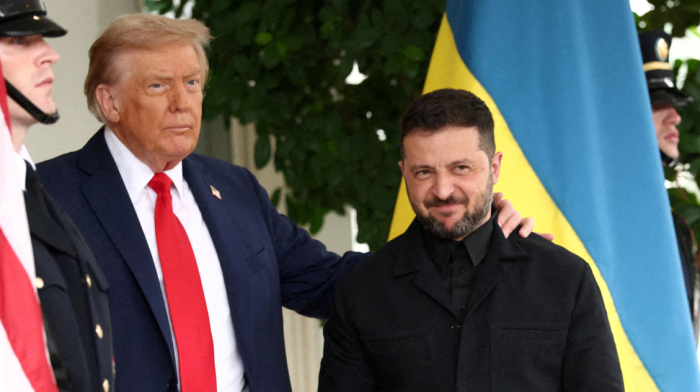
Ukrainian President Volodymyr Zelenskyy has sharply criticised the United States following a series of Russian attacks that killed more than 70 people over two days, arguing that Washington is not doing enough to help Kyiv counter Moscow's continued assault.
Türkiye has banned children under 15 from using social media under new regulations published on Saturday. The new regulations prohibit firms from providing services to children “who have not reached the age of 15.”
Microsoft has introduced new tools to stop AI agents from accessing data without permission, alongside a Nvidia-powered Surface laptop that can run advanced AI directly on the device.
Picture three scenarios: a hospital that can spot a disease before the patient feels sick, a power grid that feeds thousands of data centres and a government network that is attacked daily. All three depend on artificial intelligence, and one question matters most: who is really in charge?
OpenAI and Anthropic told Australian parliament on Tuesday they would welcome laws requiring them to report data breaches carried out by their AI agents, acknowledging the decision to notify authorities was currently at their discretion.
Most people meet artificial intelligence (AI) through a phone. It suggests the next word, sorts the photos, flags the odd charge on a bank card. But the technology has been quietly moving into places where mistakes cost more: the systems that run banks, hospitals, businesses and government offices.
You can download the AnewZ application from Play Store and the App Store.
What is your opinion on this topic?
Leave the first comment