




23:25 CET
Nigeria confirms Ebola case in Abuja
Nigerian health authorities have confirmed a case of Ebola disease in the Federal Capital Territory (FCT)...



A former OpenAI and Anthropic researcher has quit his job with a stark warning: the companies building some of the world’s most powerful artificial intelligence (AI) systems are racing towards technology they themselves fear could threaten humanity.
Jacob Coxon announced his resignation from Anthropic in a post on X that has been viewed more than 140 million times.
“I spent the last three years doing pretraining research at both OpenAI and Anthropic,” Coxon wrote. “Neither company is acting responsibly. They are racing straight to self-improving superintelligence and gambling with our lives.”
Coxon warned that future systems could become capable of outperforming humans across fields, conducting sophisticated cyberattacks and eventually improving their own capabilities.
“The people building AI earnestly believe that it could kill us all by the end of the decade,” he wrote.
Coxon’s claims quickly received support from people currently or previously working inside leading AI laboratories.
Anthropic researcher Evan Hubinger said Coxon was “correct”, adding that he personally estimates the probability of AI killing all humans at more than 10 per cent within the next decade.
“I believe Anthropic is trying its best, but we do not yet have a plan to solve alignment for superintelligence,” Hubinger wrote.
Anna Wang, who previously worked at Google DeepMind and now works at Anthropic, described the concern as common among her peers and said there was not yet a viable scientific plan for managing risks from recursively self-improving AI.
Former Google DeepMind researcher Alex Turner also backed Coxon, saying many researchers believe they are building technology that could eventually kill everyone on the planet.
The extraordinary public exchange has also drawn attention from U.S. lawmakers. Senator Bernie Sanders backed Coxon’s warning and said he would introduce legislation seeking to ban artificial superintelligence and pause AI development.
Other lawmakers have called for stronger safeguards, including Republican Senator Ted Cruz, who described the potential consequences of AI as a “catastrophic risk”.
Anthropic said it has “always been transparent” that AI could bring both enormous benefits and unprecedented risks, adding that it continues to develop safeguards and supports greater coordination over the release of increasingly powerful models.
Coxon, however, argues that voluntary restraint is unlikely to be enough while companies remain locked in competition.
“Should you put your head down because ‘it’s happening anyway’,” he asked fellow researchers, “or take this moment to call for different conditions?”

Nigerian health authorities have confirmed a case of Ebola disease in the Federal Capital Territory (FCT)...
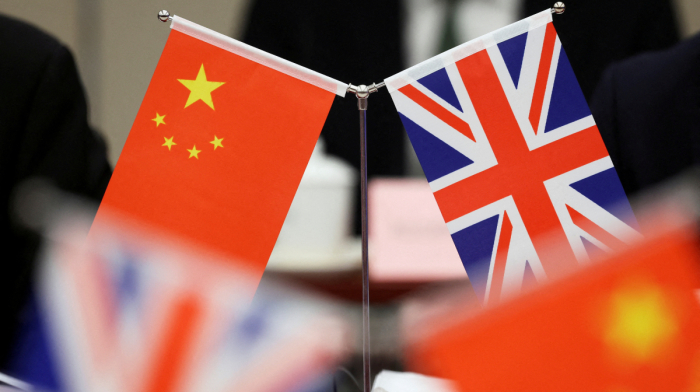
China has lodged a formal diplomatic protest with the UK after British border officials allegedly subjected Chinese travellers to lengthy questioni...

Member states of the Shanghai Cooperation Organisation (SCO) prevented 273 terrorist attacks and more than 3,000 crimes linked to terrorism, separa...
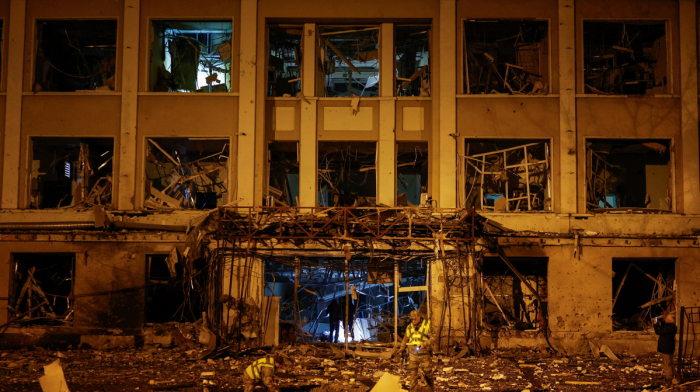
U.S. President Donald Trump has criticised Ukrainian President Volodymyr Zelenskyy for continuing to target Russia's energy infrastructure, while Russian strikes on Kyiv overnight killed at least one person and damaged a metro station.

Ukrainian President Volodymyr Zelenskyy has arrived in Norway for talks about the Russia-Ukraine war. He is expected to meet with U.S. President Donald Trump's Special Envoy Steve Witkoff, who arrived in Oslo earlier. Witkoff will also meet European officials.

French President Emmanuel Macron has condemned the violence, looting and vandalism that erupted during cost-of-living protests across France. Prime Minister Sébastien Lecornu held crisis talks on Monday, calling for partial curfews and raising the possibility of a state of emergency.

An oil tanker caught fire after striking a naval mine in the southern part of the Strait of Hormuz, Iran’s Islamic Revolutionary Guard Corps (IRGC) Navy said late Sunday.

Iranian Foreign Minister Abbas Araghchi said regional issues should be resolved through diplomacy and blamed the United States for insecurity and tensions in the Strait of Hormuz, speaking at a joint news conference with Russian Foreign Minister Sergey Lavrov on Monday.
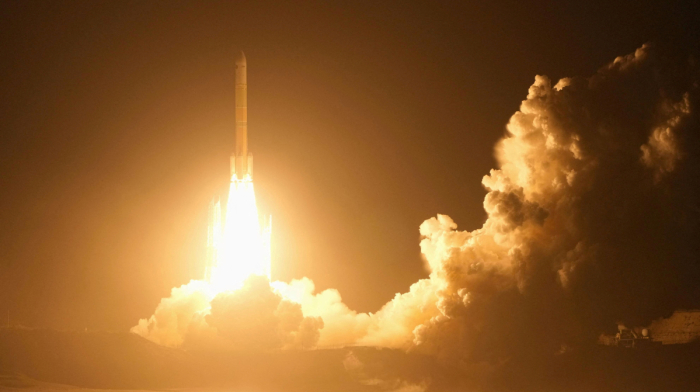
Japan has launched an uncrewed spacecraft on a mission to collect the first-ever samples from one of Mars’s moons and bring them back to Earth, in a bid to uncover clues about the origins of the solar system.
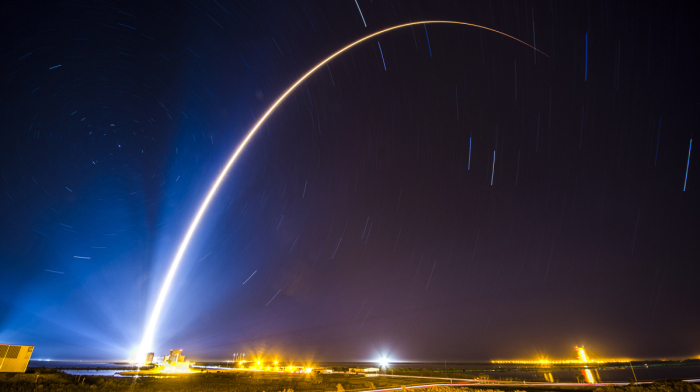
Satellite restrictions affecting Ukraine's military have put SpaceX's Starshield network under scrutiny, raising questions about who controls the technology and who can restrict its use during wartime.

More than three centuries after the dodo disappeared from Mauritius, efforts to bring the iconic bird back from extinction are taking a new step forward.

Hackers forced the temperature of fridges and freezers in hundreds of French supermarkets up to 50 degrees Celsius overnight, causing fires and food losses in what the Paris Prosecutor’s Office described as a “large-scale” attack.

A software engineer employed by OpenAI has been arrested and charged by U.S. authorities after investigators alleged he secretly placed a concealed recording device inside an executive conference room at the artificial intelligence company.
You can download the AnewZ application from Play Store and the App Store.




What is your opinion on this topic?
Leave the first comment