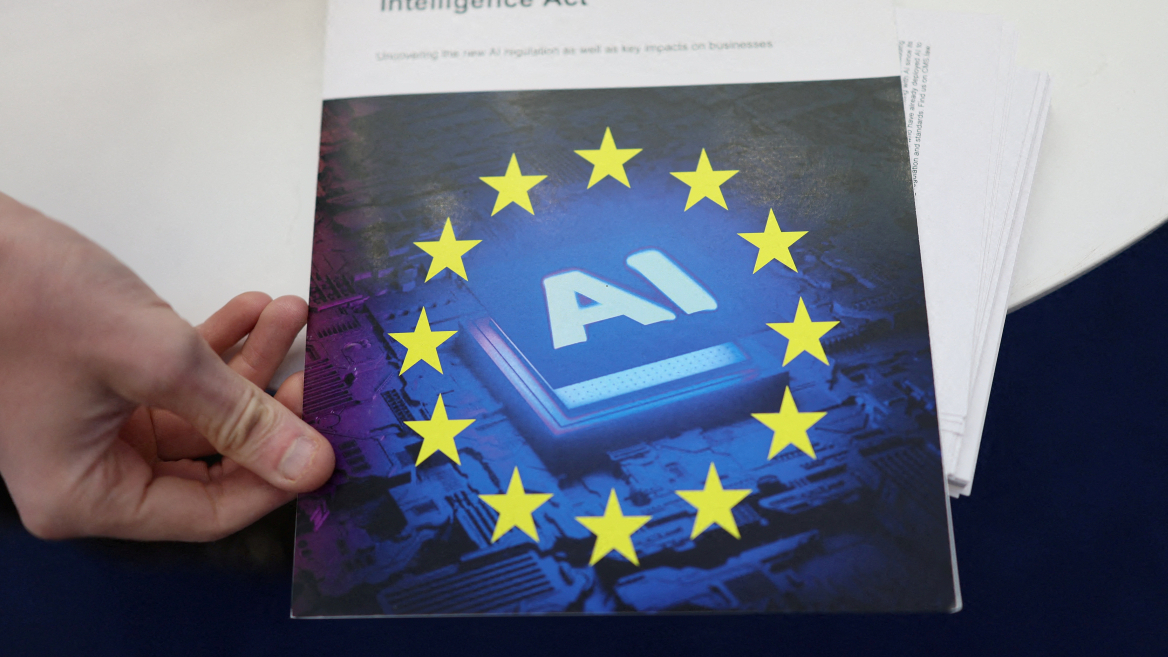
European Union countries and European Parliament lawmakers have agreed on a softened version of the bloc’s landmark artificial intelligence rules, including delayed implementation, in a move critics say reflects growing concessions to major technology firms.
The provisional agreement was reached on Thursday after nine hours of negotiations and still requires formal approval by EU governments and the European Parliament in the coming months.
Marilena Raouna, Cyprus’s deputy minister for European affairs, said the agreement would ease pressure on businesses. In a statement, she said the revised AI Act would “significantly support our companies by reducing recurring administrative costs”. Cyprus currently holds the rotating presidency of the EU Council.
The revisions form part of a broader European Commission push to simplify new digital regulations, following complaints from companies about overlapping rules and administrative burdens that they say limit their ability to compete with rivals in the U.S. and Asia.
Delays for high-risk AI systems
The AI Act entered into force in August 2024, with enforcement originally planned in stages. Under the new agreement, rules covering high-risk AI systems - including those used in biometrics, critical infrastructure and law enforcement - will now apply from 2 December 2027, instead of the earlier 2 August deadline.
Negotiators also agreed to remove machinery from the scope of the AI Act, arguing that existing sector-specific rules already apply. The decision reflects sustained lobbying from industry groups.
Ban on sexually explicit AI content
Lawmakers also agreed to ban artificial intelligence systems that create unauthorised sexually explicit images. The move follows concerns over content produced by the X-AI chatbot Grok, owned by Elon Musk, including sexually explicit deepfake imagery.
The ban will take effect from 2 December.
Dutch lawmaker Kim van Sparrentak welcomed the decision, saying it marked an important step in protecting users. “By the end of this year, everyone - especially women and girls - will be safe from horrific nudifier apps being widely available on the EU market,” she said.
Watermarking and global impact
Mandatory watermarking of content generated by artificial intelligence systems will also come into force from 2 December.
Despite the delays and exemptions, EU officials say the rules remain the most comprehensive artificial intelligence regulatory framework in the world. The legislation was originally introduced amid concerns about the impact of AI on children, workers, businesses and cybersecurity.



















What is your opinion on this topic?
Leave the first comment