French overseas territories dispute widens as activists reject interference claims
The diplomatic dispute over France's overseas territories is widening, with pro-independence leaders in the Caribbean and the Pacific rejecting claims...
U.S. President Donald Trump said on Tuesday that military aid to Ukraine was not discussed during his phone call with Russian President Vladimir Putin, despite the Kremlin stating that Putin had called for an end to U.S. support for Kyiv.
Speaking in an interview on Fox News’ The Ingraham Angle, Trump said: “We didn’t talk about aid, we didn’t talk about aid at all. We talked about a lot of things, but aid was never discussed.”
The conversation between the two leaders came as Putin agreed to a temporary halt on strikes against Ukrainian energy infrastructure but refused to endorse the full 30-day ceasefire that Trump had proposed as a step toward a broader peace deal.
The Kremlin, in its readout of the call, stated that Putin had emphasized that any resolution of the conflict would require a halt to all military and intelligence assistance to Ukraine. However, Trump did not acknowledge such a request.
The United States remains Ukraine’s largest military donor, having allocated or delivered over $70 billion in military aid since January 2022, including $15 billion for heavy weaponry, according to the Kiel Institute.
While Ukraine has agreed to the limited ceasefire, Russia's refusal to commit to a broader truce raises further questions about the future of negotiations. Meanwhile, Trump’s comments signal that U.S. aid to Kyiv remains a key unresolved issue in ongoing diplomatic efforts.

U.S. President Donald Trump said on Monday that there is a good chance” of reaching a deal with Iran, but warned that Washington would resume military operation if negotiations fail.
Iran will halt its own attacks as long as the United States maintains its pause on strikes, but Tehran remains sceptical of U.S. intentions, a senior Iranian source told on Sunday.
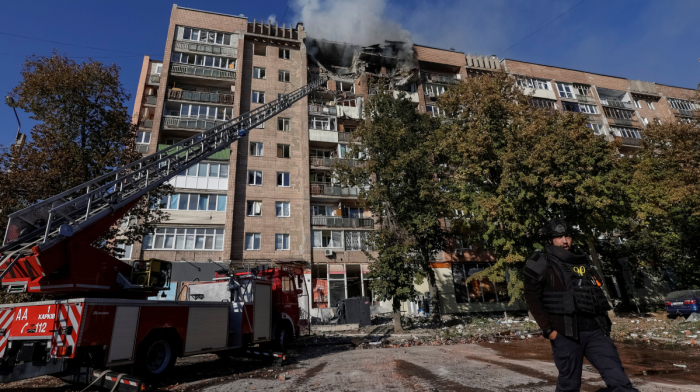
The Russia-Ukraine war is increasingly reshaping the Caspian region. From threats to energy infrastructure to renewed diplomatic efforts, countries across the region are adapting to the wider consequences of a conflict that continues to disrupt trade, transport and security.
A New York school district has put plans to introduce a humanoid robot into classrooms on hold after fierce criticism from teachers, Indigenous community members and state education officials over the use of artificial intelligence in schools.
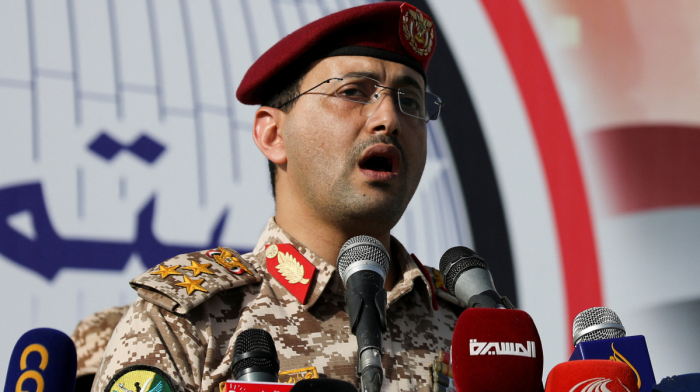
Yemen warned the Houthis were seeking to replicate Iran's Strait of Hormuz strategy in the Red Sea, as U.S. President Donald Trump said there was a "good chance" of a deal with Tehran but warned strikes could resume if talks failed.
The diplomatic dispute over France's overseas territories is widening, with pro-independence leaders in the Caribbean and the Pacific rejecting claims by French lawmakers that Azerbaijan is interfering in France's internal affairs.
U.S. diplomats walked out of a UN Security Council meeting on Ukraine after accusing France of making "disingenuous grandstanding" by comparing Washington with North Korea, Russia and other authoritarian states.
Meteorologists in China have used a swarm of drones to observe Typhoon Noul as it passed through Guangdong province, aiming to improve weather monitoring and forecasting during extreme storms.
Tehran has stressed that its commercial vessel hit by a Ukrainian drone in the Caspian Sea on Saturday was carrying only civilian cargo and vowed to respond appropriately while holding Kyiv responsible for the attack.
Since 1946, nine people have served as UN Secretary-General, the closest thing the world has to a chief diplomat. The role carries no army and little hard power, yet its occupants have shaped how nations respond to war, famine and global crises. Here are five who left the deepest mark.
You can download the AnewZ application from Play Store and the App Store.
What is your opinion on this topic?
Leave the first comment