Canada, Mexico and the European Union are pushing back against the U.S. decision to increase tariffs on goods. With the March 4 deadline approaching, concerns over supply chain disruptions, rising consumer prices, and a potential global trade war are escalating.
Canada and Mexico are pushing back against the United States increase of tariffs deadline fast approaching next week.
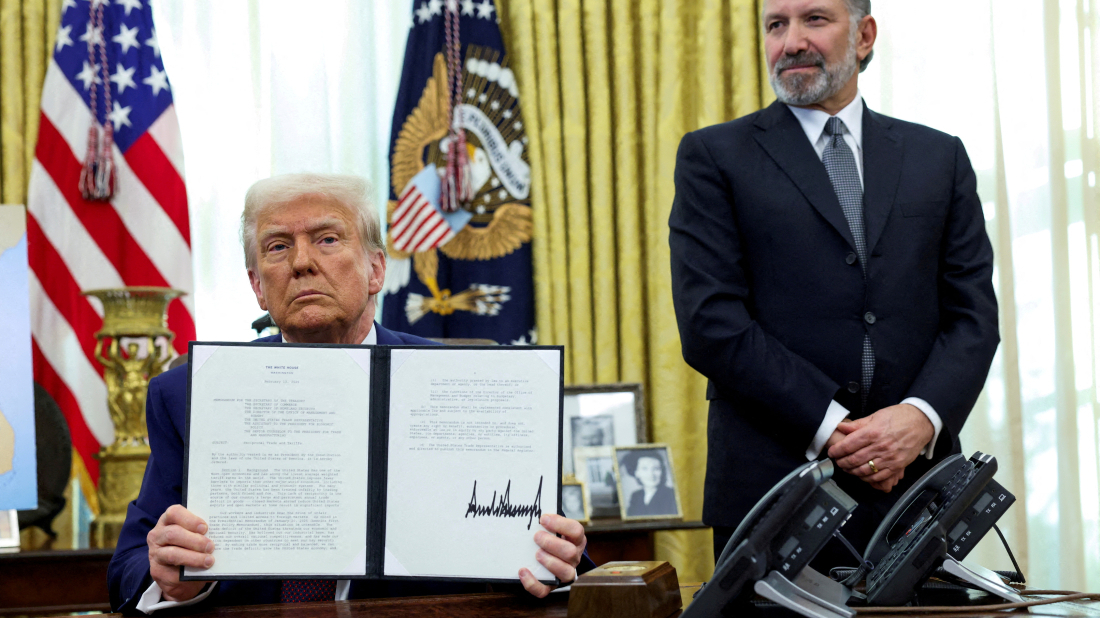
It follows US President Donald Trumps tax increase on imported goods at 25 percent. Trump says it's to curb illegal immigration and drug trafficking particularly fentanyl.
Canadian Prime Minister Justin Trudeau warns that Ottawa would retaliate swiftly if tariffs take effect. Speaking in Montreal, Trudeau warned that Canada would retaliate swiftly if tariffs take effect on Tuesday. He highlighted Canada’s $1.3 billion investment in border security and stated that less than 1% of fentanyl entering the U.S. originates from Canada.
“If unjustified tariffs are imposed, we will respond immediately and strongly,” he said. Canada has already announced retaliatory tariffs of 25% on $106.5 billion worth of U.S. goods, with $20 billion taking effect immediately.
“I've been emphasizing that less than 1% of the fentanyl that arrives in the United States comes from Canada. We’ve invested $1.3 billion in strengthening our border capacities with Blackhawk helicopters, drones, and 10,000 personnel patrolling our borders. If on Tuesday there are unjustified tariffs brought in on Canada, we will have an immediate and extremely strong response as Canadians expect.” he added.
In Mexico City, Sheinbaum expressed hope for a resolution through negotiations but acknowledged Trump’s unpredictable tactics.
“Our goal is to protect the trade treaty and strengthen all three economies,” she stated. Added that the goal is to protect the trade treaty between Mexico, the U.S. and Canada and within this frame see what actions to take to strengthen the three economies. "So, Mexican ministers in Washington, D.C. have studied the issues thoroughly and there have been previous discussions. So I hope we can reach an agreement, and on March 4 we can announce another thing" she said.
Mexico has deployed key ministers to Washington for talks and has requested a direct call with Trump to discuss the issue.
Trump confirmed the tariffs would proceed as planned, despite speculation of a delay. In addition, he announced a 25% tariff on EU imports, particularly automobiles, accusing the EU of unfair trade practices. European leaders vowed strong countermeasures in response.
The tariffs risk disrupting supply chains, raising consumer prices, and slowing economic growth. Analysts predict a 0.4% contraction in the EU economy and a 0.17% decline in the U.S. economy. With retaliatory measures from Canada, Mexico, and the EU, fears of a global trade war are mounting as the March 4 deadline approaches.
















What is your opinion on this topic?
Leave the first comment