China’s GJ-21 carrier-based stealth reconnaissance and strike drone has completed its first take-off and landing on board the Sichuan, the country’s first Type 076 amphibious assault ship, state media reported on 30 October.
Xinhua described the test as “a breakthrough in China's amphibious assault ship programme”, saying it demonstrated the Chinese navy’s growing capability to deploy fixed-wing stealth drones from large naval platforms.
The trial marks another step in China's broader military modernisation programme, which includes the development of advanced warships, fighter jets, missiles and unmanned systems.
Drone designed for repeated operations
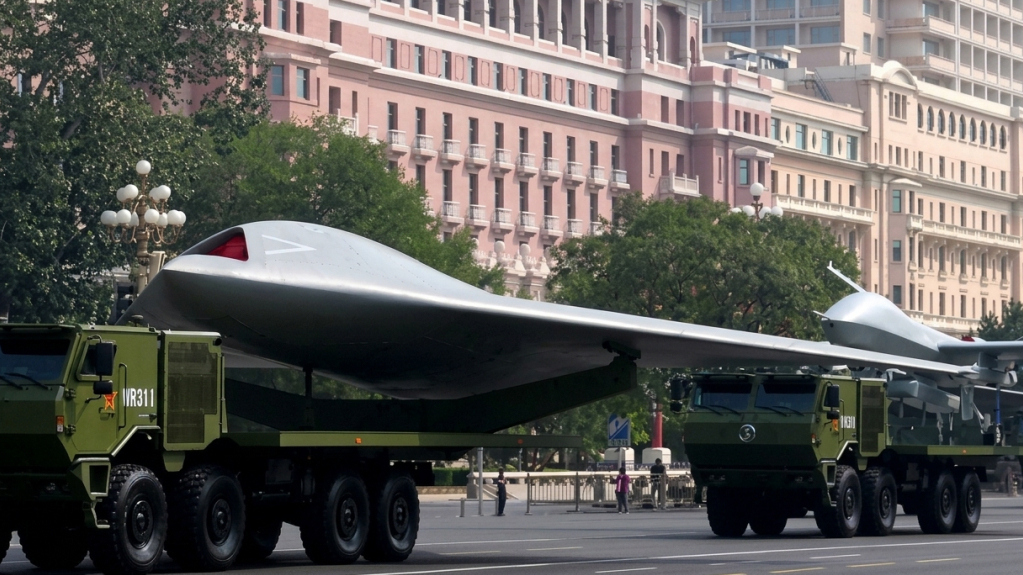
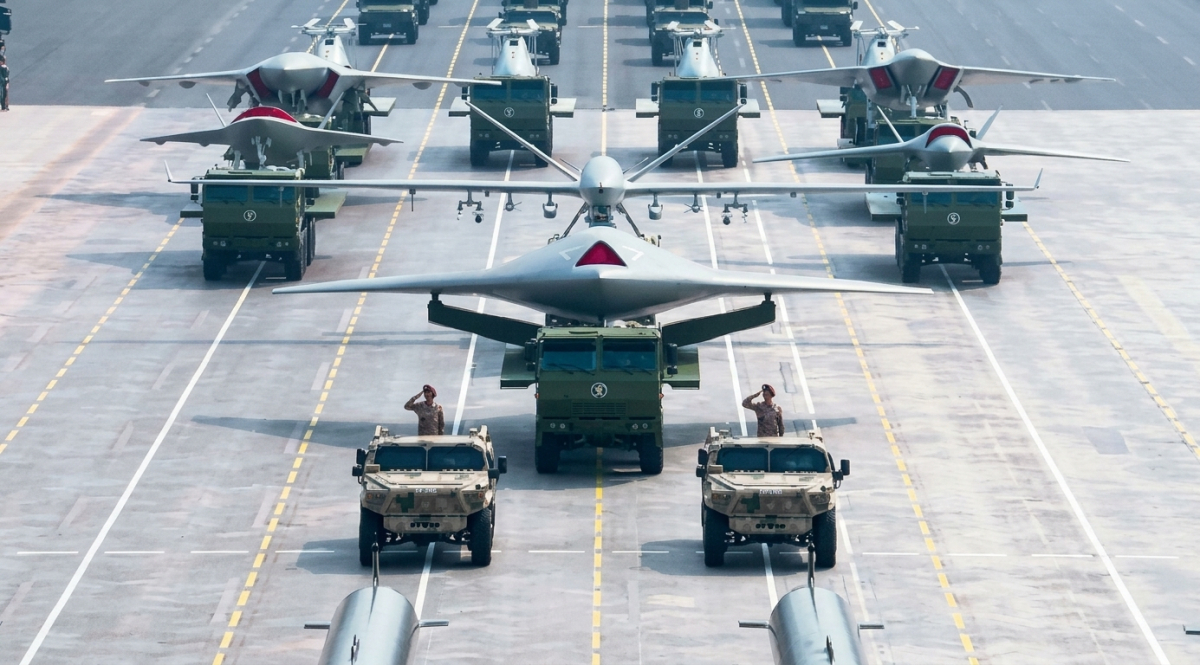
The GJ-21 made its first public appearance at a military parade in Beijing in 2025, marking the 80th anniversary of the end of the Second World War.
China’s state-run Global Times reported that the drone offers a substantial combat radius despite its smaller size compared with the J-35 and J-20 stealth fighters.
Military expert Zhang Xuefeng, quoted by the newspaper, said the GJ-21 is relatively inexpensive and reusable, enabling it to be recovered and deployed on multiple missions.
He added that it could carry small, low-cost glide-guided bombs, potentially improving operational efficiency while keeping costs down during intensive missions.
Sichuan expands China’s naval capabilities
The Sichuan, the first ship in China’s Type 076 amphibious assault ship class, was launched in December 2024.
Equipped with electromagnetic catapult and arresting systems, the vessel can launch and recover fixed-wing drones alongside operations involving helicopters and amphibious equipment.
The ship displaces more than 40,000 tonnes when fully loaded and features a full-length flight deck and twin-island superstructure.
China Central Television reported on Friday that the domestically developed vessel had completed a series of sea trials in late October, without disclosing where they took place.
In April, the Chinese navy said the Sichuan had entered the South China Sea for scientific testing and training missions. It described the deployment as routine and stressed that it was not aimed at any specific target.
Read more:



















What is your opinion on this topic?
Leave the first comment