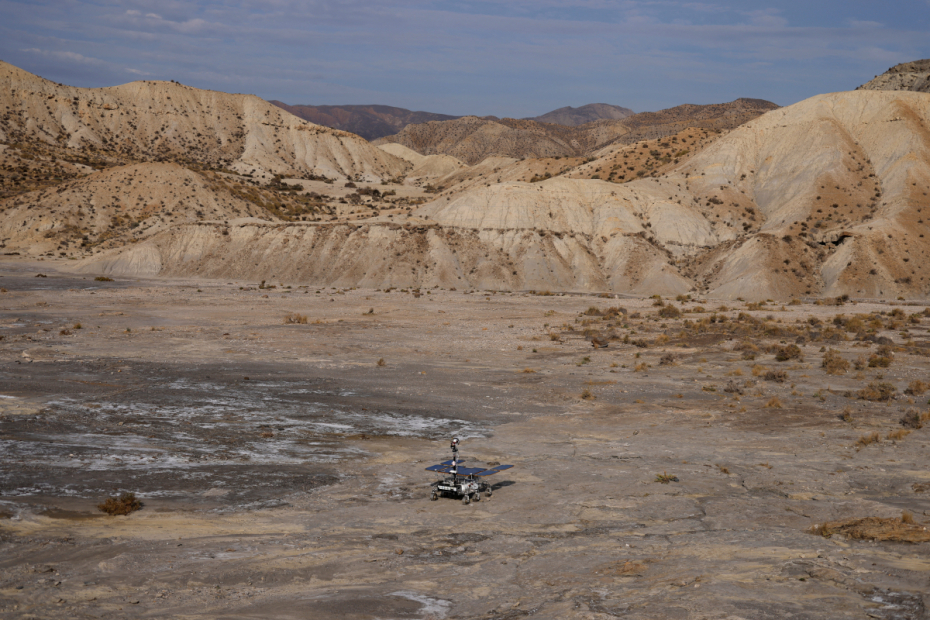
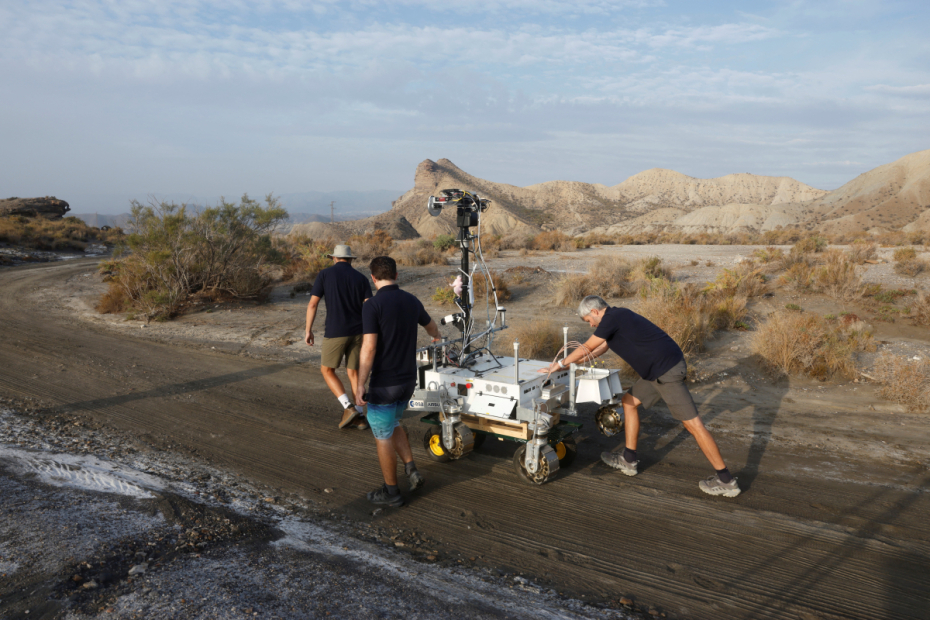
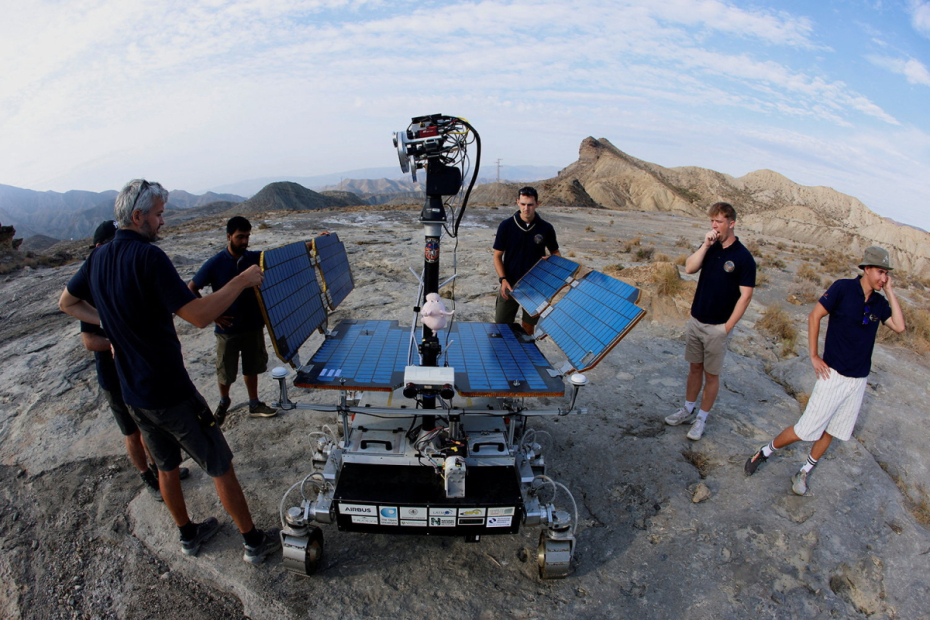
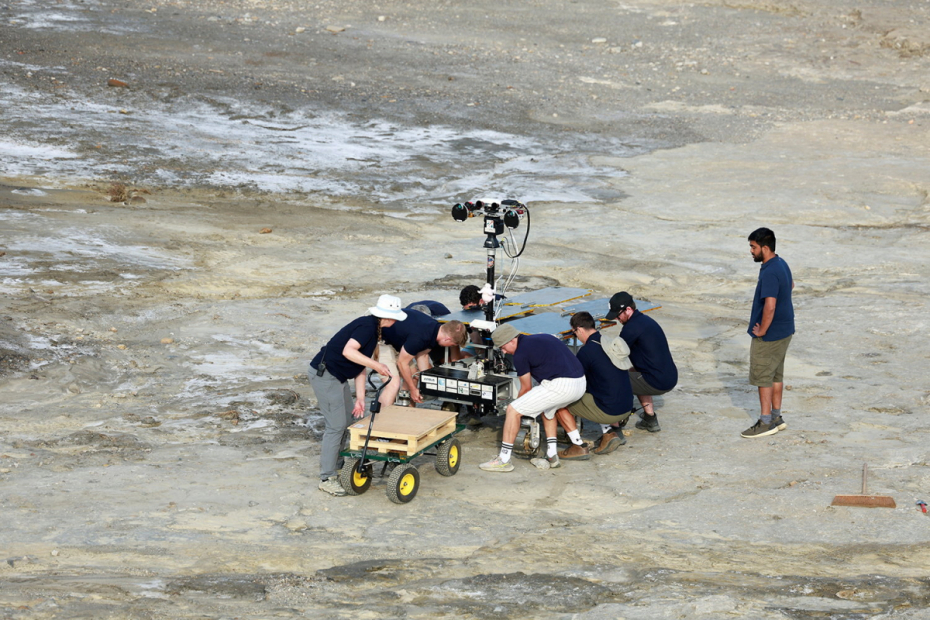
The European Space Agency (ESA), Airbus and European partners have put a six-wheeled Mars rover prototype through its paces in Spain’s Tabernas desert, simulating conditions expected on a future mission to the Red Planet.
The prototype, known as “Charlie”, was remotely operated on Thursday from the Rover Operations Control Centre in Turin, Italy, via satellite.
The trials tested technologies and procedures for ESA’s ExoMars Rosalind Franklin mission, which is expected to land on Mars in 2030 and search for evidence of past or present life.
“The objective of this field test is to train the people in the control centre in Turin, in Italy, to operate the rover as if we are on Mars,” Airbus Defence and Space team leader Vincent Schaeffer said.
Preparing for autonomous exploration
One of the main challenges is the communication delay between Earth and Mars, which can reach 45 minutes, preventing operators from controlling the rover in real time.
Instead, Charlie is being tested on its ability to travel autonomously between predetermined points, covering distances of up to 60 or 70 metres per day, including across terrain that operators may not initially be able to see.
“The main objective is to do science,” Schaeffer said, explaining that the rover is designed to travel long distances safely rather than quickly.
The teams also tested scientific activities that the Rosalind Franklin rover is expected to carry out, while assessing the latest version of its autonomous navigation system.
Mars research could shed light on Earth
ESA says studying Mars could also help scientists better understand Earth.
Benoit Pouffary, ESA’s head of exploration preparation, research and technology, said examining how the Martian climate and atmosphere evolved could help researchers better understand climate mechanisms on Earth.
European researchers are also working to develop more precise landing technology, which could eventually allow missions to target more challenging areas of Mars.
“The more accurate you manage your landing, then the more challenging areas you can start to spot on,” Pouffary said.
Read more:


















What is your opinion on this topic?
Leave the first comment