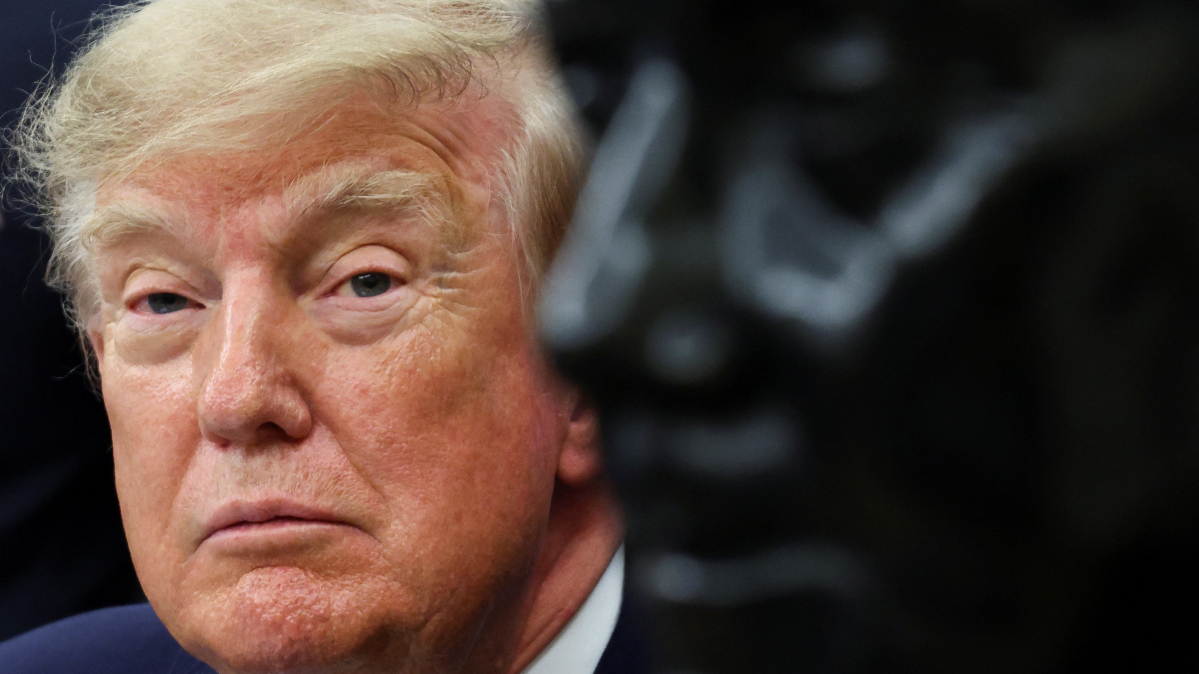
Taxpayer-funded television advertisements featuring U.S. President Donald Trump are drawing criticism from Republicans and Democrats while legal experts question whether public money can be used for spots resembling campaign messaging ahead of the midterm elections.
The three nationally broadcast advertisements, which carry the disclaimer “Paid for by the U.S. Government”, have been defended by the White House as public service announcements promoting patriotism.
Critics argue they could breach restrictions on government propaganda or political activity.
One advertisement shows Trump saying “America will never be a communist country” while a chorus repeatedly sings “love me”. Another features images of Mount Rushmore alongside Trump discussing what he calls the “golden age of America”.
A third uses footage and messaging from a 2024 Trump campaign advertisement in which he describes a “final battle” and pledges to dismantle the “deep state”. The government-funded version carries the taxpayer-funded disclaimer.
The advertisements have aired during major television programmes, including NFL games and “Saturday Night Live”.
The White House has described the spots as “public service announcements” intended to remind Americans to love their country and understand what makes it worth defending. It has not publicly identified the government agency paying for the advertisements or disclosed their total cost.
Republicans and Democrats raise concerns
Criticism has come from members of both sides of America's political divide.
Republican Senate Majority Leader John Thune said he liked the message but believed the advertisements should not be paid for with taxpayer money.
Republican Senator John Kennedy of Louisiana similarly said public officials should not use public funds to promote themselves.
Democratic lawmakers have also questioned the advertisements, with Senator Maggie Hassan seeking information about their production costs, funding sources and legal basis.
The criticism comes just weeks before the November midterm elections, when control of Congress will be contested.
Legal questions over public funds
Legal experts have questioned whether the advertisements comply with federal restrictions on the use of government funds for publicity and political activity.
Richard Painter, who served as chief White House ethics lawyer under former President George W. Bush, said the advertisements could violate federal statutes governing government-funded communications.
Other legal experts have pointed to the Hatch Act, which restricts political activity by federal employees. The president himself is exempt from the Hatch Act, but questions could arise over the involvement of other government employees or resources.
The Government Accountability Office has previously interpreted federal restrictions on government publicity to cover material that is purely partisan, self-aggrandising or covert, while allowing government agencies to communicate about policies and programmes.
A formal determination of whether the current advertisements violate federal law would depend on the agencies involved, the funding used and how the material was produced and distributed.
Campaign spending adds to scrutiny
The advertisements come as political groups prepare for the midterm elections.
According to AdImpact figures cited in the supplied material, Republican-aligned groups had reserved at least $888 million in advertising for the weeks ahead, compared with at least $666 million for Democratic groups.
The White House has maintained that its advertisements are not political because they do not explicitly tell viewers how to vote.
The controversy still centres on the use of taxpayer funds for advertisements that prominently feature the president and use themes and footage associated with his political messaging.
Read more:
















What is your opinion on this topic?
Leave the first comment