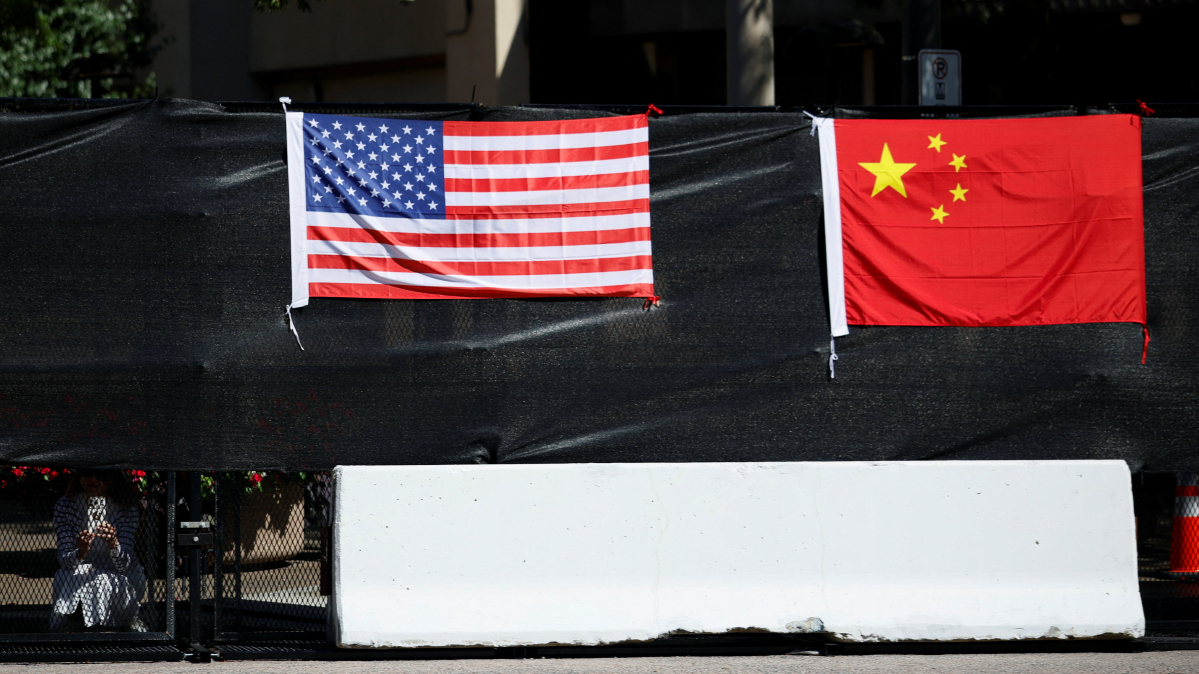
China and the U.S. have unveiled a broader package of economic cooperation after President Xi Jinping’s state visit to Washington, covering tariffs, agriculture, coal, finance, aviation and artificial intelligence.
The measures provide fresh detail on how Beijing and Washington intend to manage economic ties following Xi’s first state visit to the U.S. since 2015. While the package leaves major strategic sectors untouched, it includes tariff relief on billions of dollars of goods and new channels for talks on agriculture and artificial intelligence.
Here are 10 key takeaways from China’s Ministry of Commerce and announcements following the summit.
1. Trade truce extended until January 2027
The trade truce between China and the U.S., which had been due to expire on 10 November, has been extended by two months until 10 January 2027.
China’s Ministry of Commerce said the extension gives both sides more time to assess the implementation of their economic and trade arrangements and consider how to make further progress.
The ministry said the move would also provide a more stable and predictable policy environment for businesses while allowing talks between the two governments to continue.
2. Tariff relief covers about $30 billion of goods each way
The two sides have released reciprocal product lists covering roughly $30 billion of trade in each direction.
China’s list includes 1,619 U.S. product lines, ranging from agricultural goods and personal care products to timber, medical equipment and coal. The U.S. list covers 77 categories of Chinese goods, including toys, tableware, fireworks, glass and wooden Christmas decorations, and footballs.
China’s Commerce Ministry said tariffs on more than 90 per cent of the products would move to most-favoured-nation rates, effectively removing country-specific tariffs on those goods.
U.S. Trade Representative Jamieson Greer said the lists focus on non-sensitive goods that could benefit from more favourable tariff treatment. The lists can be adjusted, although changes are expected no more than once a year.
3. Agriculture gets a dedicated working group
Agriculture will gain its own working group under the U.S.-China Board of Trade, the bilateral mechanism established in May.
Its first meeting is due to take place before the end of 2026, with discussions expected to focus on two-way market access and regulatory issues affecting agricultural products.
Agriculture has long been a major part of U.S.-China trade relations, and the new group gives exporters and officials a dedicated channel for addressing market barriers.
4. China commits to U.S. coal purchases
China will import at least 10 million tonnes of U.S. coal a year in both 2027 and 2028 under commitments announced by the White House following the summit.
That is equivalent to roughly 2 per cent of China’s annual coal imports. Liquefied natural gas and oil were not included in the commitment.
China’s Commerce Ministry described U.S. coal imports as a useful supplement to the domestic market and said they provide stable income and employment for the U.S. coal industry. Beijing said it looked forward to expanding cooperation in the sector.
5. New communication channel for AI incidents
Beijing and Washington have also agreed to establish a communication channel for incidents involving artificial intelligence, marking one of the more forward-looking elements of the package.
The two sides are expected to hold another dialogue on AI by the end of November.
The agreement takes cooperation into an area that has largely sat outside traditional trade negotiations, despite the growing economic and strategic importance of AI.
6. China signals further opening in financial services
China said it will review and approve applications from financial services institutions worldwide, including those backed by U.S. capital, seeking to operate or establish branches in the country.
Beijing said it also expects the U.S. to provide Chinese financial institutions with a fair, transparent and stable policy environment.
7. More China-U.S. flights could be discussed
The two governments have agreed to continue talks on increasing flights between China and the U.S., although no specific targets have been announced.
The commitment leaves the details for future negotiations rather than setting an immediate timetable for additional services.
8. Analysts see opportunities - but also limits
Economists say the tariff measures could provide a noticeable boost to some parts of bilateral trade.
Lynn Song, chief economist for Greater China at ING, described the outcome as positive for the affected products compared with a smaller tariff reduction and said it could deliver a bigger boost to trade between the two countries.
Gary Ng, a senior economist at Natixis, noted that the U.S. list is weighted towards consumer goods, potentially helping to ease U.S. inflation while giving Chinese companies another outlet for excess production capacity.
Jacob Cooke of Beijing-based WPIC Marketing + Technologies said U.S. brands in fast-growing categories including hair care, personal care and infant formula could also benefit.
However, the overall economic impact could be relatively modest. Prashant Bhayani, chief investment officer for Asia at BNP Paribas Wealth Management, noted that U.S. exports to China totalled about $68 billion in the first seven months of 2026, while Chinese exports to the U.S. reached around $270 billion in the first eight months.
That means $30 billion of trade would represent a substantially larger share of U.S. exports to China than Chinese exports heading in the opposite direction.
Chinese exporters have nevertheless welcomed the move. Golden Arts Gifts & Decor, a Christmas decorations manufacturer in southern China, said the development was positive, although most of this year’s Christmas goods have already been shipped, limiting the immediate benefit.
9. Chips, EVs and batteries remain outside the deal
Despite the areas of new cooperation, some of the most strategically sensitive sectors remain untouched. Chips, electric vehicles and batteries are not covered by the agreement.
The U.S. is also investigating China alongside 15 other trading partners in a Section 301 probe into excess industrial capacity, leaving open the possibility of additional tariffs once the investigation concludes.
China’s global trade surplus, meanwhile, remains substantial. After reaching a record $1.2 trillion in 2025, it stood at about $800 billion by August 2026, according to BNP Paribas Asset Management.
10. What happens next?
The next few months will test how quickly the new commitments translate into action.
The agriculture working group is expected to hold its first meeting before the end of 2026, while another dialogue on artificial intelligence is due by the end of November.
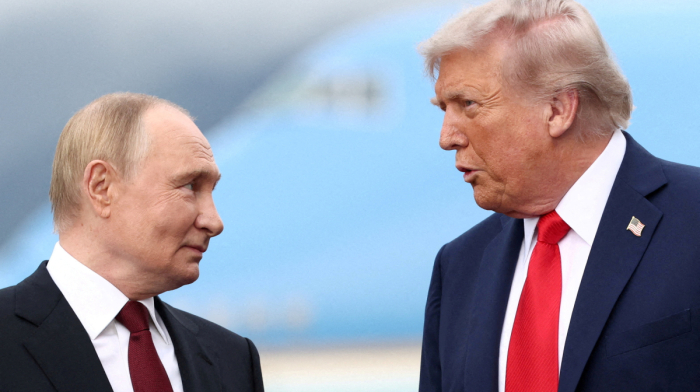
Xi and U.S. President Donald Trump are also expected to meet again at the Asia-Pacific Economic Cooperation summit in Shenzhen in November and the G20 summit in Florida in December.
ING’s Song said he does not expect a major flare-up in trade tensions before the end of the year, as the two sides continue to work through the new arrangements.
Read more:

















What is your opinion on this topic?
Leave the first comment