EU defence ministers have stepped up talks on military readiness and long-term support for Ukraine, as pressure mounts on Europe to close critical defence gaps and strengthen its ability to respond to security threats.
EU defence ministers have stepped up talks on military readiness and long-term support for Ukraine, as pressure mounts on Europe to close critical defence gaps and strengthen its ability to respond to security threats.
Meeting in Brussels, ministers focused on military assistance for Kyiv, air defence, defence industry cooperation and Europe's wider security preparedness. The talks come as Russia's war in Ukraine continues and European governments face growing pressure to strengthen their military capabilities.
Kallas calls for faster rearmament
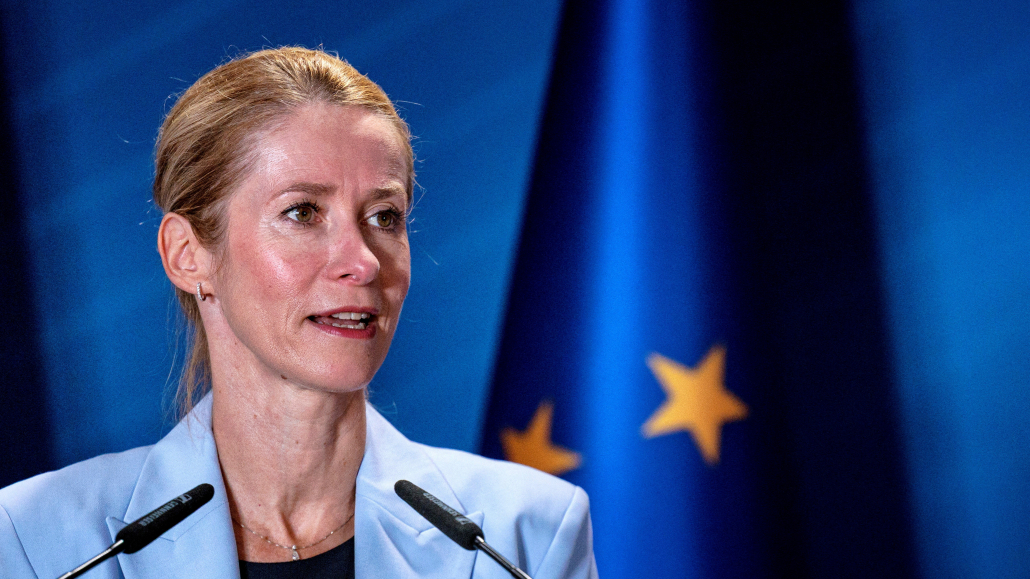
EU foreign policy chief Kaja Kallas warned that Europe must accelerate defence investment to meet its readiness objectives by 2030.
“We also discussed the first-ever annual defence readiness report,” Kallas said, adding that the assessment provides a comprehensive overview of Europe's military preparedness.
According to Kallas, Europe requires “decisive change” in the scale and speed of defence spending, capability development, innovation and industrial production.
Her comments reflect the EU's broader push to close significant capability gaps and strengthen Europe's ability to deter and respond to major security threats by 2030. Priority areas include air and missile defence, military mobility, cyber capabilities, drones, ammunition and other strategic capabilities.
Ukraine remains central to security talks
Support for Ukraine was at the centre of the ministerial meeting, with air defence among the most urgent issues.
Kallas told journalists that Ukraine's immediate need for air defence systems remains one of the most pressing security challenges facing Europe. She again urged EU member states with Patriot missiles in their stockpiles to provide them to Ukraine, with future production used to replenish those stocks.
“Ukraine urgently needs air defence,” Kallas said, urging countries holding Patriot missiles to provide them now and replenish their own stockpiles once newly manufactured systems become available.
The appeal comes amid continued Russian missile and drone attacks on Ukrainian cities and infrastructure. The EU has approved procurement plans worth €28.3 billion under the Ukraine Support Loan for 2026, including purchases of Patriot missiles from future U.S. production.
However, Kallas stressed that production takes time and Kyiv needs the missiles now, raising the possibility of member states supplying Patriots from existing stocks and receiving replacements later.
€6.6 billion released through European Peace Facility
Ministers also agreed on the distribution of €6.6 billion through the European Peace Facility, one of the EU's main mechanisms for supporting Ukraine's defence needs.
The funding includes €900 million for the EU Military Assistance Mission in support of Ukraine and €1 billion for new joint procurement of military equipment. The remaining funds are intended largely to reimburse member states for previous military assistance.
Overall EU and member-state military support for Ukraine has reached tens of billions of euros since Russia launched its full-scale invasion in February 2022. The EU Military Assistance Mission has also trained tens of thousands of Ukrainian personnel.
Ministers agreed on the first stage of a strategic review of the mission, extending it for another two years. The EU also plans to establish a coordination cell in Kyiv focused on battlefield lessons and military education.
Security concerns extend beyond Ukraine
Kallas also pointed to what she described as continued Russian actions affecting European security, including alleged sabotage operations, arson attacks and airspace violations.
Moscow has repeatedly dismissed such accusations as unfounded and has denied involvement in various incidents attributed to Russia by European governments.
The concerns are part of a wider reassessment of European security that has gathered pace since Russia launched its full-scale invasion of Ukraine in February 2022.
EU defence policy increasingly links continued support for Kyiv with efforts to strengthen Europe's own military preparedness.
Europe races to close defence gaps
The Brussels meeting underscored how sharply the EU's defence agenda has shifted in recent years.
Defence investment has increased across the bloc, while EU initiatives are seeking to expand joint procurement, strengthen military production and improve cooperation between member states.
But European officials acknowledge that higher spending alone will not close existing capability gaps.
For Kallas, the challenge is turning increased investment and political commitments into military capabilities quickly enough to respond to emerging threats.
With Russia's war in Ukraine continuing, the EU is increasingly treating defence readiness not as a long-term ambition, but as an immediate security priority.
Read more:











What is your opinion on this topic?
Leave the first comment