Libya and the United States have held fresh talks on defence cooperation, with senior military officials discussing plans to strengthen training programmes, enhance security capabilities and deepen coordination ahead of a major multinational military exercise.
Lieutenant General Salahaddin al-Namroush, chief of the General Staff under Libya's Government of National Unity (GNU), met in Tripoli with Claude Tudor, commander of special operations for U.S. Africa Command (AFRICOM), according to a statement from Libya's General Staff.
The discussions focused on efforts to improve the readiness of Libya's special forces through expanded training and qualification programmes. Officials also examined ways to increase operational effectiveness in responding to security threats, including counterterrorism challenges that continue to affect parts of the country.
Focus on Flintlock 2027
A key topic of the meeting was Libya's planned participation in Flintlock 2027, the annual U.S.-led military exercise involving African and international partners.
The two sides reviewed logistical and technical preparations for the event, which is expected to play a significant role in Libya's ongoing engagement with international security partners.
Libya already hosted part of Flintlock 2026 in the central city of Sirte earlier this year. The exercise brought together forces from both sides of Libya's military divide alongside military personnel from more than 30 countries.
Following what eastern Libyan military officials described as a successful event, Libya was subsequently selected to host the main component of Flintlock 2027, highlighting the country's growing role in regional security cooperation.
Supporting military unification
Beyond training and exercises, the meeting also addressed one of Libya's most persistent challenges: the reunification of its armed forces.
Officials stressed the importance of supporting efforts to unify Libya's divided military institutions and improve coordination across the security apparatus.
They also discussed cooperation aimed at strengthening border security, protecting critical infrastructure and safeguarding energy facilities, sectors considered vital to both Libya's economy and regional stability.
A country still divided
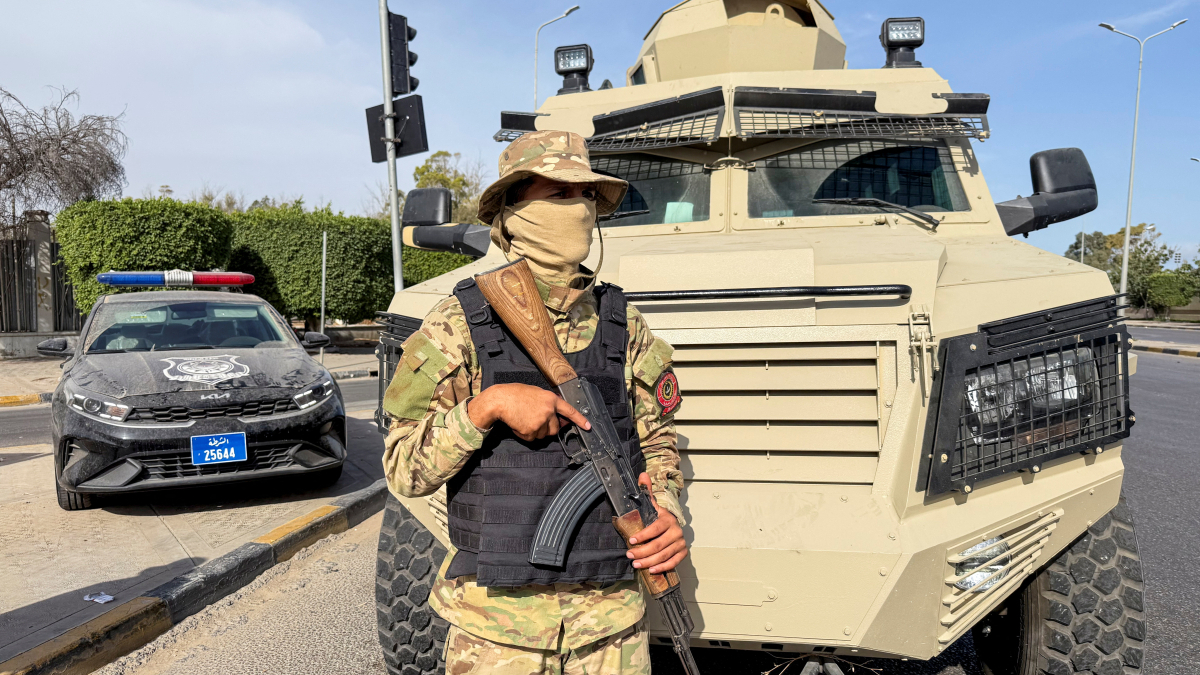
More than a decade after the fall of Muammar Gaddafi, Libya remains politically and militarily fragmented.
The country's armed forces are split between western-based units aligned with the internationally recognised Government of National Unity in Tripoli and eastern forces led by military commander Khalifa Haftar.
Attempts to bridge those divisions have been ongoing through the 5+5 Joint Military Commission, a United Nations-backed mechanism that includes representatives from both sides. The commission forms part of wider efforts to implement the October 2020 ceasefire agreement that ended large-scale fighting between rival factions.
At the political level, Libya also remains divided between two competing administrations: the UN-recognised government led by Abdul Hamid Dbeibah in Tripoli and a rival eastern-based government appointed by the House of Representatives and headed by Osama Hammad.
Security cooperation amid political uncertainty
The latest discussions between Libyan and U.S. officials underscore Washington's continued engagement with Libya's security sector at a time when international efforts are focused on stabilising the country and advancing long-stalled political processes.
While military cooperation has expanded in recent years, analysts say lasting stability will ultimately depend on progress toward unifying state institutions and resolving the political divisions that continue to shape Libya's future.
For now, officials on both sides say enhanced training, greater coordination and participation in multinational exercises remain important building blocks in the effort to create a more capable and unified Libyan military.













What is your opinion on this topic?
Leave the first comment