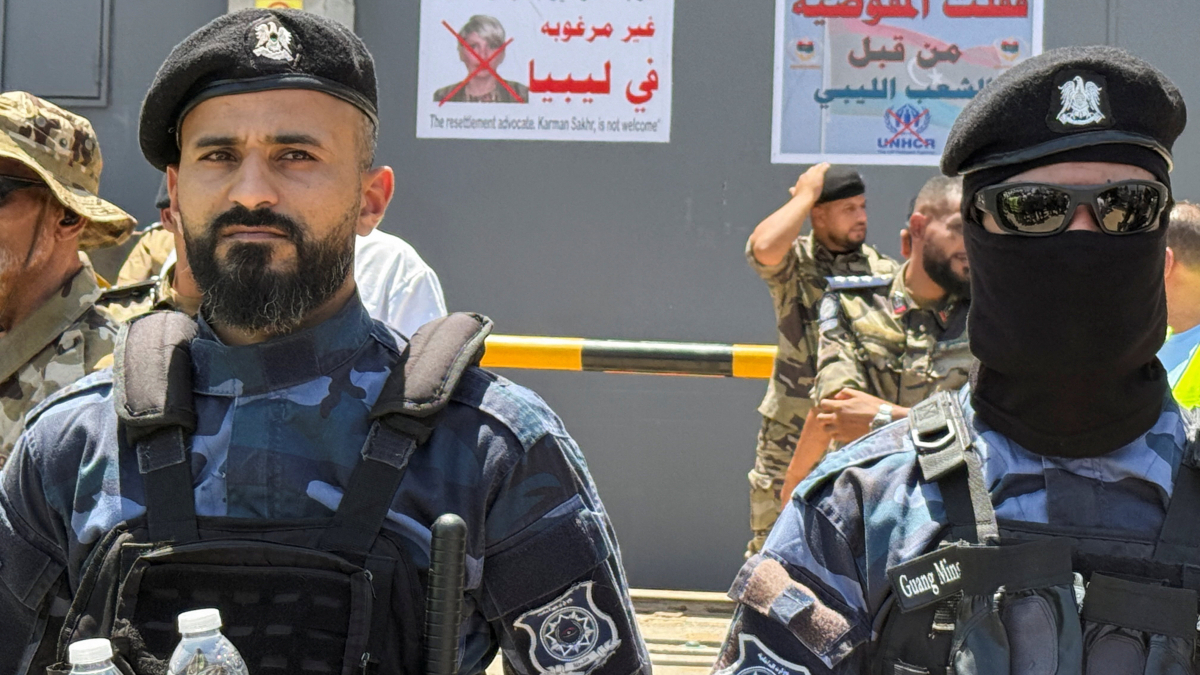
Amnesty International has accused the European Union of being complicit in human rights abuses after authorities in eastern and western Libya intensified a crackdown on migrants and refugees through mass arrests, detentions and expulsions.
In a report released on Tuesday (23 June) the rights group said hundreds of migrants, including people fleeing conflict in Sudan, have been arrested, forcibly evicted or deported without being given the opportunity to seek asylum or challenge their removal.
The allegations come as European leaders seek closer cooperation with Libyan authorities to curb irregular migration across the Mediterranean.
Crackdown expands across divided Libya
Libya remains politically divided between rival administrations in the east and west more than a decade after the 2011 NATO-backed uprising that overthrew former leader Muammar Gaddafi.
The country has long served as a key transit point for migrants and refugees from Africa and the Middle East attempting to reach Europe via the Mediterranean.
In a report released on Tuesday, Amnesty said the latest crackdown has been carried out across multiple Libyan cities and includes large-scale arrests, detention operations and forced removals targeting foreign nationals.
The organisation said many of those affected were expelled without access to legal protections or asylum procedures required under international law.
Amnesty criticises EU migration policy
Amnesty directed particular criticism at the European Union, arguing that years of financial and operational support for Libyan migration control have contributed to a system that enables abuses.
"The EU has long bankrolled migration control in Libya with its support to the Libyan Coast Guard, which has already made it complicit in horrific violations and abuses," said Diana Elahawy, Amnesty International's deputy regional director for the Middle East and North Africa.
She also criticised recent efforts to deepen engagement with eastern Libyan authorities.
"Extending this cooperation to eastern-based armed groups with records of committing war crimes and other abuses with impunity shows a shocking disregard, not only for international law, but also for human life and dignity," Elahawy said.
EU defends cooperation with Libya
The European Commission and Libyan authorities did not immediately respond to Amnesty's allegations.
European officials have consistently defended cooperation with Libya, arguing that it helps prevent dangerous sea crossings, disrupts human trafficking networks and reduces deaths in the Mediterranean.
The EU has for years provided funding, training and equipment to the Libyan Coast Guard, which intercepts migrant boats attempting to reach European shores.
Although the EU formally recognises only the internationally backed government in Tripoli, it has increasingly engaged with authorities in eastern Libya amid growing concerns over migration flows.
Rising concern over Mediterranean crossings
In a letter to EU leaders last week, European Commission President Ursula von der Leyen described continued engagement with Libya as essential.
She pointed to a recent increase in irregular migration routes, particularly crossings towards Greece through the eastern Mediterranean.
"We are providing targeted financial and operational support to strengthen border management, search-and-rescue and anti-smuggling capacities, and reduce illegal departures and the loss of lives at sea," von der Leyen wrote.
The comments highlight the difficult balance European policymakers face between managing migration and addressing concerns over human rights violations linked to migration control efforts.
Growing scrutiny of eastern Libya ties
The controversy has also renewed attention on the EU's outreach to eastern Libya.
Last summer, European Commissioner for Migration Magnus Brunner travelled to eastern Libya for talks with local authorities but was expelled shortly after arriving, underlining the challenges of engagement with the region's rival administration.
Human rights groups have repeatedly warned that migrants intercepted in Libya often face arbitrary detention, abuse, exploitation and poor living conditions.
As migration pressures continue to shape political debates across Europe, Amnesty's accusations are likely to intensify scrutiny of the EU's partnership with Libyan authorities and the human cost of efforts to stem migration across the Mediterranean.














What is your opinion on this topic?
Leave the first comment