Extreme heat and historically low river levels are forcing nuclear power plants across Southeast Europe to reduce production, increasing pressure on already stretched electricity supplies and prompting governments to call for lower consumption.
Slovenia’s Krško nuclear power plant said it would gradually reduce reactor output to 80% overnight into Thursday, 6 August, because of persistent hydrological and meteorological conditions affecting the Sava River.
The reduction adds to mounting energy problems across the region as Hungary also severely restricts production at its Paks nuclear plant, while Romania has taken unprecedented measures to maintain cooling-water supplies for the only operating reactor at its Cernavodă facility.
The disruption comes as a powerful heatwave and prolonged drought affect large parts of central and southern Europe, driving temperatures towards or beyond national records, fuelling wildfires and lowering water levels on major rivers.
Krško reduces output as the Sava heats up
Krško, Slovenia’s only nuclear power plant, uses water from the Sava River for cooling and also supplies electricity to neighbouring Croatia.
Plant operator NEK said output could be reduced further if river conditions persist or worsen. The reactor will return to full-power operation once conditions improve.
The measure is required to comply with environmental rules governing the temperature of water released into the Sava. The daily average temperature at the point where the water mixes with the Brežice hydropower plant basin must not exceed 28 degrees Celsius. The average daily temperature increase must also remain below three degrees Celsius.
NEK said it had maintained full-power operations during the recent hot months by using the plant’s cooling tower and other systems to limit the thermal impact on the river.
The last time Krško was forced to operate at reduced power because of constraints related to the Sava’s temperature and flow was in 2003. The plant remained at reduced capacity for more than 90 days.
Hungary and Romania take emergency measures
Conditions are more severe in Hungary, where record-low water levels on the Danube have forced the country to largely shut down its sole nuclear power plant.
The four-unit Paks facility also relies on the Danube for cooling. Its last remaining operating reactor has been producing only limited power, with authorities warning that available output might be sustained for only a short period unless conditions improve.
The Hungarian government has asked households and companies to reduce electricity consumption to ease pressure on the grid. Voluntary cuts lowered demand by about 700 megawatts on Sunday, according to Prime Minister Peter Magyar.
Hungary’s capital, Budapest, has also been preparing for temperatures close to 40 degrees Celsius during the peak of the heatwave.
Romania, meanwhile, blew up a rock outcrop in the Danube to redirect vital cooling water towards the only working reactor at the Cernavodă nuclear power plant.
The unprecedented operation underlined the scale of the regional energy crisis. State-owned producer Nuclearelectrica, which normally generates around one-fifth of Romania’s electricity, had already shut down one of its two reactors after falling water levels affected cooling operations.
Romanian Prime Minister Ilie Bolojan said drought-related difficulties were being compounded by limited electricity connections with central and western Europe, restricting the country’s ability to import additional power.
Car manufacturers Dacia, which is owned by Renault, and Ford agreed to suspend production until 19 August, reducing electricity demand by approximately 200 megawatts. Ford later clarified that its summer production shutdown had been scheduled in advance.
Heat records and wildfires spread across Europe
The energy disruption is part of a wider emergency caused by extreme heat and drought.
Austria recorded a temperature of 41.2 degrees Celsius in Bad Deutsch-Altenburg, near the Slovakian border. GeoSphere Austria said it was a new national record, surpassing the 41-degree reading registered in Vienna a day earlier.
Italy placed its major cities under red heat alerts as temperatures approached 40 degrees Celsius in some areas. The Vatican moved Pope Leo’s first weekly general audience following the July break indoors instead of holding it in St Peter’s Square.
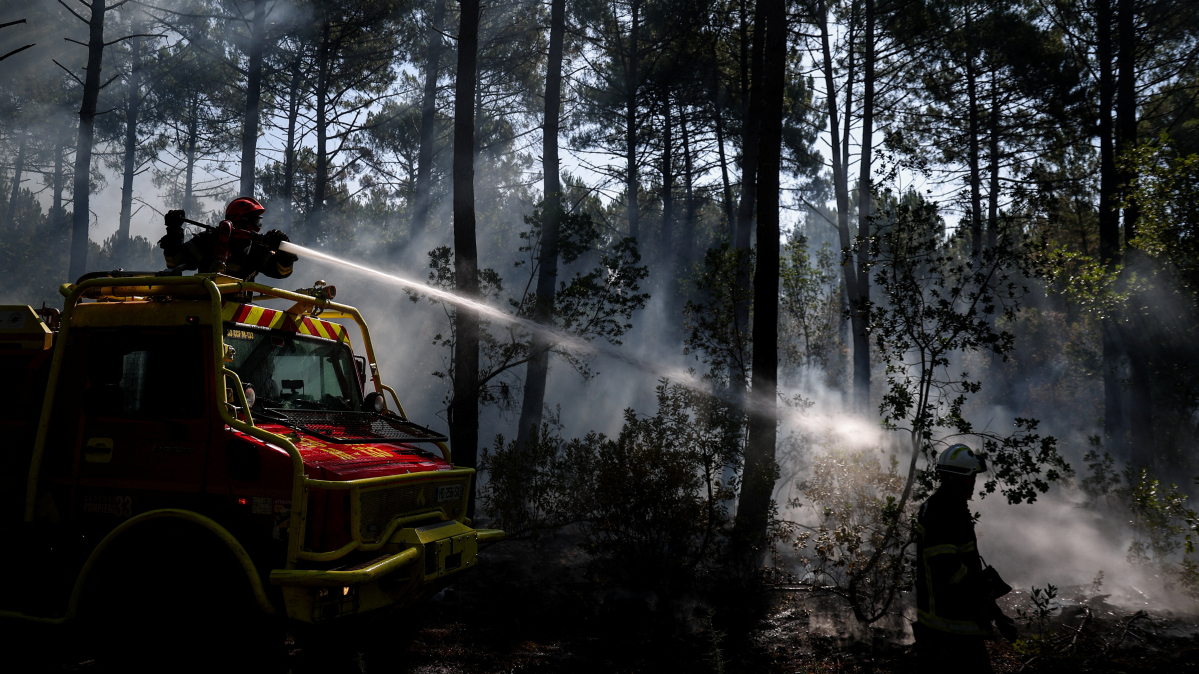
Wildfires also continued to threaten communities across the region.
In Albania’s southern Mallakaster region, around 15 families were evacuated with their livestock and pets as ground and aerial teams fought to prevent flames from reaching homes. Firefighters were also tackling another blaze in mountainous terrain south of Gjirokaster, which was believed to have been caused by lightning.
In neighbouring Greece, hundreds of firefighters remained deployed after a major fire burned thousands of hectares of farmland near a popular holiday destination northwest of Athens. The blaze had largely been contained, but helicopters continued to extinguish scattered hotspots.
France and Spain have also experienced destructive wildfires during a summer of repeated extreme-weather events.
Low rivers disrupt transport and electricity supplies
Falling river levels are affecting more than nuclear power production.
In Germany, parts of the Rhine have reached new lows. Some cargo services have stopped, while other vessels have been forced to carry substantially lighter loads. The Rhine is a major transport route for commodities including grain, ores and petrol.
Moldova is also facing increasing pressure on its electricity and water supplies. President Maia Sandu urged residents to reduce power consumption during evening peak hours and to conserve water as temperatures were forecast to reach 38 degrees Celsius.
Prime Minister Vasile Tofan said neighbouring Ukraine could not supply electricity at previously agreed prices, while Romania was unable to provide additional power even at three times the usual price during peak periods.
Economic risks extend beyond the energy sector
The drought is also damaging agriculture and industrial activity.
Britain’s cereal harvest is on course to be the worst since comparable records began in 1984, according to an analysis published on Wednesday. Crops have withered following one of the driest and hottest spring and summer periods on record.
Energy analyst Jess Ralston, head of energy at the UK-based Energy and Climate Intelligence Unit, said plants must maintain adequate cooling both to operate safely and to generate electricity efficiently.
She said shutting down a nuclear plant when cooling conditions deteriorate is a safe procedure and does not in itself represent a direct threat to life.
However, reduced electricity generation can have serious consequences across the economy. Factories and commercial premises may be forced to stop operating, while power interruptions can create risks for households that depend on medical equipment or cooling during periods of extreme heat.
Climate pressure tests regional resilience
Rain forecast in parts of the region could provide some relief by restoring water levels and lowering temperatures. However, experts have warned that heavy rain following a prolonged drought can also trigger flash flooding.
The crisis highlights how different forms of electricity generation remain vulnerable to extreme weather. Nuclear power is generally considered a highly reliable source, but its dependence on cooling water can become a constraint during severe heat and drought.
As extreme weather becomes more frequent, governments are likely to face growing pressure to strengthen electricity connections, diversify energy supplies and prepare power systems for increasingly prolonged periods of heat, drought and low river flows.

















What is your opinion on this topic?
Leave the first comment