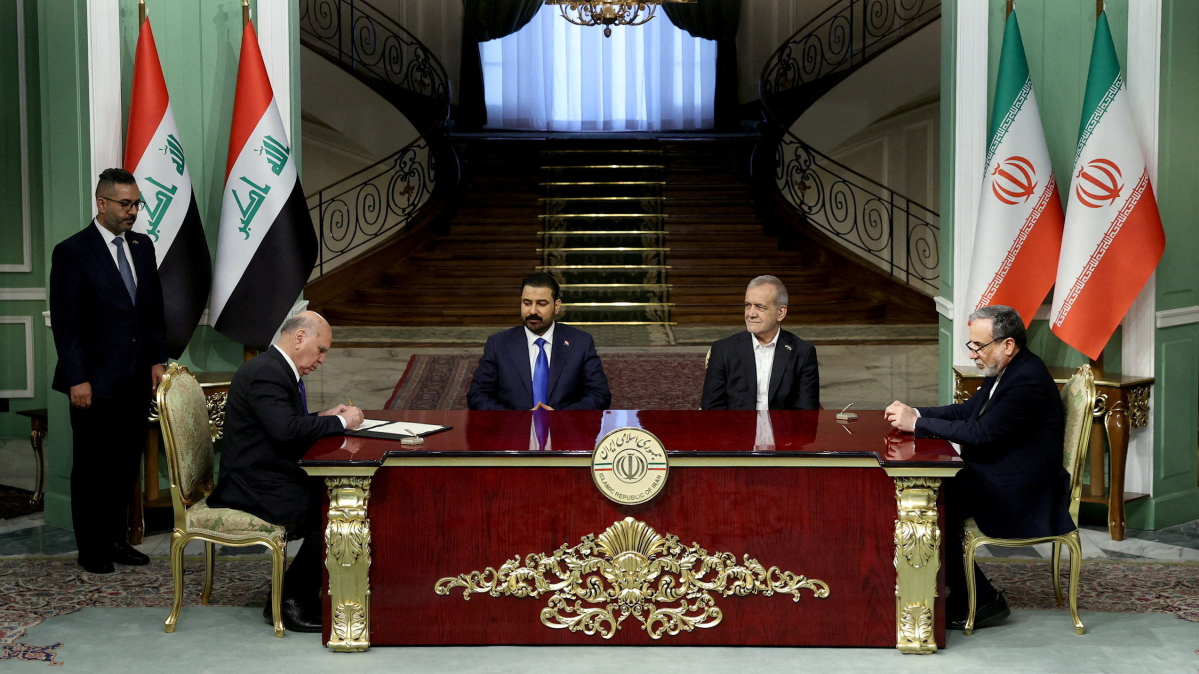
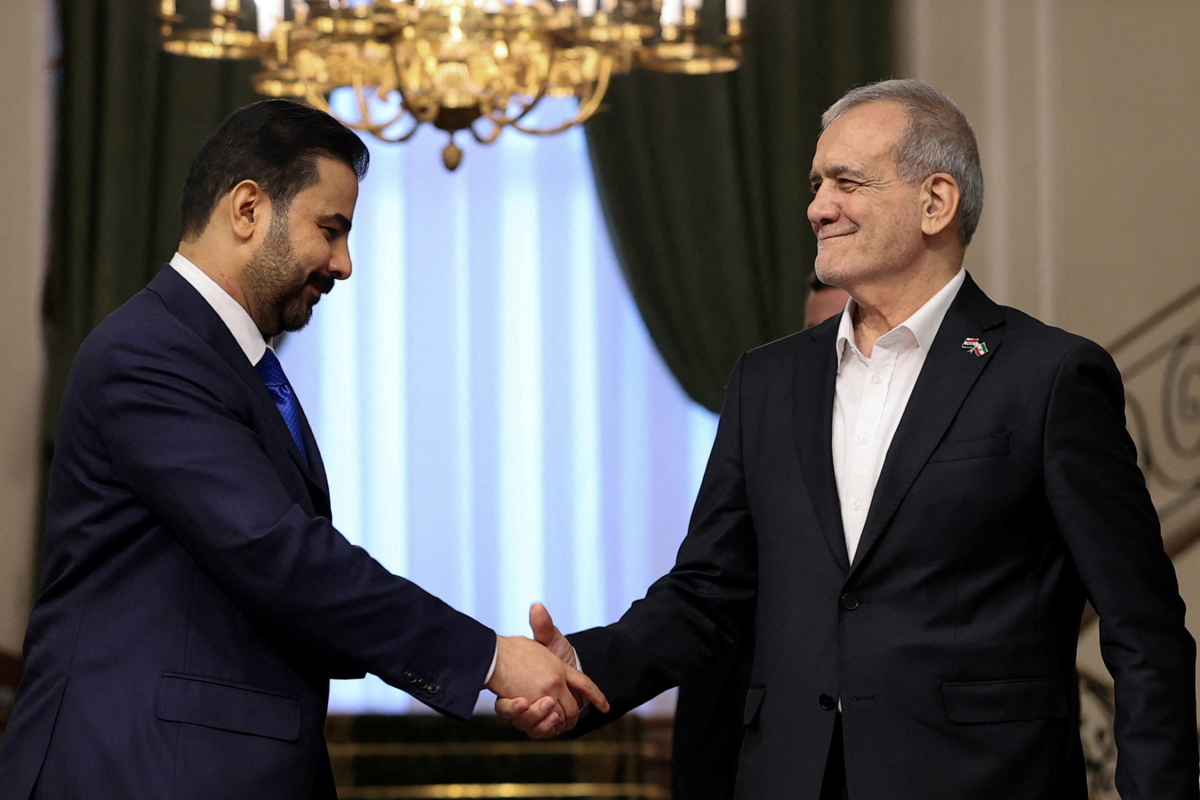
Iranian President Masoud Pezeshkian and Iraqi Prime Minister Ali al-Zaidi signed a series of agreements in Tehran on Thursday aimed at strengthening bilateral trade, transport links and security cooperation, highlighting the growing strategic partnership between the neighbouring countries.
Trade and transport cooperation
Pezeshkian and al-Zaidi oversaw the signing of four agreements and memoranda of understanding by Iranian and Iraqi ministers covering road freight transport, construction of the Khosravi–Baghdad railway, a sister-city agreement between Tehran and Baghdad, and cooperation in public administration, training and human resources.
The agreements, aimed at expanding economic ties and strengthening security cooperation along the shared border, were concluded during al-Zaidi's visit to Iran.
According to the President's Office, Pezeshkian described the development of rail and road networks as one of Iran's key priorities.
"Iran has begun developing transport and transit infrastructure with neighboring countries and is interested in Iraq being connected to this network to foster investment, common markets, and port development."
He also stressed the importance of maintaining security along the border to facilitate trade and transit between Iran and Iraq.
Al-Zaidi welcomed closer trade relations with neighbouring Iran and praised Tehran's political and practical support for Iraq during the fight against terrorism when ISIS occupied several Iraqi cities.
"Iraq will not tolerate any hostile activity from its soil against Iran and is committed to the security agreements with Tehran," the visiting Iraqi prime minister was quoted as saying.
Shared history and regional ties
In addition to sharing a 1,400km border, Iran and Iraq have deep historical, religious and commercial ties, despite fighting an eight-year war during the 1980s under Iraqi ruler Saddam Hussein, shortly after the 1979 Iranian Revolution.
Earlier in July, the Iraqi cities of Najaf and Karbala - home to the shrines of the revered Shia figures Imam Ali and Imam Hussein - held a large funeral for Iran's former Supreme Leader Ayatollah Seyed Ali Khamenei and members of his family who were killed in Israeli–U.S. air raids in February.
Iraqi and Iranian officials, including Foreign Minister Abbas Araghchi, said the large procession demonstrated solidarity between the two nations.
Washington visit fuels speculation
Al-Zaidi's visit to Tehran came after his first foreign trip to the United States last week, prompting speculation that Baghdad could act as a mediator between Iran and the U.S. amid heightened military tensions.
Speaking on the sidelines of the visit, Araghchi said he was optimistic about the outcome of the agreements signed in Tehran.
Asked whether the Iraqi prime minister had delivered a message to Iranian officials following his visit to Washington, Iran's top diplomat said:
"It is natural that Mr. al-Zaidi conveyed his impression of the talks with U.S. officials to Iran."
He added: "We have no problem with a mediator to exchange messages with Washington,"
before saying that the main obstacle remained what he described as the "irrational, excessive, and hegemonic" demands of the U.S.
Domestic and regional agenda
Al-Zaidi's visit to Tehran precedes a regional tour later in July which, according to his office, will also take him to the neighbouring countries of Türkiye and Syria.
At 41, he is the youngest prime minister in Iraq's history.
Domestically, al-Zaidi has launched an anti-corruption campaign targeting former and serving officials and lawmakers.
He also faces the challenge of disarming Iraqi militias and curbing the influence of pro-Iran political groups opposed to continued U.S. influence in post-Saddam Iraq.











What is your opinion on this topic?
Leave the first comment