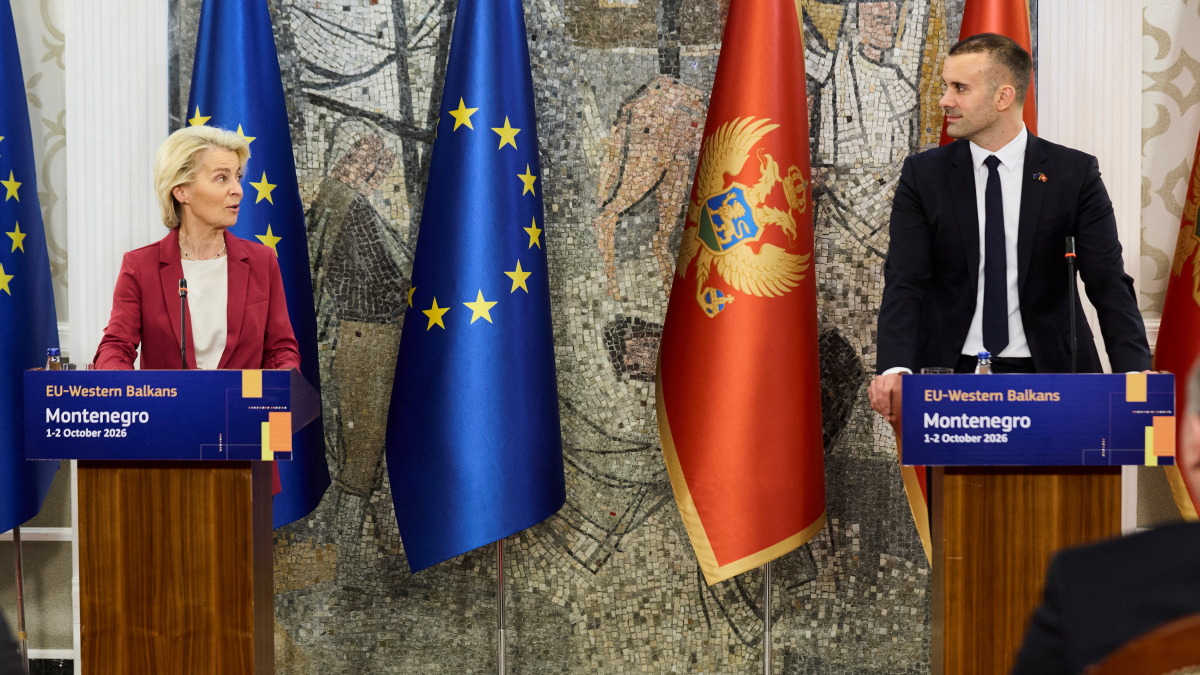
Montenegro has moved a step closer to becoming the European Union's next member, with Brussels signalling that the Balkan country could join by 2028, ending more than a decade without EU enlargement.
In its latest assessment of candidate countries, the European Commission said Montenegro had made significant progress in bringing its laws, institutions and governance standards into line with EU requirements, placing it ahead of other candidates in the race to join the bloc.
If reforms remain on track and EU member states give their approval, accession talks could conclude within the next year, opening the door to a formal accession treaty before the end of the decade.
Montenegro, an Adriatic nation with a population of around 630,000, aims to join the EU in 2028. But to meet that target, it must finalise negotiations across several policy areas and win ratification from all 27 existing member states.
While praising the country's reform efforts, the Commission warned against losing momentum.
Officials emphasised the need to maintain political unity over EU membership, deliver remaining reforms and prevent domestic divisions from derailing progress.
EU enlargement gains fresh momentum
The EU's push to expand comes after years of stalled progress, with geopolitical tensions bringing enlargement back into focus.
Russia's war in Ukraine, regional security concerns and growing competition for influence in the Western Balkans have made expansion an increasingly urgent priority for Brussels.
EU leaders increasingly see enlargement as a way to strengthen political and economic ties with neighbouring countries while reinforcing stability across Europe.
Montenegro is widely regarded as the leading candidate for membership, although Albania, Ukraine and Moldova are also advancing towards accession.
Albania faces pressure to accelerate reforms
The Commission also recognised Albania's progress but warned that further reforms were needed before membership negotiations could be concluded.
Brussels called for stronger cooperation among political parties, parliament and civil society to keep reforms moving despite political tensions.
The assessment comes amid some of Albania's largest public demonstrations since its transition to democracy.
EU officials stressed that progress on governance, judicial reform and institutional accountability would be crucial if Albania is to achieve its goal of completing accession negotiations by the end of 2027.
Montenegro's accession could mark a turning point
If Montenegro succeeds in joining the EU, it will become the bloc's 28th member state, marking its first expansion since Croatia joined in 2013.
The move would also send a powerful signal across the Western Balkans that EU membership remains within reach for countries prepared to undertake far-reaching political, legal and economic reforms.
With Montenegro now approaching a potentially decisive stage in its accession process, attention is turning to whether it can sustain reform momentum and secure the backing needed to turn years of negotiations into EU membership.
Read more:










What is your opinion on this topic?
Leave the first comment