Russia launched another wave of missile and drone attacks across Ukraine on Wednesday, killing at least nine people and underscoring Kyiv's growing concerns over dwindling supplies of U.S.-made air-defence interceptors.
The latest strikes came as President Volodymyr Zelenskyy met U.S. President Donald Trump on the sidelines of the NATO summit in Ankara, where one of the key topics was Ukraine's urgent need to strengthen its air-defence capabilities.
Kyiv was hit by overnight ballistic missile strikes and repeated waves of jet-powered drones throughout the day. Ukrainian officials said three people were killed and 13 were injured in the capital, including a child.
Mayor Vitali Klitschko said one of the drone attacks struck a 25-storey residential building during the afternoon. Overnight strikes also sparked fires at warehouse facilities, with emergency crews battling flames into the morning.
Ukraine's air force said it intercepted 139 of the 169 drones launched by Russia overnight. However, none of the five ballistic missiles fired during the attack was shot down, highlighting a persistent vulnerability in Ukraine's air-defence network.
Russia intensifies air campaign
The latest barrage is part of a broader escalation in Russia's aerial campaign. As battlefield advances have slowed, Moscow has increasingly relied on long-range missiles and drones to pressure Ukrainian cities and infrastructure.
In July alone, Russian attacks on Kyiv and the surrounding region have killed 60 people. According to Ukrainian air force data, only four of the 54 ballistic missiles launched by Russia this month have been intercepted.
Elsewhere, Russia targeted Ukraine's Black Sea port city of Odesa, killing four people and injuring six others. Regional officials said port infrastructure was damaged in the strike, further threatening one of Ukraine's most important export hubs.
Kharkiv, Ukraine's second-largest city, also came under attack. Local authorities reported damage to residential buildings and a church, while a separate missile strike later killed two people in a residential area.
Air-defence needs dominate Trump-Zelenskyy talks
The intensifying air war has become a central issue for Ukraine's leadership. Zelenskyy has repeatedly appealed for additional U.S.-made interceptor missiles, which remain the only systems in Ukraine's arsenal capable of reliably engaging ballistic missiles.
Following his meeting with Trump in Ankara, Zelenskyy said discussions had focused on strengthening Ukraine's air-defence capabilities.
“President Trump and I spoke about some ideas that could strengthen our positions and bring peace closer,” Zelenskyy wrote on social media after the talks.
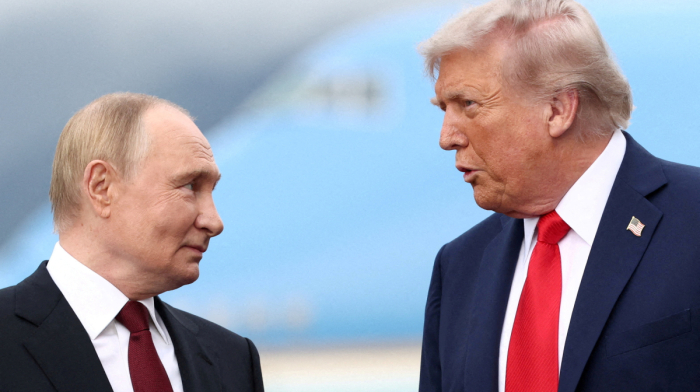
Trump, who also recently spoke with Russian President Vladimir Putin, said he believed the war could be settled “hopefully soon,” though no breakthrough has been announced.
No sign of compromise from Moscow
Meanwhile, Russia maintained its hardline position. Putin has repeatedly indicated that Moscow intends to continue the war and has demanded that Ukraine surrender the remainder of the eastern Donetsk region still under Kyiv's control.
Russian officials said Ukrainian drone attacks overnight killed one person and damaged industrial facilities inside Russia. In occupied parts of southern Ukraine's Kherson region, Russian-installed authorities reported that a Ukrainian drone hit an ambulance station, killing a hospital worker.
NATO support remains firm
Diplomatic tensions remained high at the NATO summit as Russia criticised the alliance's decisions on Ukraine.
Foreign Ministry spokeswoman Maria Zakharova accused NATO of further militarising Europe and preparing for potential confrontation with Russia.
She warned that the alliance's course of action could have “catastrophic” consequences, while condemning continued military assistance to Ukraine.
Despite those warnings, NATO leaders reiterated their commitment to supporting Kyiv, making clear that air-defence assistance and broader military aid will remain central to Western efforts to bolster Ukraine against Russia's ongoing attacks.















What is your opinion on this topic?
Leave the first comment