Flooding across parts of China is expected to worsen as Super Typhoon Bavi approaches the country's coast this weekend, becoming the second tropical cyclone to strike the country in a week. Authorities have warned that more provinces could be affected.
Flood threat grows
The cyclone, measuring more than 1,000km (621 miles) in diameter and packing winds of more than 290kph (180mph), follows Typhoon Maysak, which made landfall on China's southernmost island province of Hainan before sweeping into the neighbouring region of Guangxi, which borders Vietnam, last week.
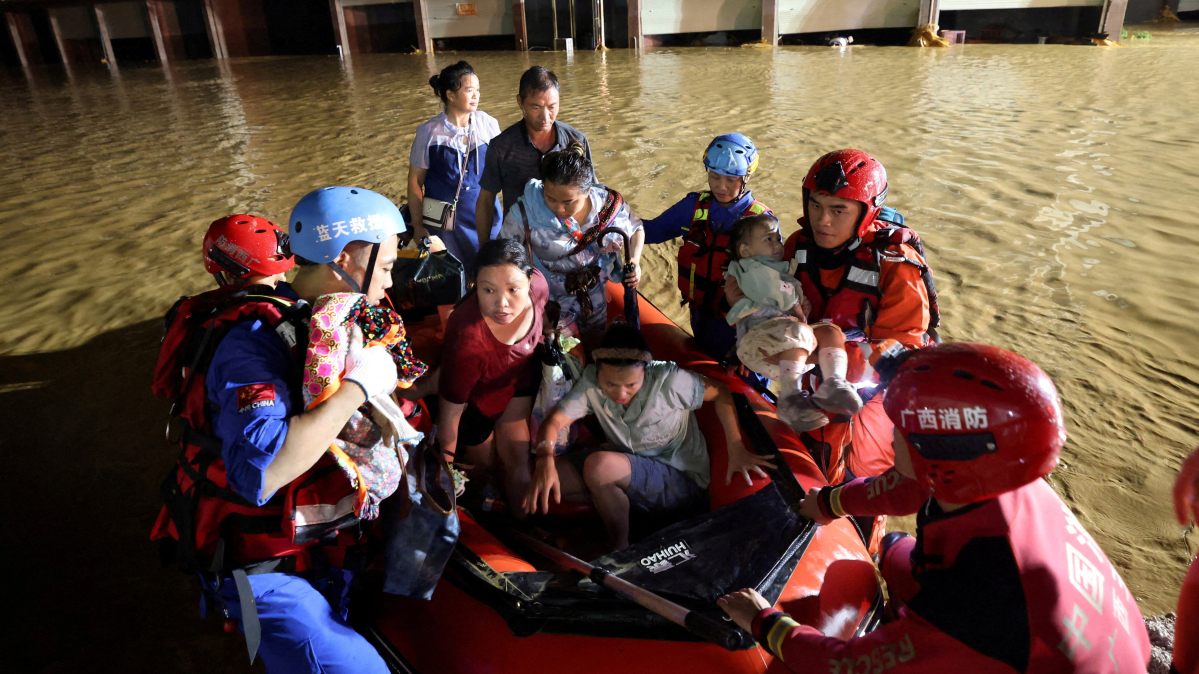
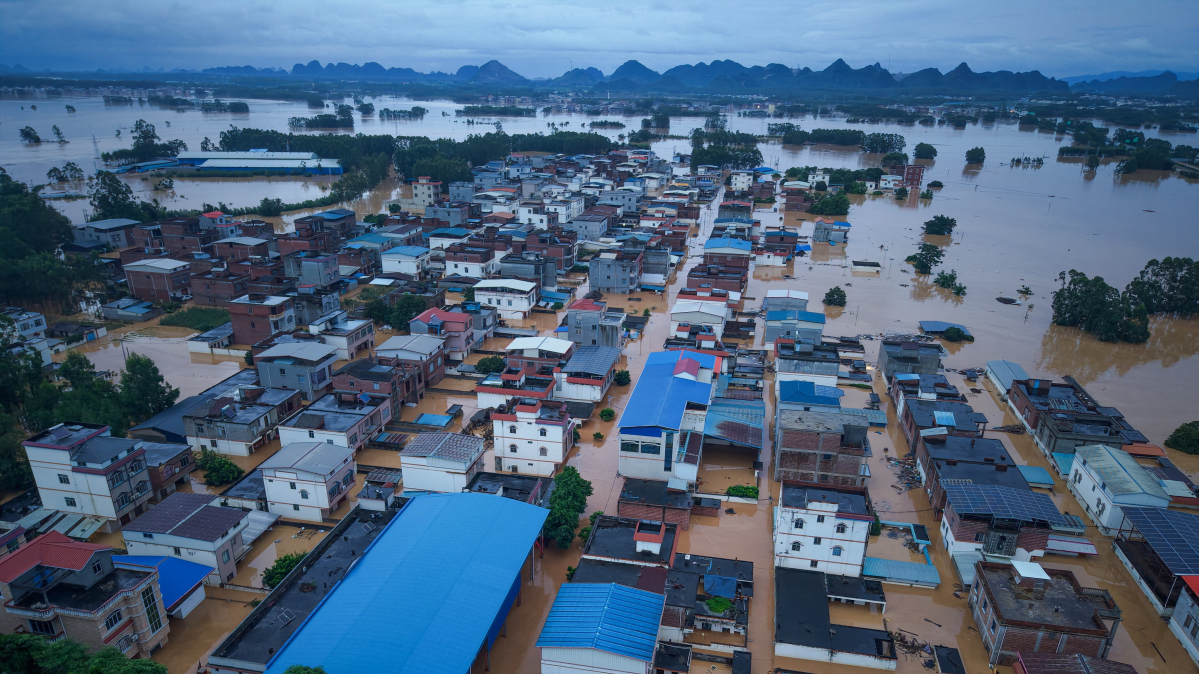
At least six people have already died in Guangxi, officials said, with the death toll expected to rise. Towns and villages in Hengzhou were inundated after dams at a local reservoir failed.
Floodwaters carrying large amounts of mud and silt have submerged downstream farmland and villages, state broadcaster China Central Television (CCTV) reported.
China's National Climate Centre expects up to six typhoons to form in the north-west Pacific and South China Sea in July, above the average of 3.8. Of those storms, up to three could make landfall, almost double the long-term average of 1.8. The agency also warned that this year's cyclones are likely to be more intense than usual.
Climate concerns
Scientists say climate change is increasingly exposing the world's second-largest economy to destructive weather events, with this year of particular concern because of the expected emergence of the El Niño weather pattern.
The climate phenomenon, characterised by unusually warm surface waters in the eastern and central equatorial Pacific Ocean, can trigger severe flooding, typhoons and hurricanes across the Asia-Pacific region, including southern China.
Benjamin Horton, Dean of the School of Energy and Environment at the City University of Hong Kong, said the magnitude of extreme weather events was increasing, leaving little time for adaptation.
"This is just going to repeat and repeat and repeat," he said.
Hui Su, Chair Professor in the Department of Civil and Environmental Engineering at the Hong Kong University of Science and Technology, said 2026 was shaping up to be "more intense and damaging than a typical year."
"El Nino is shifting typhoon tracks westward toward China's coast and heightening risks, while climate change makes storms wetter and more destructive,” she said.
















What is your opinion on this topic?
Leave the first comment