Trump sends Saudi nuclear deal to Congress as Riyadh urged to recognise Israel
U.S. President Donald Trump has formally sent a landmark nuclear cooperation agreement with Saudi Arabia to Congress, opening a new phase in a deal...
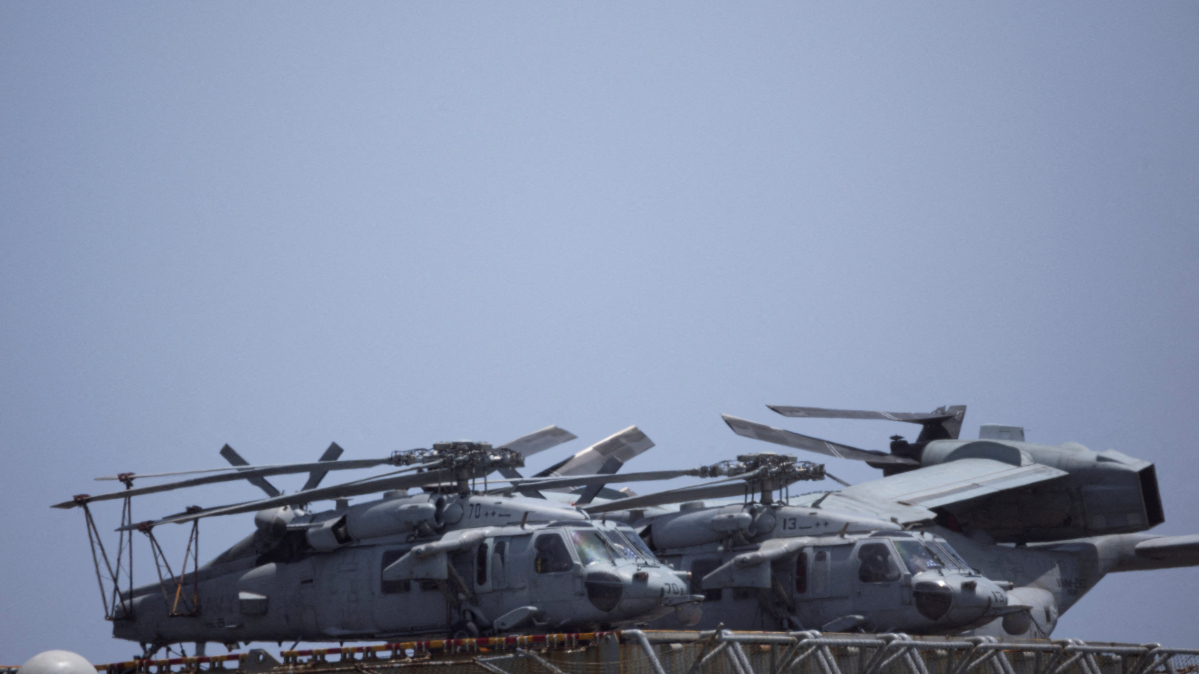
The United States has approved the possible sale of five Seahawk maritime helicopters to New Zealand in a deal valued at $1.5 billion, as Wellington moves to strengthen its armed forces.
The U.S. State Department said on Friday that it had approved a potential Foreign Military Sale of MH-60R multi-mission helicopters and related equipment to New Zealand.
The helicopters are produced by Sikorsky, a subsidiary of U.S. defence company Lockheed Martin.
The planned purchase forms part of New Zealand’s wider effort to modernise its military and increase defence spending over the coming years.
The centre-right government announced in 2025 that it would invest an additional NZ$9 billion, around $5.21 billion, over four years. It also plans to raise defence spending to 2% of gross domestic product within eight years.
Last month, the government allocated NZ$1.58 billion, around $916 million, in new defence funding as part of that programme.
Prime Minister Christopher Luxon said New Zealand could no longer rely on the relatively stable security environment of previous decades.
“We've moved from a benign environment to a much more globally strategically competitive environment. It's entirely appropriate that we double our defence spending,” Luxon said during a visit to Australia’s Queensland state, where he was attending annual talks with Australian Prime Minister Anthony Albanese.
The United States has encouraged allies in Europe and the Asia-Pacific region to increase military spending and strengthen defence capabilities.
New Zealand, a close partner of Australia, has expanded its military presence in East Asia in recent years, as concerns grow over regional security and China’s rapidly developing military capabilities.
According to the U.S. State Department, the proposed sale would improve New Zealand’s ability to respond to current and future threats and help protect critical infrastructure.
“The proposed sale will improve New Zealand’s capability to meet current and future warfare threats by providing greater security for its critical infrastructure,” the department said.
It added that New Zealand would use the helicopters and related equipment to strengthen its national defence capabilities.

Oil prices fell after the U.S. expanded economic sanctions on Iran, as Tehran vowed to retaliate and warned it had tools to respond, raising concerns over potential disruption to regional oil supplies.
Ukraine’s President Volodymyr Zelenskyy said on Monday that Kyiv wants peace but will not surrender to Russia, as foreign leaders joined Independence Day events marking 35 years since Ukraine’s independence.
Kyiv has recently received a small number of U.S.-made Patriot interceptors capable of downing Russian ballistic missiles, Ukrainian President Volodymyr Zelenskyy has said. It comes as Britain and France pledged stronger military support for Ukraine.
Only four commodity vessels crossed the Strait of Hormuz on Sunday, following 13 transits a day earlier, as disruptions continue to restrict traffic through the key energy chokepoint.
Pakistan is stepping up efforts to protect its trade and energy supplies as the Iran war disrupts shipping through the Persian Gulf, driving up freight costs and putting pressure on key export routes.
U.S. President Donald Trump has formally sent a landmark nuclear cooperation agreement with Saudi Arabia to Congress, opening a new phase in a deal that has already sparked debate over nuclear proliferation and Riyadh's ambitions.
Russia and Ukraine are preparing another major prisoner exchange, with officials from both sides working to finalise lists of people who could be released, Russia's state news agency TASS said Wednesday.
The Trump administration has temporarily suspended some visa appointment scheduling at U.S. embassies and consulates around the world as part of a new training initiative for consular staff, adding another layer to the administration's broader immigration policy overhaul.
The United States has launched what it describes as its most aggressive sanctions campaign yet against Iran, expanding secondary sanctions and targeting sectors ranging from shipping and aviation to technology and finance.
Kyiv has recently received a small number of U.S.-made Patriot interceptors capable of downing Russian ballistic missiles, Ukrainian President Volodymyr Zelenskyy has said. It comes as Britain and France pledged stronger military support for Ukraine.
You can download the AnewZ application from Play Store and the App Store.
What is your opinion on this topic?
Leave the first comment