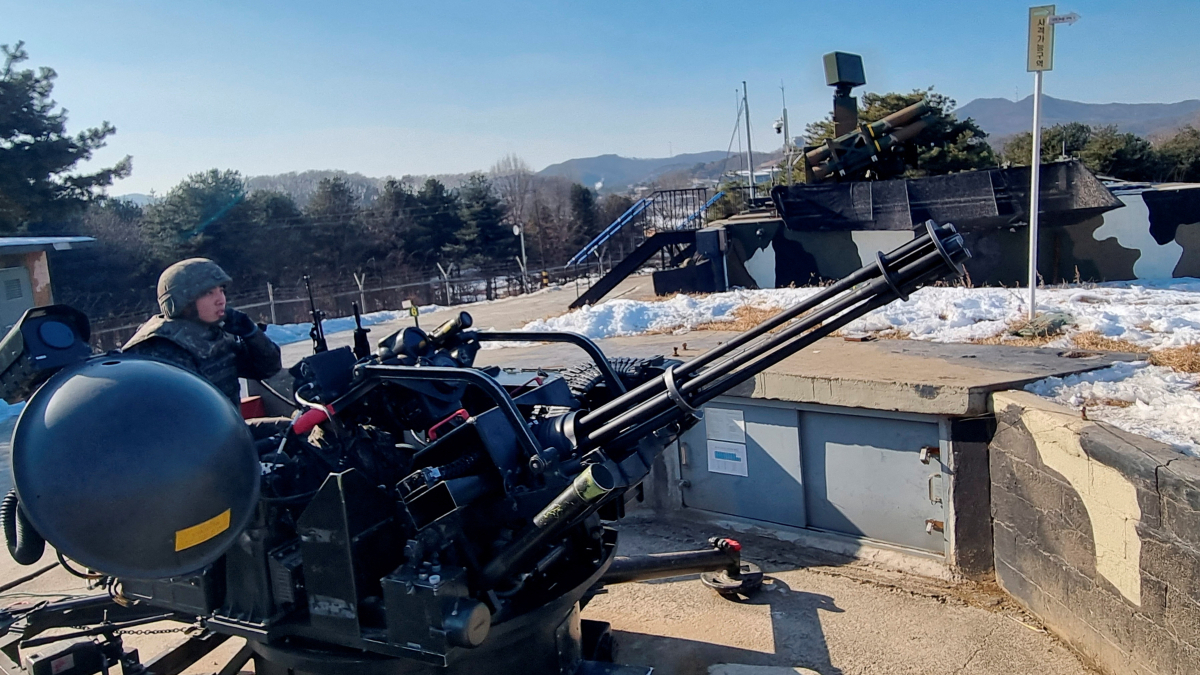
South Korea is set to dramatically expand its unmanned warfare capabilities, with plans to integrate drones across all branches of its military as tensions with North Korea continue to shape the country's defence strategy.
Drones to become standard equipment
The initiative includes training up to 500,000 so-called "drone warriors" and distributing tens of thousands of unmanned systems across the armed forces, according to announcements from defence officials.
Defence Minister Ahn Gyu-back said the goal is to transform drones from specialist equipment into universal battlefield tools.
"Drones should no longer be equipment used by a limited number of units, but a universal combat tool," he said, describing them as a "second personal weapon" for soldiers.
Under the plan, unmanned systems will be deployed across the army, navy, air force and marine corps, embedding drone operations into routine military activities.
Revised production targets
Initial plans called for the production of around 110,000 drones by 2029. However, the target has since been revised to approximately 60,000 systems.
Around 11,000 drones are expected to enter service as early as 2026, signalling a rapid rollout as the military accelerates procurement and integration.
A senior defence official also confirmed plans to acquire more than 20,000 low-cost, expendable drones, alongside AI-enabled swarm systems and loitering munitions.
Strengthening domestic production
A key pillar of the strategy is technological independence. South Korea plans to rely entirely on domestically produced components, avoiding Chinese-made parts because of security concerns.
The government also intends to reform procurement rules to speed up the adoption of civilian technologies, positioning the military as a major customer to help stimulate the domestic drone industry.
Investing in counter-drone technology
Alongside the expansion of offensive drone capabilities, Seoul will significantly increase investment in counter-drone technologies, including laser and high-power microwave weapons.
Operational doctrine will also change, allowing each branch of the military to independently conduct surveillance and strike missions using unmanned systems, reducing reliance on centralised command structures.
Officials said the changes reflect lessons learned from recent conflicts in Ukraine and the Middle East, where low-cost drones have reshaped modern warfare.
Growing competition on the Korean Peninsula
The announcement comes as both Koreas accelerate the development of unmanned systems amid rising regional tensions.
South Korean officials warned that North Korea is also advancing its drone capabilities, increasing the threat to military and civilian infrastructure in the South.
"Low-cost drones operated in large numbers are fundamentally changing the nature of warfare," Minister Ahn said.
Political and organisational changes
The expansion also follows political controversy surrounding drone operations under the previous administration.
Former president Yoon Suk Yeol was recently sentenced to prison in connection with allegations involving a military drone incursion into North Korea, which prosecutors said was intended to justify political decisions during his administration.
Meanwhile, current president Lee Jae Myung has overseen the dismantling of the previous drone operations command. The new framework will instead focus on policy co-ordination and capability development, while leaving operational control to individual military units.
Demographic pressures
South Korea's strategy is also being driven by long-term demographic decline, which is reducing the pool of available military personnel.
As a result, defence planners are increasingly turning to automation and unmanned systems to maintain operational readiness and sustain combat effectiveness in an evolving security environment.











What is your opinion on this topic?
Leave the first comment