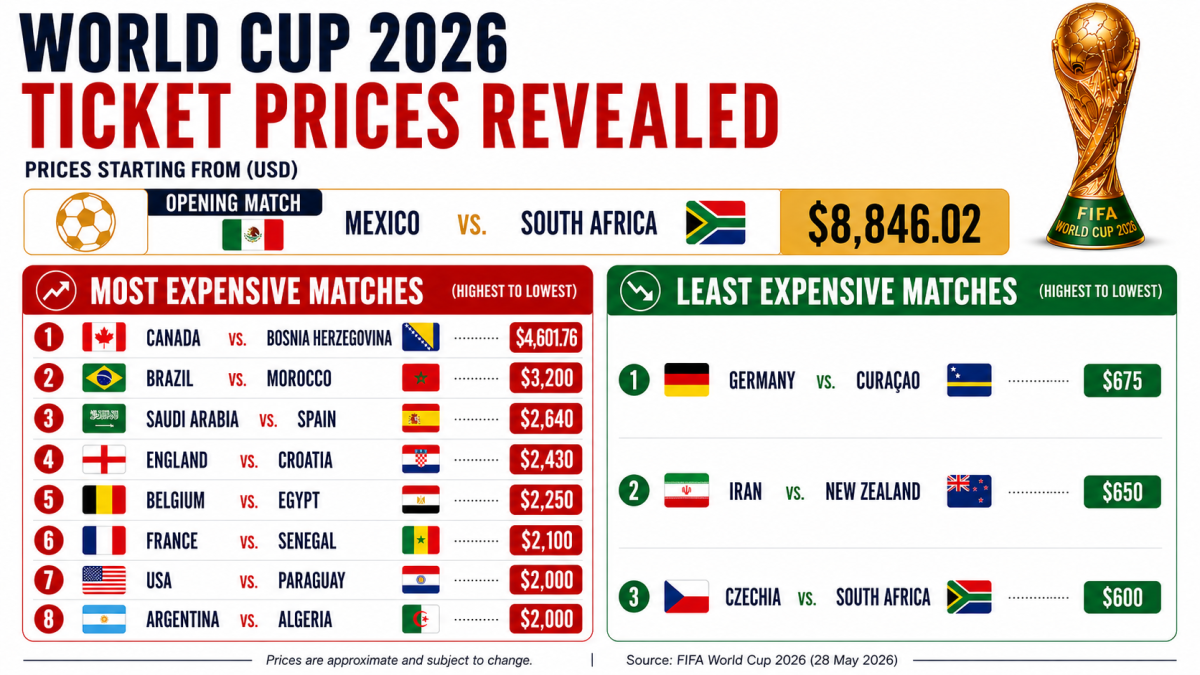
Authorities in the U.S. states of New York and New Jersey have launched a formal probe into FIFA’s ticketing practices for the 2026 World Cup, citing allegations of misleading pricing, dynamic pricing concerns, and seat allocation complaints.
New York and New Jersey Attorneys General have issued a subpoena to FIFA as part of an investigation into how tickets for the 2026 FIFA World Cup are being sold, priced and allocated.
The probe focuses on eight matches scheduled at MetLife Stadium, including the final on 19 July 2026.
New York Attorney General Letitia James and New Jersey Attorney General Jennifer Davenport said they are seeking internal documents to understand how ticket prices were set and how seating categories were defined and marketed.
Allegations of soaring prices and dynamic pricing
According to the attorneys general, ticket prices for the tournament have risen sharply compared with previous World Cups, with reports of average increases of more than 30% across multiple ticket categories.
This is also the first World Cup to use dynamic pricing, where ticket costs fluctuate based on demand. Officials say this has contributed to widespread fan complaints about affordability and transparency.
“New Yorkers have been waiting years for the World Cup to come to their backyard,” James said, adding that fans “deserve a fair shot at affordable tickets”.
Concerns over seating allocation
A key part of the investigation relates to how seats were allocated after purchase.
Authorities say that after initial sales, FIFA introduced new “Front Category” zones, which reportedly contained the most desirable seats but were priced higher. Some fans who had already purchased tickets say they were excluded from these sections.
The attorneys general also cited complaints from buyers who claim they received seats in lower-quality locations than those originally selected and paid for.
Broader regulatory scrutiny
The New York and New Jersey investigation follows a separate request from California Attorney General Rob Bonta, who has also sought information on FIFA’s ticketing practices for matches scheduled in California.
Together, the actions suggest expanding regulatory scrutiny of how FIFA is managing ticket distribution across multiple U.S. host cities.
FIFA response
FIFA has not commented directly on the subpoena, but has previously defended its pricing model, stating that ticket prices reflect market demand and global entertainment standards.
President Gianni Infantino has previously argued that pricing aligns with broader market conditions in major international sporting events.
Read more:














What is your opinion on this topic?
Leave the first comment