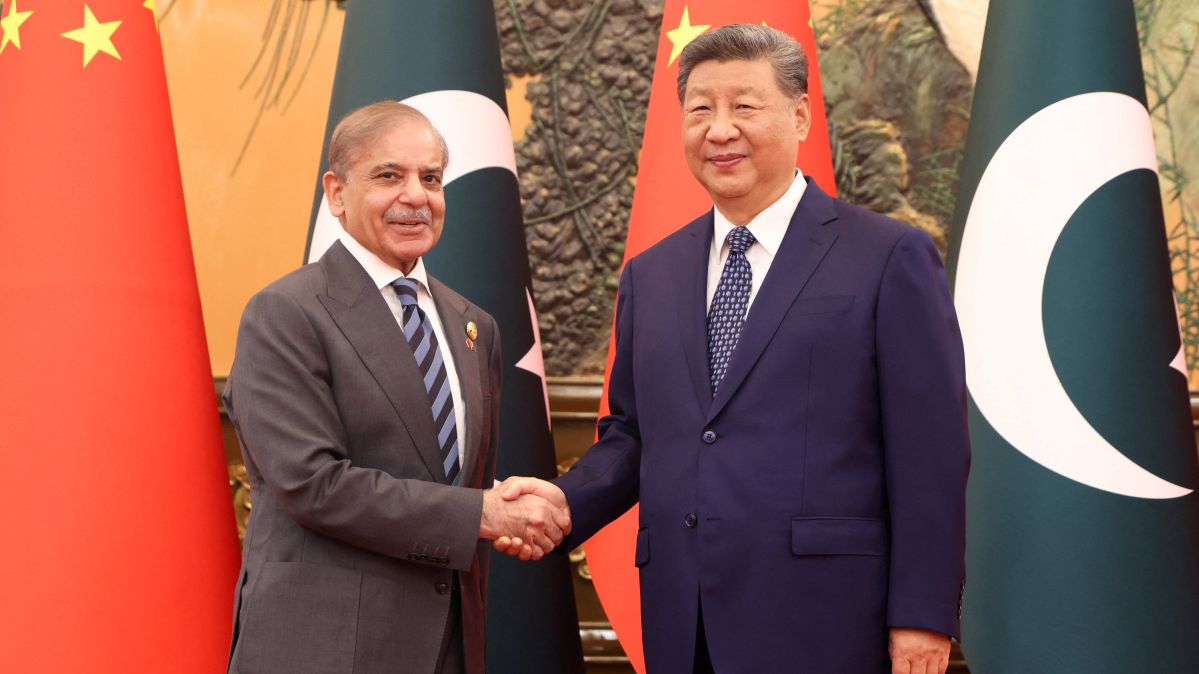
Pakistan's Prime Minister Shehbaz Sharif arrived in China on May 23rd for a four-day state visit that comes at a particularly consequential moment for Beijing, for Islamabad, and for a region being reshaped by the ongoing war between the United States and Iran.
Meetings focus on trade and security
Sharif is on a visit to China from May 23 to 26 at the invitation of the Chinese government. He is meeting with President Xi Jinping and Premier Li Qiang to discuss trade, investment, technology, agriculture, and strategic affairs.
“Iron Brothers” mark 75 years of diplomatic relations
The visit coincides with the 75th anniversary of diplomatic relations between Pakistan and China, a milestone both governments have marked with official messages of goodwill.
Pakistani Foreign Minister Ishaq Dar, who is accompanying Sharif along with a large multi-party delegation, described the relationship as one built on consistency and trust rather than conventional diplomacy. Both countries frequently refer to each other as “Iron Brothers”, a term that reflects the depth of their long-standing partnership.
Economic and strategic ties anchor the relationship
China remains Pakistan’s largest trading partner, its primary source of military equipment, and its most significant infrastructure investor.
At the centre of this cooperation is the China-Pakistan Economic Corridor (CPEC), a multi-billion-dollar initiative that has funded major roads, energy projects, and port infrastructure across Pakistan. The programme has significantly reshaped connectivity within the country and remains a cornerstone of Islamabad’s foreign policy.
Military cooperation has also deepened in recent years, with Pakistan deploying Chinese-made defence equipment during its brief conflict with India last year, underscoring the strategic dimension of the partnership.
Iran war disrupts regional stability and trade routes
Sharif’s visit comes as the Middle East conflict involving the United States and Iran continues to disrupt regional stability.
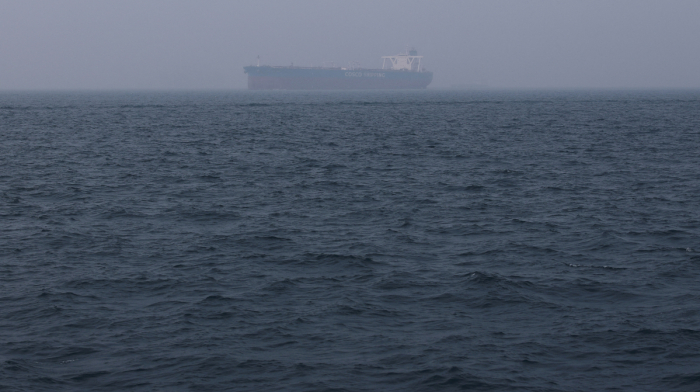
The war has affected key shipping routes, including the Strait of Hormuz, through which roughly one-fifth of global oil supply passes. The resulting uncertainty has had direct implications for Pakistan, which borders Iran and relies heavily on imported energy.
Gwadar Port gains new strategic importance
Amid these disruptions, Pakistan’s Gwadar Port has seen a noticeable increase in activity as regional trade patterns shift.
The deep-sea port, developed and operated with Chinese investment, is increasingly being viewed as a potential alternative trans-shipment hub. Pakistani officials estimate it could eventually contribute up to $25 billion to the economy by redirecting trade away from vulnerable maritime chokepoints.
The government has also designated new land routes linking Gwadar to the Iranian border, aimed at improving overland connectivity with Iran and parts of Central Asia.
For China, Gwadar represents a strategic asset within its wider Belt and Road Initiative, offering access to the Arabian Sea while bypassing the Strait of Malacca.
China and Pakistan expand diplomatic role in Iran conflict
The Iran war has also pushed Beijing and Islamabad into a more active diplomatic space.
Both countries have expressed interest in supporting mediation efforts in the conflict. Chinese Foreign Minister Wang Yi has reportedly encouraged Pakistan to play a greater role in facilitating dialogue with Tehran, reflecting Islamabad’s geographic and political proximity to Iran.
Beijing’s diplomatic activity underscores broader strategy
Sharif’s visit comes during a period of intense diplomatic engagement in Beijing, which has recently hosted a series of high-level international visits.
His trip continues China’s recent run of engagements with major global leaders, reinforcing its positioning as a central diplomatic hub amid rising global tensions.
Trade, investment and security expected to dominate talks
During the visit, Sharif is expected to push for further progress on China-Pakistan Economic Corridor (CPEC) projects, expanded trade and investment ties, and discussions on regional security, including developments in Kashmir.
For Pakistan, facing domestic economic pressures and heightened regional instability, the relationship with China remains a central pillar of both economic planning and foreign policy strategy.












What is your opinion on this topic?
Leave the first comment