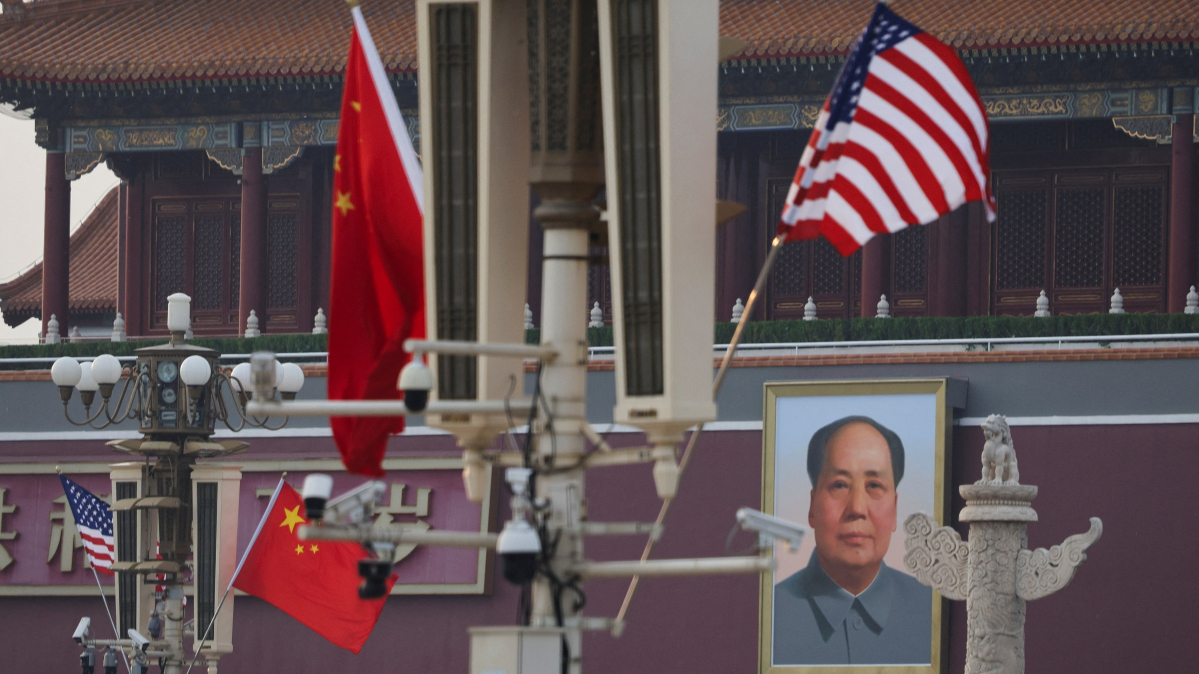
U.S. President Donald Trump and Chinese President Xi Jinping will meet in Beijing on 14–15 May 2026 for a high-stakes summit aimed at managing rising tensions over trade, technology, Taiwan and the Iran conflict.
The talks come at a time of heightened strain over trade, technology, Taiwan and the Iran conflict. While expectations for major agreements are low, both sides are under pressure to avoid further escalation in a relationship that shapes global economic and security stability.
Despite public rhetoric describing a personal rapport between the two leaders, analysts say the summit is best understood as a controlled effort to stabilise relations rather than reset them.
As Alejandro Reyes, an adjunct professor at the University of Hong Kong, put it, this is not a “friendship summit” but a “risk management summit” taking place at a critical moment for global geopolitics and the global economy.
The underlying message from both capitals is cautious: prevent deterioration, but avoid overpromising outcomes.
Trade tensions: From soybeans to Boeing jets
Trade remains the most visible pillar of the agenda. Washington is expected to push for increased Chinese purchases of U.S. goods, particularly agricultural products such as soybeans, beef and poultry, alongside energy exports including oil, coal and natural gas.
A key focus is also aviation. China has reportedly been engaged in long-running discussions with Boeing over a potential large aircraft deal, including hundreds of 737 MAX jets and wide-body aircraft. However, negotiations have repeatedly stalled amid broader political tensions and U.S. export restrictions on sensitive technology.
At the same time, both sides are exploring a “Board of Trade” mechanism designed to identify areas where commerce can expand without affecting national security or supply chains.
While minor trade concessions or extensions of existing truce arrangements may be possible, analysts say a broader resolution to the trade war remains unlikely.
Technology, chips and rare earth leverage
The summit also highlights a deepening technological rivalry. The United States continues to restrict exports of advanced semiconductors and chip-making equipment to China, citing national security concerns. Beijing, in response, has raised objections and is seeking an easing of those restrictions.
China, meanwhile, holds a critical advantage in rare earth minerals and has used export controls to exert pressure on global supply chains. These materials are essential for automotive, aerospace and defence manufacturing.
Both countries have increasingly developed economic “leverage tools”, including sanctions, investigations and regulatory measures targeting foreign firms and strategic industries.
The growing competition suggests not a temporary dispute, but a long-term struggle for technological dominance.
Iran and the Strait of Hormuz
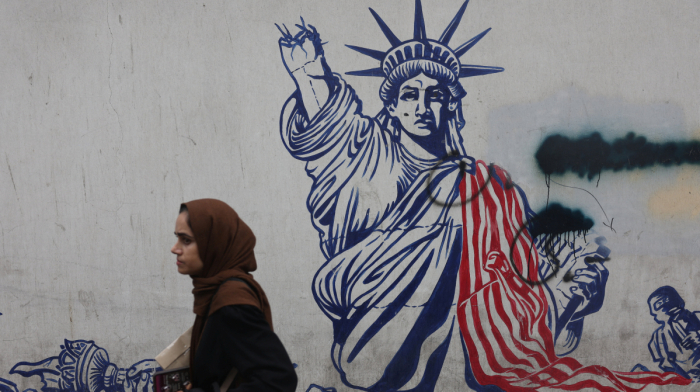
Another sensitive issue on the agenda is the Iran conflict and its wider regional consequences.
The U.S. is expected to urge China to play a more active role in encouraging stability and ensuring the continued flow of global energy through key maritime routes such as the Strait of Hormuz.
However, analysts caution that China’s influence over Iran is often overstated. While Beijing has engaged diplomatically with Tehran, it is unlikely to act in ways that align too closely with U.S. expectations or appear to follow Washington’s direction.
For China, the conflict is primarily a matter of energy security and regional stability rather than alignment with U.S. strategy.
Taiwan: The most sensitive flashpoint
Taiwan remains the most politically sensitive issue in U.S.–China relations. China considers the island part of its territory and has not ruled out the use of force to achieve unification. The United States maintains a policy of strategic ambiguity, officially stating it “does not support” Taiwan independence.
Beijing has reportedly signalled interest in subtle changes to U.S. language on Taiwan, particularly moves towards phrasing used in earlier diplomatic exchanges, such as explicitly opposing independence.
Even small adjustments in wording could be interpreted as shifts in U.S. commitment to Taiwan’s security, potentially altering regional perceptions across Asia.
Competing priorities
Despite overlapping tensions, both leaders arrive with clear domestic and strategic objectives.
For Donald Trump, the priorities are often described as three “Ts”:
- Trade concessions, particularly increased Chinese purchases of U.S. goods
- Tehran, with hopes of greater Chinese influence over Iran
- Taiwan, where Washington seeks to maintain strategic clarity and stability
For Xi Jinping, the focus is more about three “Ss”:
- Stability in global markets and energy flows
- Status as a responsible global power
- Sensitivity around Taiwan and U.S. regional positioning
Limited expectations amid long-term rivalry
Most analysts do not expect a major diplomatic breakthrough. Instead, the likely outcome is a series of symbolic or incremental steps, including possible extensions of trade truces, carefully worded joint statements, or agreements on limited commercial purchases.
At the same time, structural competition between the two powers - particularly in advanced technology, electric vehicles and semiconductors - is expected to continue.
A delicate balancing act
Ultimately, the Trump-Xi summit is less about resolving differences and more about containing them.
For Washington, the goal is to demonstrate diplomatic control and secure economic gains. For Beijing, it is about projecting stability and avoiding escalation while safeguarding core national interests.
In that sense, the meeting is unlikely to reset relations, but it may help prevent them from deteriorating further at a moment when global stability depends heavily on how the world’s two largest economies manage their rivalry.
















What is your opinion on this topic?
Leave the first comment