live Trump sees 'progress' in Israel-Lebanon talks as Hezbollah rejects ceasefire
U.S. President Donald Trump said he sees progress between Israel and Lebanon after talks with Netanyahu, while Hezbollah has rejected a new ceasefire ...
Hungary has suspended diesel fuel deliveries to Ukraine with immediate effect and will not resume shipments until crude oil transit via the Druzhba pipeline is restored, said Peter Szijjarto, Hungarian Minister of Foreign Affairs and Trade.
The suspension will remain in place until Ukraine restarts crude oil deliveries to Hungary through the pipeline, Szijjarto told a press conference following a government meeting.
According to the minister, crude oil transit was halted on 27 January.
Hungary cannot be expected to guarantee another country's energy security while its own supply is put at risk, said Szijjarto.
He noted that energy cooperation must be based on respect, not pressure.
On the same day, Slovak Prime Minister Robert Fico said that the Bratislava-based Slovnaft refinery is halting its diesel exports to Ukraine, and all products will now be reserved for the domestic market.
Fico also warned that Slovakia would cut off power supplies to Ukraine if Kyiv continues to sabotage the pipeline.
Ukrainian Foreign Minister Andrii Sybiha had earlier said that the Druzhba pipeline was no longer carrying Russian oil to Europe because of a Russian attack. This meant a halt to oil supplies to Hungary and Slovakia, which haven't been resumed yet.
However, Hungary accused Ukraine of cutting off power to that part of the pipeline. Fico likewise accused Ukraine of deliberately delaying the pipeline's restart in an attempt to pressure Hungary into dropping its objections to Ukraine's European Union accession.
The two countries have asked Croatia to permit Russian oil brought in by sea to transit across Croatian territory.
The Druzhba pipeline, which carries Russian oil through Ukraine to Central Europe, including the Czech Republic, Slovakia and Hungary, has faced repeated disruptions since last year because of damage to energy infrastructure amid the ongoing Russia-Ukraine conflict.
On Wednesday, the Slovak government declared a state of emergency in relation to oil supplies, the News Agency of the Slovak Republic (TASR) reported.
The country will release up to 250,000 tons of oil from national reserves for the Slovnaft refinery, according to a government decision in response to the interruption of oil supplies via the Druzhba pipeline.

Iran’s Revolutionary Guards (IRGC) said in a statement that its Aerospace Force did not strike the Kuwait Airport passenger terminal on Wednesday, and that the destruction was instead caused by a failed U.S. Patriot missile.
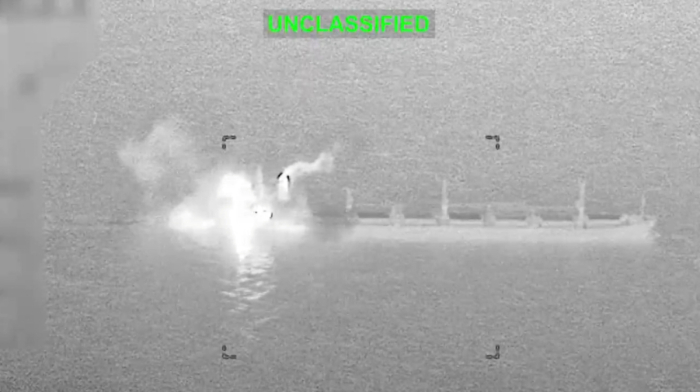
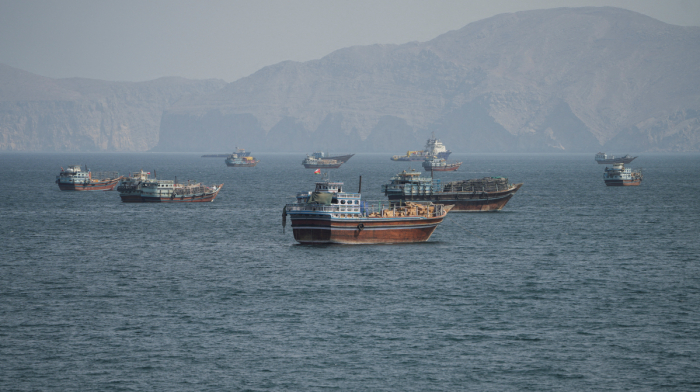
Five Azerbaijani citizens have been killed and three others injured following drone attacks on two cargo vessels in the Sea of Azov, Azerbaijan's Foreign Ministry said on Friday.
Israel and Lebanon have agreed to implement a ceasefire after U.S.-backed talks in Washington. The deal requires Hezbollah to halt attacks and withdraw from southern Lebanon, while both sides will resume direct talks later this month aimed at reaching a broader agreement.
As Armenia heads toward parliamentary elections on 7 June, the country's relationship with Azerbaijan is emerging as one of the defining issues of the campaign, with analysts and international observers highlighting the role of regional politics in shaping voters’ mindsets.
Armenia will hold parliamentary elections on 7 June 2026, a vote that will shape the country’s political direction for the next five years. Understanding how the electoral system converts votes into parliamentary power is key to following the outcome and its wider regional implications.
People across Gaza are facing a worsening humanitarian crisis, with millions struggling to access food, clean water, shelter and medical care as the conflict continues.
The next time a goal goes in during a Champions League final, fans around the world could watch it from every angle at once — frozen, rotated and replayed in ways that were impossible only a few years ago.
An ageing, poorly insured shadow armada now accounts for around one-sixth of the world's tanker fleet. Hidden by design and fraught with risk, it operates beyond conventional oversight. A maritime law expert explains how it works, who profits, and why much of the world looks the other way.
Azerbaijan has strongly rejected allegations published by CNN claiming that its territory was used for Israeli military and intelligence operations against Iran, describing the report as entirely baseless and demanding a retraction.
Turkish President Recep Tayyip Erdoğan hosted Nigerien President Abdourahamane Tchiani in Ankara on Thursday, underscoring Türkiye’s growing engagement with Africa’s Sahel region as geopolitical alliances continue to shift.
You can download the AnewZ application from Play Store and the App Store.
What is your opinion on this topic?
Leave the first comment