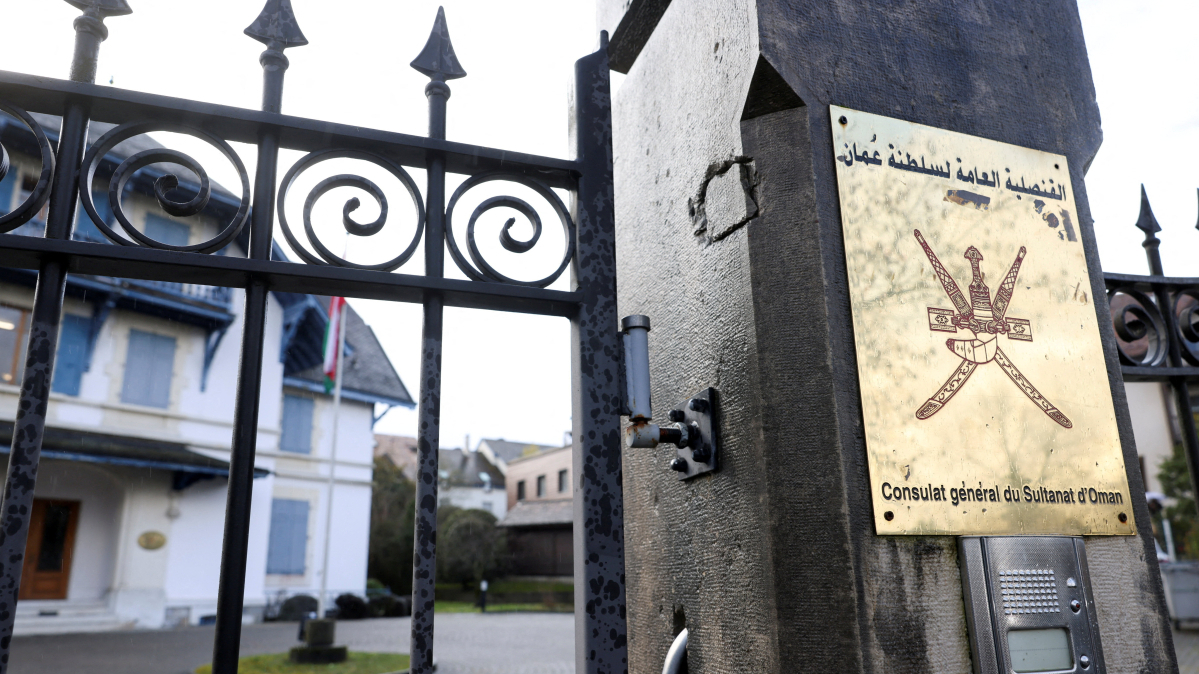
Iranian Foreign Minister Abbas Araghchi has described the second round of indirect nuclear talks with the United States as a "good start" as negotiations concluded on Tuesday (17 February) at the Omani consulate in Geneva.
Araghchi led the Iranian delegation, while the U.S. team was headed by Special Envoy to the Middle East Steve Witkoff and U.S. President Donald Trump's son-in-law Jared Kushner.
The delegations exchanged technical notes through Omani mediators, with Araghchi emphasising that “any dialogue requires refraining from threats and pressure. (Tehran) only discusses its nuclear issue… We do not discuss any other issue with the U.S.”
Speaking after the conclusion of the second round of nuclear negotiations in Geneva, Araghchi said: “The path for a deal has started,” noting that there are still topics for the two sides to work on.
He added, “I can say compared to the last round, we’ve had very serious discussions and there was a constructive atmosphere where we exchanged our point of view. Those ideas were discussed and we came to some agreements and some main principles. And based on those principles, we will eventually draft a document … We are hopeful we can achieve this. When we reach the stage of drafting a document, naturally the process will slow down.”
The talks, which lasted approximately four hours, involved experts in nuclear, legal and economic matters, media report.
Iranian Foreign Ministry spokesman Esmaeil Baghaei told state media the Iranian delegation is committed to the talks and ready to remain in Geneva for several days or even weeks to finalise an agreement.
He emphasised that lifting sanctions is integral to any nuclear deal and described Iran’s approach as “good faith, completely serious and result-oriented.”
“There have been good developments compared to last round,” Araghchi said, adding that the two parties will work on drafting potential agreement documents and exchanging them.
“This does not mean that we will reach an agreement soon, but the path has started,” he concluded.
Khamenei warns U.S.
In a message delivered on the sidelines of the talks, Iran’s Supreme Leader Ali Khamenei stressed that the negotiation process must remain genuine, warning that any U.S. attempts to dictate terms would undermine the process.
“If the U.S. comes up with fixed outcomes, then the process is not negotiation; it is just a position of the terms,” Khamenei said. The message underlined the importance of compromise and reciprocal negotiation, cautioning the Iranian team against accepting any imposed conditions.
Meanwhile, IRGC Navy Commander Rear Admiral Alireza Tangsiri warned that Iranian forces could close the strategic Strait of Hormuz “upon orders from the country’s senior leadership.”
The statement came during a large-scale naval exercise in the waterway linking the Arabian Gulf and the Gulf of Oman. Tangsiri said that weapons used under wartime conditions “would be entirely different” from those displayed in the ongoing exercises.
U.S. officials have yet to publicly comment on the outcome of the talks.












What is your opinion on this topic?
Leave the first comment