AnewZ's Orkhan Amashov reports from Munich as the three-day Munich Security Conference kicked off on Friday (13 February), bringing together world leaders, diplomats, and policy makers to discuss pressing global security challenges.
“The rupture of the Transatlantic Alliance is facing one of its major crises in living memory,” said the president of the Munich Security Conference in his opening remarks, framing the event around this year’s conference report, Under Destruction, which examines the state of global affairs as a “wrecking ball” from multiple angles.
Amashov described the atmosphere as “electric,” noting that the conference, held at Munich’s Hotel Bayerischer Hof, is unusually condensed compared with gatherings such as Davos or the UN General Assembly, with leaders arriving for a flurry of meetings and panel sessions.
A key focus is the U.S. delegation, led by Secretary of State Marco Rubio, whose speech, on Saturday, is expected to set the tone for U.S.-Europe relations amid heightened tensions over NATO cohesion and Arctic security. Discussions are also expected to address China’s potential role in limiting Russia’s actions in Ukraine, an issue European leaders are watching closely.
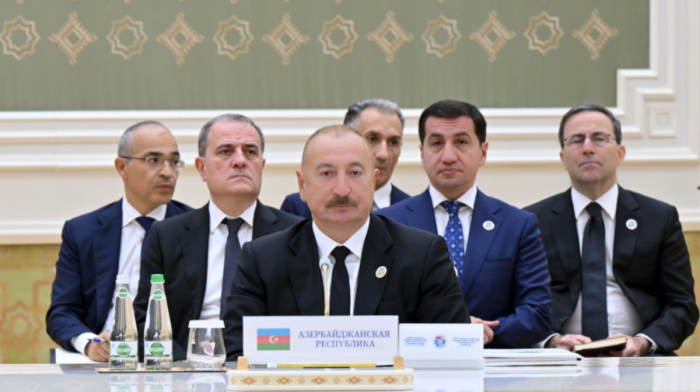
President of Azerbaijan Ilham Aliyev arrived in Munich on Friday, holding meetings with senior officials, including the head of the Kurdish Regional Government of Iraq.
President Aliyev is scheduled to participate in a panel discussion on Saturday.
Other historic moments in the conference’s 60-year history, such as Vladimir Putin’s 2007 speech, were cited as context for current debates, highlighting how strategic signalling from global powers continues to shape European security calculations.
The conference continues through Sunday, with a series of speeches, bilateral meetings, and panel discussions aimed at addressing what organisers describe as “unprecedented challenges” to the international order and alliance cohesion.
Conference Prospects
Senior Fellow Qinduo Zhu of the Pangoal Institution told AnewZ from Munich that European leaders are increasingly recognising the need to take responsibility for their own security.
“After 80 years of protection, Europe has grown up. They now understand they are on their own and must face this new reality,” Zhu said.
He added that while the shift in mindset is broadly accepted, European nations are still adjusting to the practical challenges of assuming greater responsibility for defence and NATO cohesion.
On the impact of the Ukraine war, Zhu highlighted that it has intensified debates over deterrence and the future structure of NATO.
“The U.S. is rebalancing the alliance, transforming NATO into a partnership-oriented framework that is very different from the unipolar period following the Soviet Union’s collapse,” he explained.
He noted that European states remain partners of the U.S., but the ongoing conflict in Ukraine and broader geopolitical pressures mean Europe must invest more in its security and economic resilience.
Zhu described the emerging narrative at the Munich Security Conference as one of urgency.
He reiterated that Europe must act independently, strengthen NATO, and confront the challenges of the new global order while balancing economic competition, transatlantic expectations and the complex dynamics of the Ukraine crisis.










What is your opinion on this topic?
Leave the first comment