Start your day informed with AnewZ Morning Brief: here are the top news stories for the 12th of February, covering the latest developments you need to know.
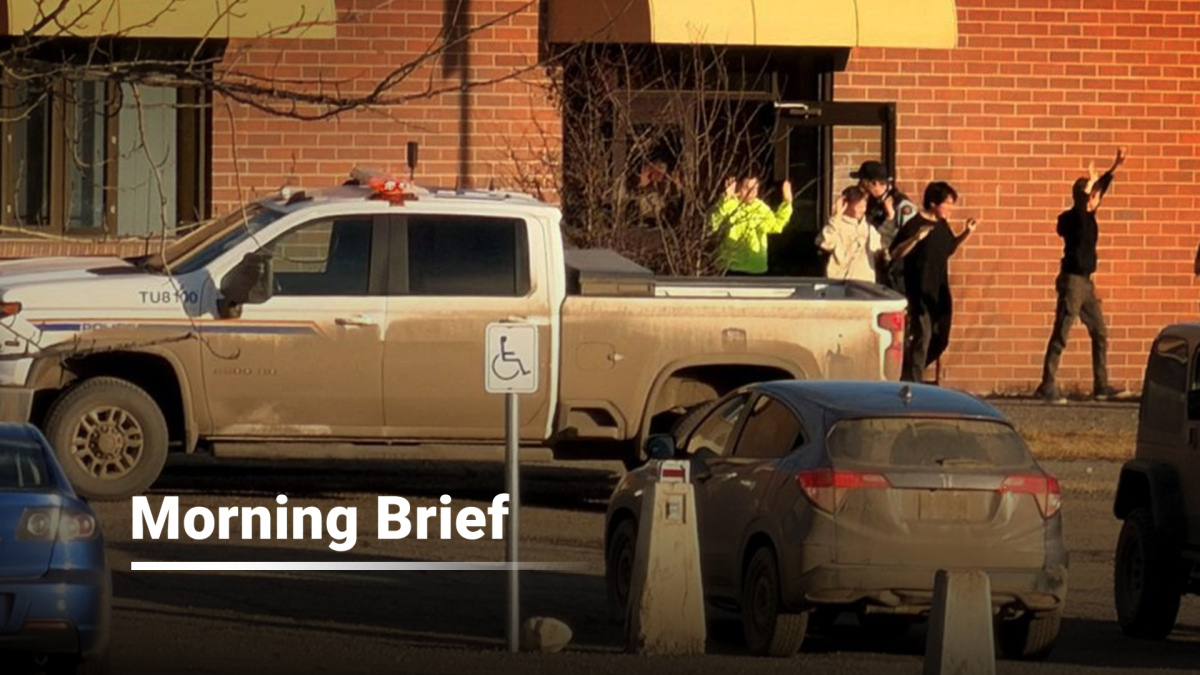
Police identify suspect in Canada school shooting
Canadian police have identified the suspect behind the deadly rampage in Tumbler Ridge, British Columbia, as 18-year-old Jesse Van Rootselaar, who died by suicide at the scene. Investigators confirmed that Van Rootselaar, a former student who had transitioned to female, killed her mother and stepbrother at their home before attacking the school, leaving nine people dead (including Van Rootselaar) and dozens injured. While a specific motive remains under investigation, authorities noted the suspect had a history of police contact regarding mental health concerns, as Prime Minister Mark Carney led national tributes to the community.
No breakthrough in Trump-Netanyahu Iran talks
A White House meeting between U.S. President Donald Trump and Israeli Prime Minister Benjamin Netanyahu has ended without a definitive agreement on how to proceed with Iran. While Mr Trump insisted that diplomatic negotiations with Tehran must continue to test the viability of a deal, Mr Netanyahu emphasised Israel’s security red lines, reportedly pushing for a harder stance on ballistic missiles. During the visit, the Israeli leader also formally signed his country into President Trump’s ‘Board of Peace’ initiative for Gaza, a move seen as an attempt to align strategic priorities ahead of further talks.
Italy rejects Trump’s ‘Board of Peace’ initiative
Italy has formally declined to join President Trump’s ‘Board of Peace’, with Foreign Minister Antonio Tajani citing constitutional constraints that prevent Rome from signing the charter. The decision aligns Italy with other major Western powers-including the UK, France, and Germany-who have opted out of the new international body established to oversee Gaza’s reconstruction and global conflict resolution. Despite refusing membership, Rome confirmed it remains committed to independent humanitarian efforts in the Middle East, whilst the U.S. administration prepares for the board's first leader-level meeting in Washington on 19 February.
Athens and Ankara seek to mend ties in high-level summit
Greek Prime Minister Kyriakos Mitsotakis and Turkish President Recep Tayyip Erdoğan have held closed-door talks in Ankara, signalling a continued thaw in relations between the historic rivals. The leaders discussed complex disputes regarding maritime borders in the Aegean and migration management, with Mr Erdoğan describing the territorial issues as difficult but solvable within the framework of international law. The summit concluded with a mutual reaffirmation of ‘good neighbourliness’ and a commitment to maintain open communication channels, despite ongoing military tensions over island sovereignty.
Bangladesh votes in historic post-revolution election
Voters in Bangladesh have headed to the polls for a watershed election that marks a decisive attempt to transition from revolutionary upheaval to democratic stability. With the former ruling Awami League absent from the ballot, The contest pits two coalitions led by former allies, the Bangladesh Nationalist Party (BNP) and the Islamist Jamaat‑e‑Islami, with opinion polls giving an edge to the BNP. The election also serves as a de facto referendum on the ‘July Charter’, a package of constitutional reforms designed to dismantle authoritarian structures and redefine the nation's geopolitical alignment in South Asia.












What is your opinion on this topic?
Leave the first comment