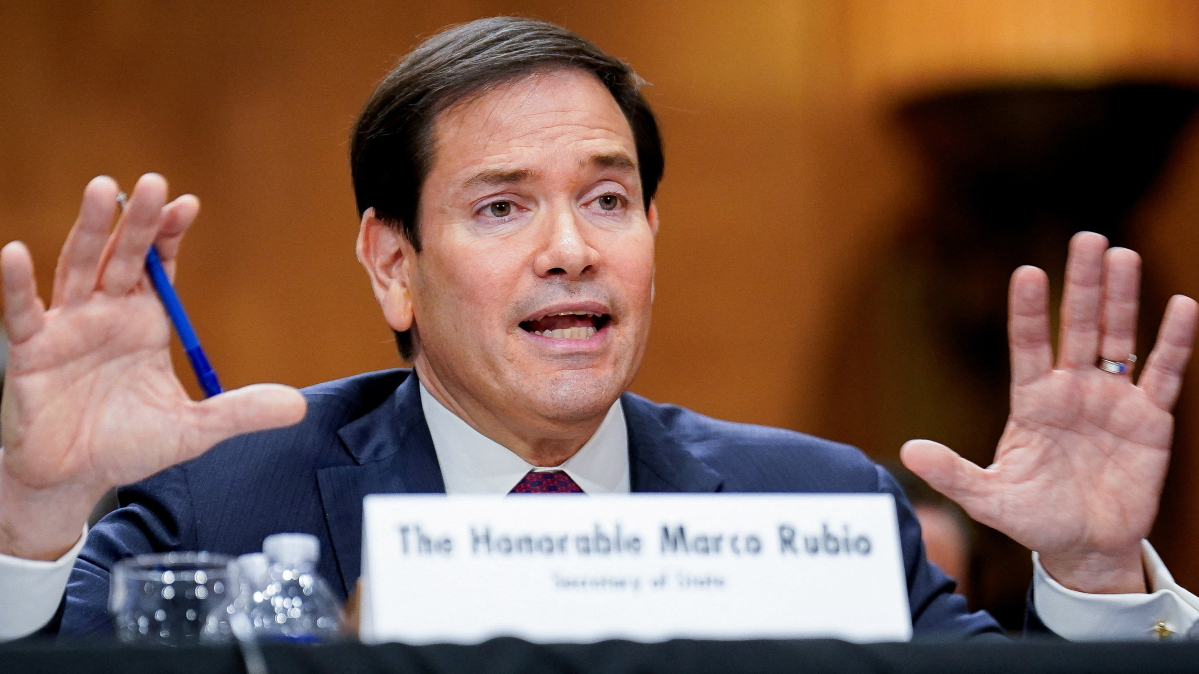
U.S. Secretary of State Marco Rubio told the Senate on Wednesday that Venezuela’s new leadership is moving towards closer relations with the United States, signalling that Washington sees no immediate need for further military action following the recent arrest of President Nicolas Maduro.
Appearing before lawmakers for the first time since a U.S.-led operation earlier this month that resulted in Maduro’s capture, Rubio said President Donald Trump had instructed his administration to engage with Delcy Rodriguez, a longtime Maduro ally who was sworn in as interim president after his arrest.
While Trump has previously warned that further military action remained an option if Venezuela failed to meet U.S. demands, Rubio sought to reassure senators that Washington does not expect escalation.
“We are not postured to, nor do we intend or expect to, have to take any military action in Venezuela,” Rubio told the Senate Foreign Relations Committee. “The only military presence you will see in Venezuela is our Marine guards at an embassy. That is our goal.”
Rubio said communications with Venezuela’s new leadership had been “very respectful and productive” and suggested the United States could soon reopen a diplomatic presence in Caracas. The U.S. embassy has been closed since 2019, though State Department officials have recently begun preparations for its reopening.
Rubio told lawmakers the talks marked a significant departure from the past two decades of strained relations, saying Washington was now engaging Venezuela on reducing the influence of U.S. adversaries.
“For the first time in 20 years, we are having serious conversations about eroding and eliminating the Iranian presence, the Chinese influence and the Russian presence,” Rubio said, adding that some political and business figures in Venezuela welcomed renewed engagement with the United States.
However, questions remain over how committed Rodriguez’s government is to Washington’s strategy. Reuters reported this week that U.S. intelligence assessments have raised doubts over whether she intends to fully sever ties with countries such as Iran, China and Russia.
Rubio is also due to meet Venezuelan opposition leader Maria Corina Machado, amid speculation over whether Washington could support her as a long-term political alternative.
Oil and congressional concerns
Rubio reiterated the administration’s view that Maduro had to be removed because Venezuela had become a hub for U.S. adversaries and alleged drug trafficking networks.
The United States has established a temporary mechanism to sell Venezuelan oil, with proceeds being held offshore, while aiming to oversee a political transition toward what Rubio described as a “friendly, stable and prosperous Venezuela” that would eventually hold free and fair elections.
Venezuela holds the world’s largest proven crude oil reserves, and the Trump administration has said it intends to maintain control over the country’s oil industry and revenues for the foreseeable future.
That approach has drawn criticism on Capitol Hill. A group of 12 Democratic lawmakers warned oil companies this week about the risks of investing in Venezuela, noting that current arrangements could be reversed.
During the hearing, some Democrats also questioned the legality and long-term viability of U.S. actions, warning of the risk of another prolonged overseas entanglement.
“The scope of the project that you are undertaking in Venezuela is without precedent,” said Senator Chris Murphy of Connecticut.
“You are taking their oil at gunpoint … and deciding how that money will be used in a country of 30 million people,” he added.
The hearing underscored growing congressional unease over Trump’s foreign policy powers, particularly after a narrow Senate vote earlier this month rejected a measure that would have required congressional approval for further military action in Venezuela.
Despite the criticism, Rubio maintained that the administration’s approach was working and said Washington remained focused on preventing escalation while reshaping Venezuela’s political and economic trajectory.













What is your opinion on this topic?
Leave the first comment