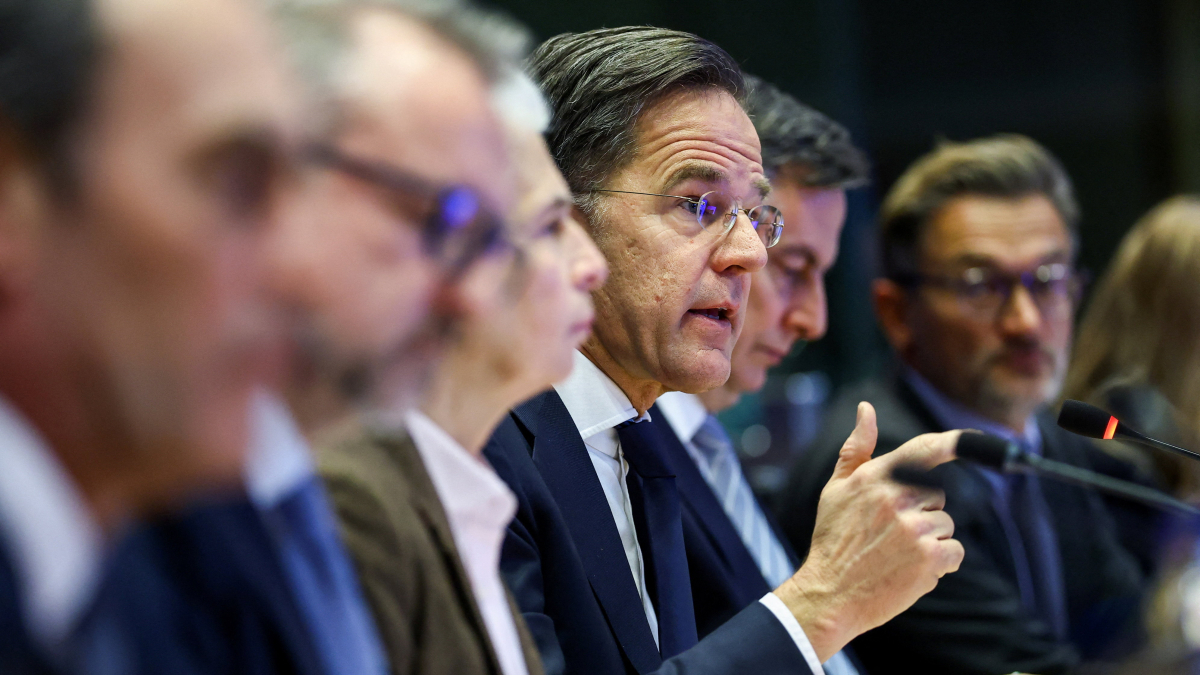
NATO Secretary General Mark Rutte said on Monday that Europe is "incapable" of defending itself alone without the United States, dismissing calls for a separate European defence force and stressing that transatlantic cooperation remains essential for the continent’s security.
Speaking at the European Parliament in Brussels, Rutte issued a blunt reality check to EU lawmakers: "If anyone thinks that Europe can defend itself without the U.S., keep on dreaming. You can't. We can't. We need each other." He even went as far as wishing "good luck" to those who believe a go-it-alone strategy is viable.
Rutte argued that for Europe to provide its own security, it would have to more than double its current military spending targets. "If you really want to go it alone, you can never get there with 5%. It will be 10% [of GDP]," he said.
"You would have to build your own nuclear capability, which costs billions and billions of euros. You would lose the ultimate guarantor of our freedom, which is the U.S. nuclear umbrella," he added, warning that a separate force would only weaken existing militaries. "Putin would love it. So think again."
Greenland and Arctic security
The Secretary General’s remarks come at a time of heightened friction within the 32-nation alliance. Tensions have reached a boiling point over U.S. President Donald Trump’s renewed threats to annex Greenland, a semiautonomous territory of Denmark.
In a significant update to the diplomatic standoff, it was revealed that Trump had previously threatened to impose new tariffs on Greenland’s European backers. However, those threats were recently dropped after Rutte helped broker a "framework" for a deal regarding the mineral-rich island. While Rutte confirmed his role in facilitating the discussion, he noted that few details of the agreement have yet emerged.
Addressing the Arctic situation, Rutte outlined two "workstreams." One involves NATO collectively preventing Russia and China from expanding their presence in the North. The second involves direct talks between Denmark, Greenland, and the U.S.
"It is up to the Danes, Greenland and the U.S. to do that. I have no mandate to negotiate on behalf of Denmark, so I didn't and I will not," Rutte said, while emphasizing there is no link between the Greenland issue and the war in Ukraine.
Stress on Article 5 and Ukraine support
The ongoing disputes have raised concerns regarding Article 5, the alliance’s mutual defense clause. Rutte's visit to the European Parliament aimed to reaffirm that European and American security remain inextricably linked despite political disagreements.
Turning to the conflict in Ukraine, Rutte warned that Kyiv’s ability to intercept Russian missiles and drones has declined due to a shortage of interceptors. He urged allies to "dig into their stockpiles" immediately.
"Europe is now building its defence industry, and that is vital, but it cannot at the moment provide nearly enough of what Ukraine needs to defend itself today and to deter tomorrow," he said. He concluded by highlighting that, for now, the continued flow of American heavy weaponry remains the backbone of Ukraine’s defense.










What is your opinion on this topic?
Leave the first comment