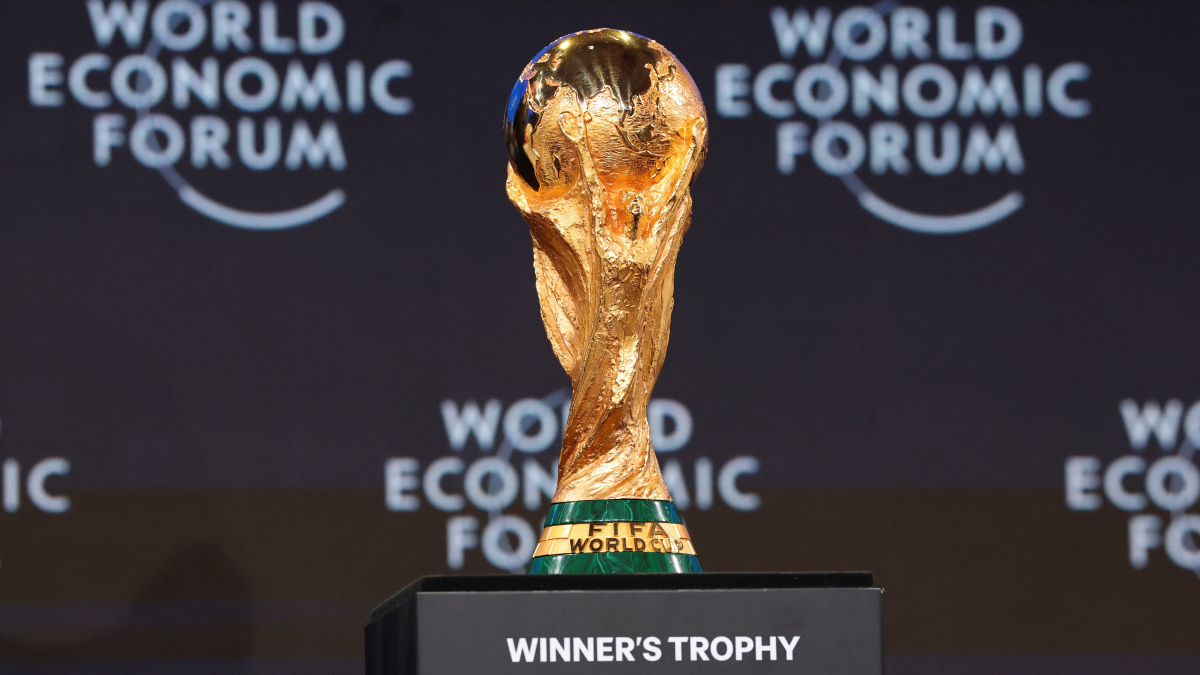
Germany is divided over whether to boycott the 2026 FIFA World Cup in the United States if U.S. President Donald Trump were to follow through on remarks about annexing Greenland, a move widely viewed in Europe as a violation of international law.
The debate has gained traction in Berlin, where some lawmakers argue that participating in a major sporting event hosted by the U.S. would be inappropriate under such circumstances. The World Cup is scheduled to take place in the United States, Mexico and Canada from 11 June to 19 July 2026.
Jürgen Hardt, a lawmaker from the Christian Democratic Union (CDU), led by Chancellor Friedrich Merz, said he could not imagine a celebratory football tournament in the U.S. if Washington were to illegally annex Greenland.
Hardt said refusing to take part could be considered a “last resort” to pressure the Trump administration, arguing that Europe should send a clear message about respecting sovereignty and international norms.
Another CDU lawmaker, Roderich Kiesewetter, said it would be difficult to envision European participation in the tournament if Trump pursued both annexation plans and a trade war with the European Union.
Germany’s Sports Minister Christiane Schenderlein, however, stressed that decisions on participation or boycotts rest with sports federations, not politicians.
Public opinion divided
A survey by polling firm Insa showed Germans are split on the issue. About 47% of respondents said they would support a boycott if the U.S. annexed Greenland, while 35% opposed such a move and 18% said they were undecided.
Several Berlin residents interviewed by Anadolu echoed the divided mood. Some argued that athletes should not be punished for political disputes, pointing to past Olympic boycotts in 1980 and 1984. Others said a boycott could be justified as a symbolic act to apply pressure, even if it failed to change Trump’s position.
Some respondents said Europe needs to defend its interests more assertively, while others questioned whether sports and politics should be mixed at all.
The discussion reflects growing unease in Germany over Trump’s foreign policy rhetoric and broader concerns about how Europe should respond if tensions with Washington escalate further.










What is your opinion on this topic?
Leave the first comment