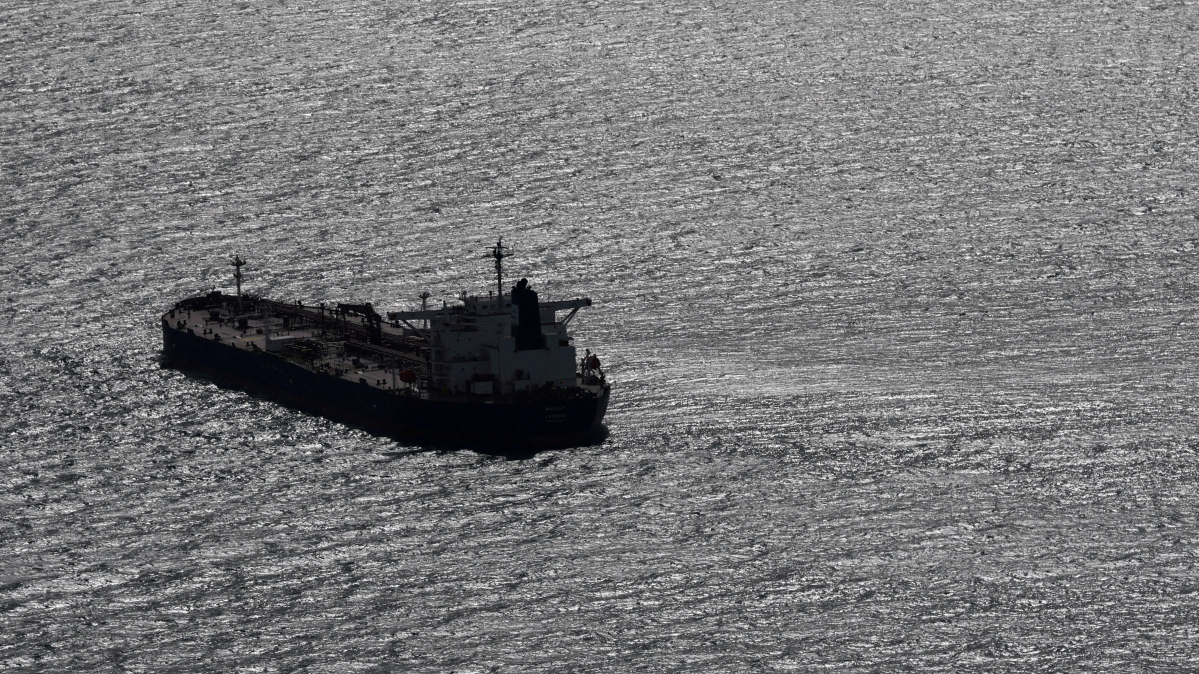
France has intercepted a Russian oil tanker in the western Mediterranean over suspicions it was operating as part of Moscow’s “shadow fleet,” a network of vessels accused of helping Russia evade international sanctions, French authorities said on Thursday.
In a post on X, French President Emmanuel Macron said the operation was carried out with the support of allied forces and in full compliance with international maritime law. The tanker, identified as the GRINCH, had departed from the northern Russian port of Murmansk and is subject to international sanctions, Macron said.
“The activities of the shadow fleet contribute to financing Russia’s war of aggression against Ukraine,” the French president added.
French maritime police confirmed that the interception took place in international waters between southern Spain and northern Morocco, with assistance from allied naval forces, including the United Kingdom. The case has been referred to the Marseille public prosecutor, who ordered the vessel diverted for further investigation.
According to shipping data from LSEG, the tanker was sailing under a Comoros flag, a practice often associated with vessels seeking to obscure ownership or regulatory oversight.
International Reactions
Ukrainian President Volodymyr Zelenskyy welcomed France’s action, calling it “exactly the kind of resolve needed” in a post on X. He urged Western countries to go further by seizing and selling oil carried by vessels linked to the shadow fleet.
Russia, however, said it had not been notified of the interception. State news agency TASS quoted Russian officials as saying that the Russian consulate in Marseille was seeking clarification on whether any Russian nationals were among the crew.
Sanctions Pressure Intensifies
The interception comes as the European Union continues to tighten sanctions against Moscow, having adopted 19 packages of restrictive measures since Russia’s full-scale invasion of Ukraine.
Despite those measures, Russia is still believed to export significant volumes of oil, often at discounted prices to countries such as India and China. Much of that trade is reportedly conducted through vessels operating outside Western insurance, certification and monitoring systems — commonly referred to as the shadow fleet.
France carried out a similar operation in October 2025, when it briefly detained the sanctioned Russian tanker Boracay off its Atlantic coast before releasing it several days later.
Western officials say stepped-up maritime enforcement is increasingly seen as a key tool in limiting Russia’s ability to finance its war effort, even as Moscow adapts its export routes and shipping practices to circumvent sanctions.











What is your opinion on this topic?
Leave the first comment