San Diego Mosque Attack: Expert says there is a global connection driving these attacks
More than 2,000 people gathered in San Diego this week for funeral prayers honouring three men killed while trying to stop an attack at the Islamic...
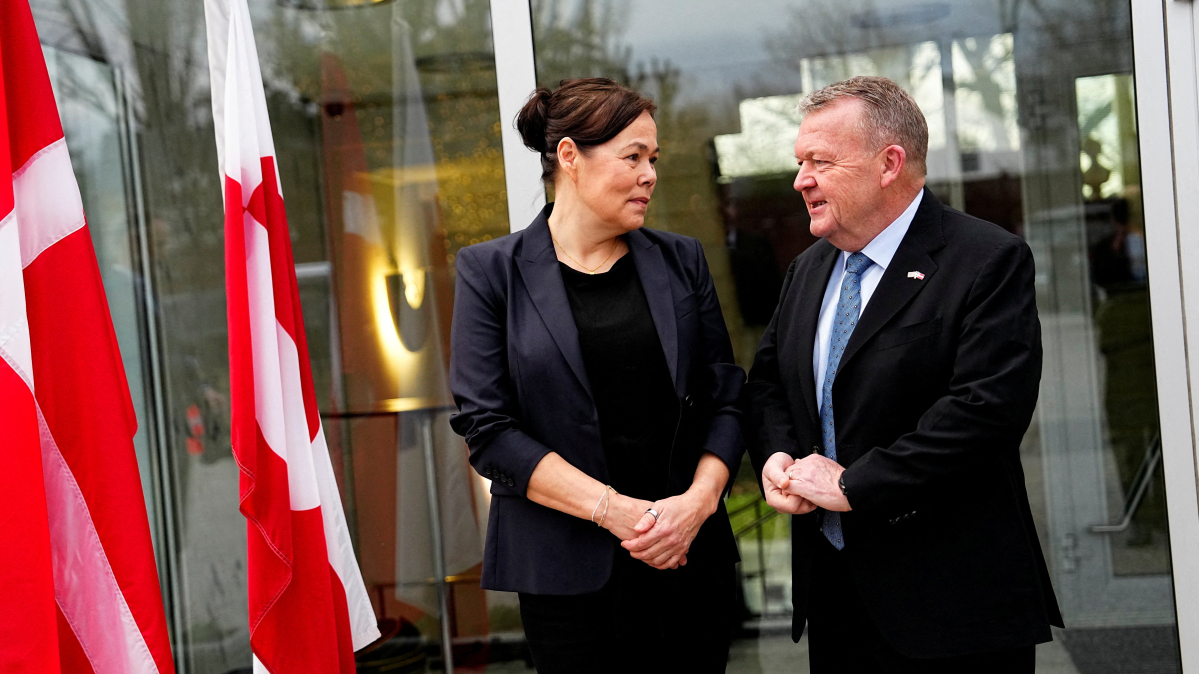
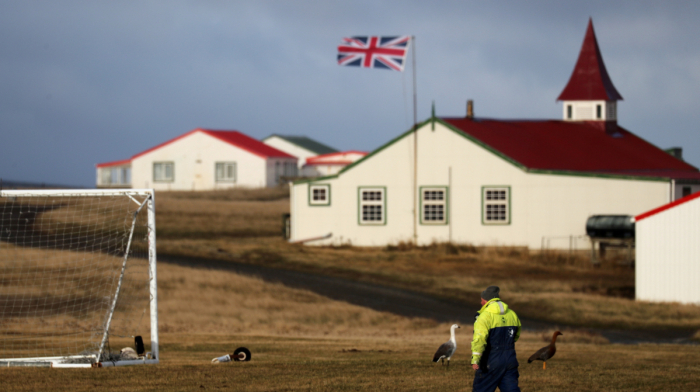
Denmark says deep differences with the United States remain over Greenland’s future, despite what officials described as frank but constructive talks in Washington.
Danish Foreign Minister Lars Løkke Rasmussen told reporters that a “fundamental disagreement” persists after meetings with U.S. Vice President JD Vance and Secretary of State Marco Rubio at the White House.
Speaking alongside Greenland’s Foreign Minister Vivian Motzfeldt, Rasmussen said it was “absolutely not necessary” for the U.S. to acquire Greenland and stressed that the island faces no “instant threat” from Russia or China.
His remarks come after President Donald Trump again argued that Greenland is vital for U.S. national security and warned of growing influence from Russia and China. Both Greenland’s leadership and Denmark, a Nato ally, have firmly rejected any idea of U.S. control over the semi-autonomous territory.
Rasmussen said the talks focused on long-term Arctic security, but acknowledged that the two sides see the future of Greenland differently. Still, he called the meeting productive and confirmed that a high-level working group will be formed to search for common ground.
“The task is to address American security concerns while respecting Denmark’s territorial integrity and Greenlanders’ right to self-determination,” he said.
Greenland’s Foreign Minister Vivian Motzfeldt underlined that Greenland wants close cooperation with Washington, but not ownership by the U.S.
“We can be strong allies without being owned,” she said.
Rasmussen also rejected claims of an immediate Chinese or Russian threat, noting there is currently no Chinese presence in Greenland. He added that Denmark is ready to further strengthen its security role in the Arctic, pointing to increased military spending and long-standing agreements that already give the U.S. broad access to Greenland.
Despite the disagreements, both Denmark and Greenland said they remain committed to working closely with the United States.
“We are among America’s closest allies,” Rasmussen said, adding that continued dialogue was the only way forward.

Asian stocks surged on Thursday as some vessels resumed passage through the Strait of Hormuz, while forecast-beating results at Nvidia and a suspended workers' strike at Samsung Electronics lifted shares of chipmakers.
Belarusian President Alexander Lukashenko has said Belarus will not be dragged into the war in Ukraine, while also stressing that Minsk and Moscow would jointly respond to any aggression against them.
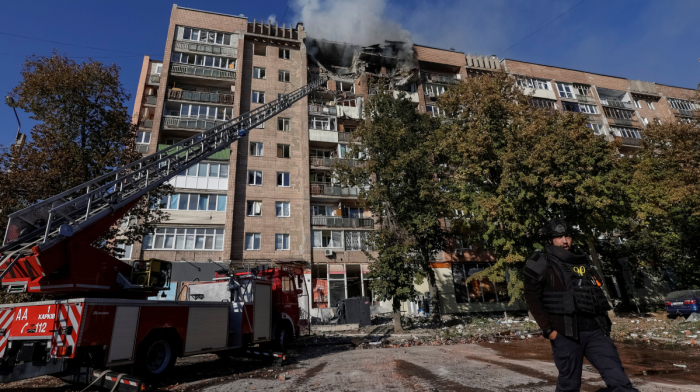
Fighting in the Russia–Ukraine war has intensified sharply, with both sides launching significant strikes far beyond the front lines as the conflict enters its 1,549th day.
The penultimate day of the World Urban Forum 13 in Baku will see Azerbaijan's Pavilion highlight post-construction efforts in Garabagh and East Zangezur, as well as host events on the future of Baku and architectural education.
As the 13th edition of the World Urban Forum ended, Azerbaijan's Pavilion showcased reconstruction efforts in its liberated territories and foregrounded the importance of mine removal in resettlement efforts.
China already dominates the global rare earth supply chain. Now, scientists have discovered new deposits in northeastern China that could prove cheaper and cleaner to extract than those mined elsewhere in the country.
More than 2,000 people gathered in San Diego this week for funeral prayers honouring three men killed while trying to stop an attack at the Islamic Centre of San Diego, in what authorities are investigating as a suspected hate crime.
U.S. Secretary of State Marco Rubio said negotiations with Iran remain deadlocked over uranium enrichment and the Strait of Hormuz, despite what he described as modest progress in recent talks.
Fighting in the Russia–Ukraine war has intensified sharply, with both sides launching significant strikes far beyond the front lines as the conflict enters its 1,549th day.
Serbian President Aleksandar Vučić said he was pessimistic that an agreement would be reached before Friday’s deadline regarding Hungarian oil company MOL group's bid to acquire a majority stake in Naftna Industrija Srbije (NIS), the operator of Serbia’s only oil refinery.
You can download the AnewZ application from Play Store and the App Store.
What is your opinion on this topic?
Leave the first comment